
By Hassan Osman Kargbo
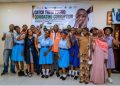
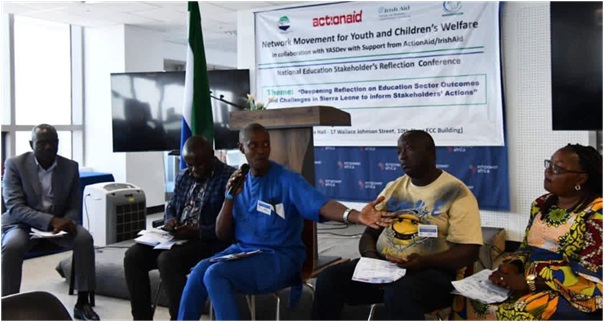
Education stakeholders from across Sierra Leone gathered in Freetown for a national reflection conference aimed at assessing learning outcomes, identifying sector challenges, and strengthening collective action. The event was organized by the Network Movement for Youth and Children’s Welfare in collaboration with the Youth Alliance for Sustainable Development, with support from ActionAid and Irish Aid.


Held under the theme “Deepening Reflection on Education Sector Outcomes and Challenges in Sierra Leone to Inform Stakeholders’ Actions,” the conference created space for open dialogue, lived testimonies, and evidence-based discussions on the state of the country’s education system. Participants included school leaders, teachers, students, civil society groups, development partners, and government representatives.
Opening the conference, the Executive Director of ActionAid Sierra Leone, Foday Bassie Swaray, delivered a strong message on the need for accountability and improved quality learning outcomes. He stressed that education reforms must be grounded in transparency and effective use of resources. Swaray explained that performance management, community monitoring, and data-driven decision making are essential to rebuilding trust in the sector. He expressed ActionAid’s commitment to supporting reforms that prioritize equitable access and measurable learning progress.
Representatives from the Teaching Service Commission and Ireland in Sierra Leone also made statements reinforcing the importance of teacher professionalism and integrity in school systems. They emphasized the need for continuous teacher training, better working conditions, and stronger investment in education infrastructure to boost learning outcomes nationwide.
The keynote address was delivered by the Deputy Commissioner of the Anti-Corruption Commission, Augustine Foday Ngobie. He reaffirmed the commission’s commitment to safeguarding the education sector from corruption, noting that the sector receives more than 20 percent of the national budget and remains central to the government’s Human Capital Development agenda. Ngobie highlighted progress made through the 2019 amendment of the Anti-Corruption Act, which criminalized academic malpractice and supported the prosecution of offenders. He stressed that protecting the integrity of examinations and strengthening school governance are crucial for ensuring fairness and quality.
Ngobie also called for increased funding, enhanced teacher training, deeper community participation, and the use of technology to support teaching and learning. He reminded students of their responsibility to uphold integrity and avoid practices that undermine their future.
The conference featured three panel discussions anchored in research and field experiences. The first panel examined teachers’ roles and working conditions, focusing on teacher deployment gaps, professional development needs, and challenges linked to overcrowded classrooms. The second panel explored education governance and accountability, with emphasis on examination integrity, financial management, and payroll transparency. The third panel addressed the role of parents, students, and communities in promoting integrity, highlighting limited parental involvement and the need for stronger community-school collaboration.
A plenary session allowed school heads, teachers, parents, and students to share real-life experiences. Testimonies covered strategies for tackling absenteeism, improving school governance, addressing teacher shortages, and reporting malpractice. Participants also discussed how community scorecards, transparent communication, and teacher mentoring have helped strengthen learning environments.
The conference closed with a collective call for coordinated action, shared responsibility, and sustained commitment to improving education outcomes across Sierra Leone.