

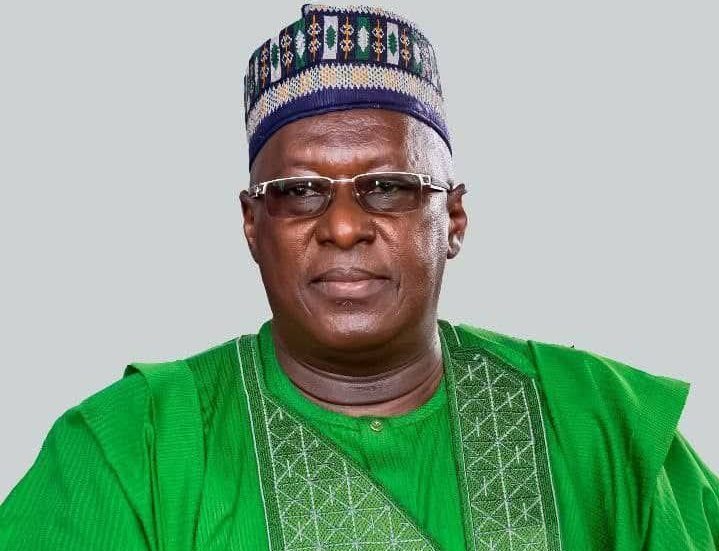
By Hassan Osman Kargbo
A former member of the ECOWAS Parliament Hon. Mohamed Sidi Tunis has reflected on two years of regional advocacy, warning that West Africa’s democratic future depends on urgent and deliberate action to protect constitutional rule and strengthen institutions across the sub region.


In a reflective statement marking the anniversary of his tenure, Mr Tunis recalled engagements held across ECOWAS capitals, including Abuja, Niamey, Dakar, Monrovia, Freetown, and Bamako. He described these engagements as critical moments where leaders and representatives defended shared principles and reminded citizens that the promise of West Africa must never be broken.
According to him, the vision that inspired the creation of ECOWAS through the Treaty of Lagos and later reinforced by the Revised Treaty was never limited to economic cooperation. Rather, it was a broader commitment to justice, prosperity, and the building of an enduring community of people grounded in shared values and democratic governance.
He emphasized that stability in the region cannot be taken for granted. It must be intentionally built through strong institutions, respect for the rule of law, and effective checks and balances. He argued that a functional system requires a legislature with real decision making authority, an executive constrained by constitutional limits, and independent institutions capable of holding power to account.
Reflecting on developments across the region, the former lawmaker said warning signs were evident even during his time in office. He pointed to the manipulation of presidential term limits, the erosion of constitutional norms, and the resurgence of military coups as indicators of democratic decay.
He condemned all forms of unconstitutional changes of government, stressing that the seizure of power by force has no justification. According to him, military coups undermine democratic legitimacy, weaken institutions, and deepen instability rather than resolve political challenges.
“Democracy, despite its imperfections, remains the only viable path to lasting peace and development,” he noted, adding that silence or inaction in the face of democratic erosion amounts to complicity.
The former parliamentarian said these concerns shaped the work of the Fifth Legislature of the ECOWAS Parliament. He explained that members pushed consistently for reforms aimed at transforming the regional parliament into a full legislative body with stronger oversight responsibilities.
Among the priorities, he said, were efforts to strengthen public accounts committees, expand parliamentary oversight, and ensure accountability across regional institutions. He stressed that the goal was to move the parliament beyond a ceremonial role and position it as a true defender of the people’s will.
He noted that while progress was made, the challenges confronting the region remain significant and require renewed commitment from leaders and citizens alike.
As West Africa continues to grapple with political uncertainty and security challenges, he said the responsibility of the current generation is clear. The legacy of today’s leaders, he argued, will not be measured by the crises they inherit but by the constitutional safeguards they build to protect future generations.
He concluded by calling for sustained vigilance, principled leadership, and collective action to ensure that democracy remains the foundation of peace, stability, and progress across West Africa.