
By: Usman Fambuleh
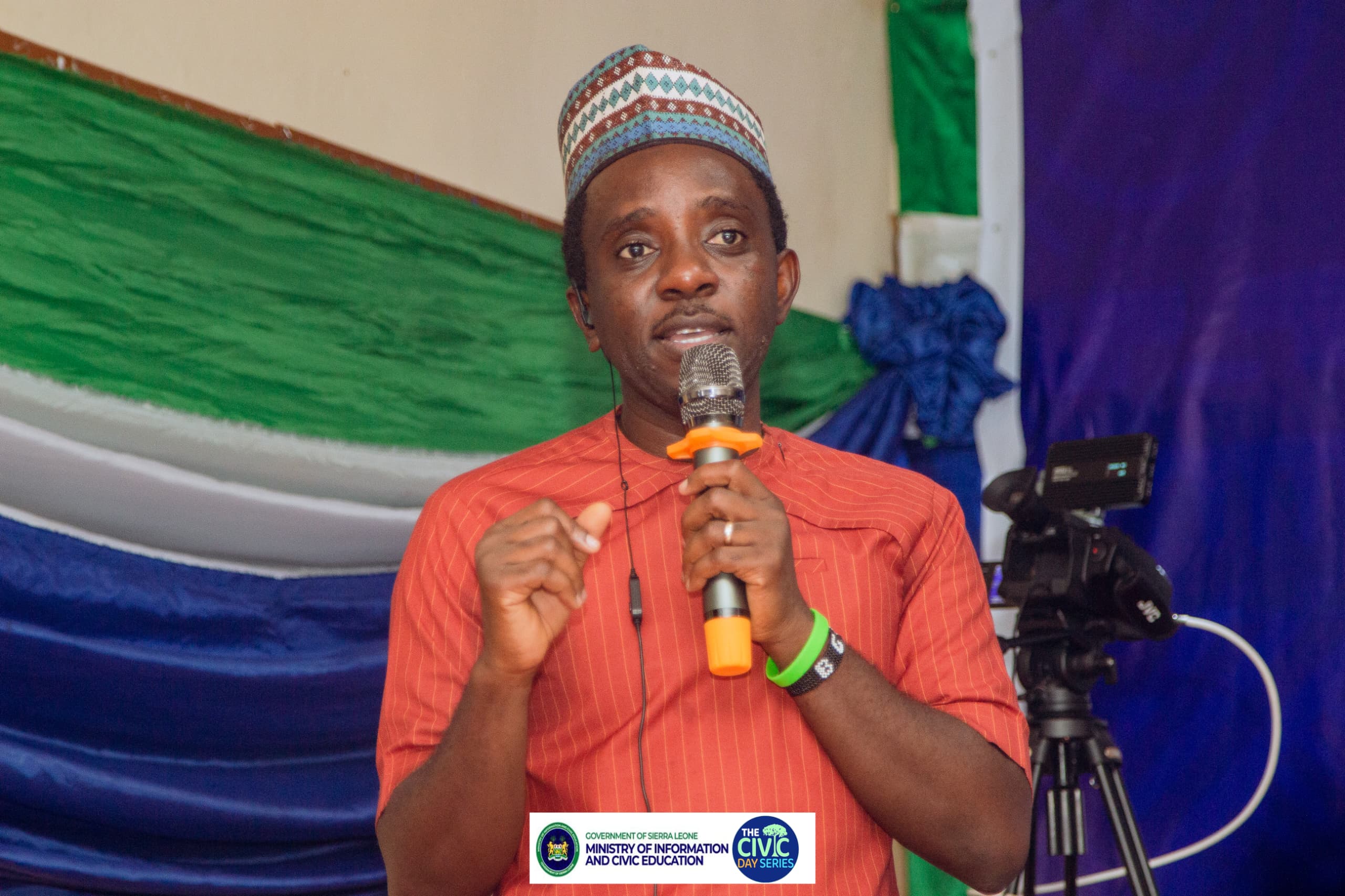
IMATT College on Friday, 23 January 2026, hosted the Minister of Information and Civic Education, Hon. Chernor Bah, and the Chairman of the Independent Media Commission (IMC), Joseph Ebenda Kapuwa Esq, as guest lecturers at the Department of Law. The academic engagement took place at the 4th Floor, IMATT College Kingtom Campus, and attracted law students, lecturers, and invited guests.


Welcoming the distinguished guests, the Proprietor and Board Member of IMATT College, Amadu Justice Bah, expressed appreciation for their acceptance of the invitation. In his statement, he provided a brief history of the establishment of the institution and highlighted its commitment to quality legal education.
“IMATT College has often been referred to as the Harvard of Sierra Leone, and this is due to the standard, quality, and efficient education we continue to provide,” he stated.
Delivering his lecture on the oversight role, legal mandate, and regulation of the Fifth Estate (social media), the Minister of Information and Civic Education, Chernor Bah, explained ongoing efforts by his ministry to regulate the social media space. He emphasized that while freedom of speech is essential in a democratic society, it must be exercised responsibly and in the public interest.
“Inasmuch as we desire a free society and free speech, responsibility is key,” he noted.
The Minister assured media practitioners of his commitment to press freedom, stating:
“I will try my best to ensure that no media professional sleeps in jail—not under my tenure.”
He encouraged students and media practitioners to always fact-check information in order to combat misinformation, noting that the ministry is often held accountable when misinformation spreads. He further disclosed that the government is developing policies to regulate individuals and institutions operating as news media on social media platforms.
“This regulation is aimed at protecting Sierra Leoneans, and that is why we will soon have a Data Protection Law,” he added.
The Minister also highlighted citizens’ right to access information, announcing that, for the first time in Sierra Leone’s history, all cabinet ministries will make their decisions and conclusions accessible to the public.
In his lecture titled “The Digital Frontier: The Emergence of Online Broadcasters and the IMC’s Regulatory Approach,” the Chairman of the Independent Media Commission, Joseph Ebenda Kapuwa Esq, addressed the growing influence of digital media. He educated students on the history, mandate, and limitations of the IMC, as well as its regulatory role over traditional media institutions.
He noted that while online platforms such as blogs and digital broadcasters are now at the forefront of news dissemination, many operating as news agencies are not registered with the Commission.
“For blogs, we are developing a compliance policy to regulate them. This is not to reject them, but to ensure their content is balanced, credible, and serves the public interest,” he explained.
According to him, such regulation will enhance professionalism and ethical standards in media content production. He further revealed that the IMC, in collaboration with the Ministry of Information and Civic Education, is working on strong regulatory frameworks to promote an ethical media landscape in Sierra Leone. He also highlighted key challenges faced by the Commission and reaffirmed its commitment to ensuring that all content producers operating in the country are properly regulated.
The Head of the Law Department, IMATT College, and Media & Telecommunications Law Lecturer, Mohamed Wurie Bah Esq, underscored the significance of the engagement. He noted that the interaction provided students with first-hand exposure to public policy formulation, media regulation, and the practical application of the law beyond the classroom.
“This is just the beginning. We will continue to invite more professionals to lecture our students on critical areas of the law,” he assured.
The engagement was climaxed with a highly interactive question-and-answer session, allowing students to directly engage with the guest lecturers.
IMATT College reaffirmed its commitment to academic excellence and national development through sustained stakeholder engagement.