

By Hassan Osman Kargbo
Nigeria’s military has clarified that about 200 United States troops expected to arrive in the country in the coming weeks will not be involved in combat operations, stressing that Nigerian forces will maintain full control over all security and operational decisions.


The clarification was made on Wednesday following reports from a US official a day earlier indicating that the Pentagon planned to deploy troops to Nigeria to assist in training local forces battling Islamist militant groups. The deployment comes weeks after President Donald Trump ordered military strikes against what he described as Islamic State targets in the region.
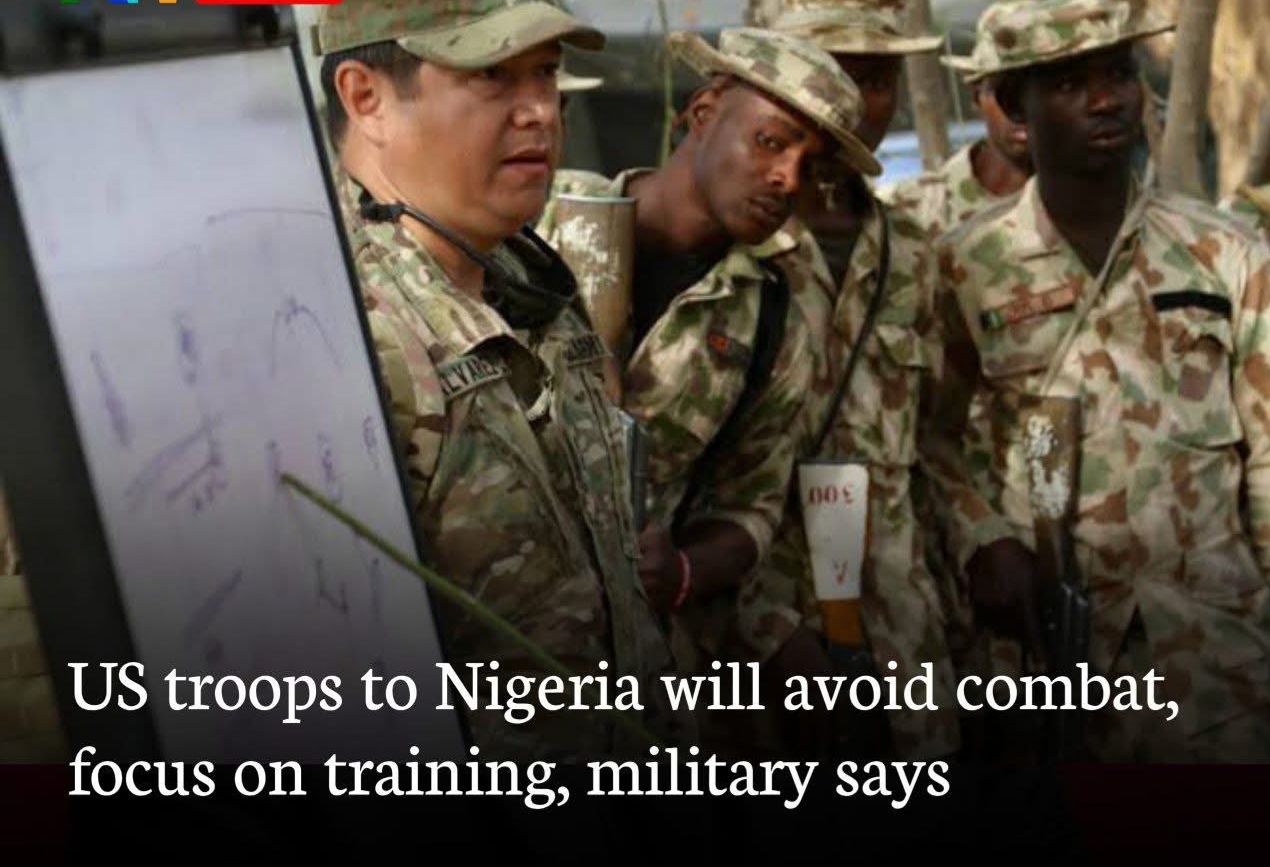
According to Nigerian military authorities, the role of the US troops will be limited strictly to training advisory and capacity building support. Officials emphasized that the presence of foreign troops does not amount to joint combat operations and does not compromise Nigeria’s sovereignty or command structure.
“The Nigerian Armed Forces remain fully in charge of all security operations,” the military said in a statement. “At no point will foreign personnel take part in combat or make operational decisions on Nigerian soil.”
The issue of US troop deployment has drawn significant public attention amid heightened security concerns in Nigeria particularly in the northeast where Islamist militants have carried out repeated attacks on military positions and civilian communities. The government has faced growing pressure to demonstrate progress in its counter insurgency efforts.
Last week the US military confirmed that it had already sent a small team to Nigeria though it did not provide details about the size mission or duration of the deployment. This confirmation marked Washington’s first public acknowledgment of US personnel on the ground in Nigeria since the Christmas Day airstrikes that targeted militant positions.
The Pentagon has described its involvement as part of broader security cooperation aimed at strengthening Nigeria’s ability to counter extremist threats. US officials say training support focuses on intelligence sharing logistics battlefield coordination and the protection of civilians.
Despite these assurances the announcement has generated debate within Nigeria with some critics questioning the long term implications of increased foreign military presence. Concerns have been raised about transparency accountability and the potential for mission expansion beyond training roles.
Government officials however have sought to reassure the public that all cooperation with the United States is guided by Nigeria’s national interest and existing defense agreements. They insist that any foreign assistance is carefully regulated and subject to Nigerian law.
Security analysts note that Nigeria has long received military support from international partners including the United States Britain and France particularly in areas such as training intelligence and equipment supply. They argue that such cooperation can be beneficial if properly managed and aligned with local priorities.
As Nigeria continues to confront complex security challenges the arrival of US trainers is likely to remain under close scrutiny from lawmakers civil society groups and the general public. For now authorities maintain that the deployment represents technical support rather than a shift in control of the country’s security operations.
Source CNN