

By Karamoh Kabba
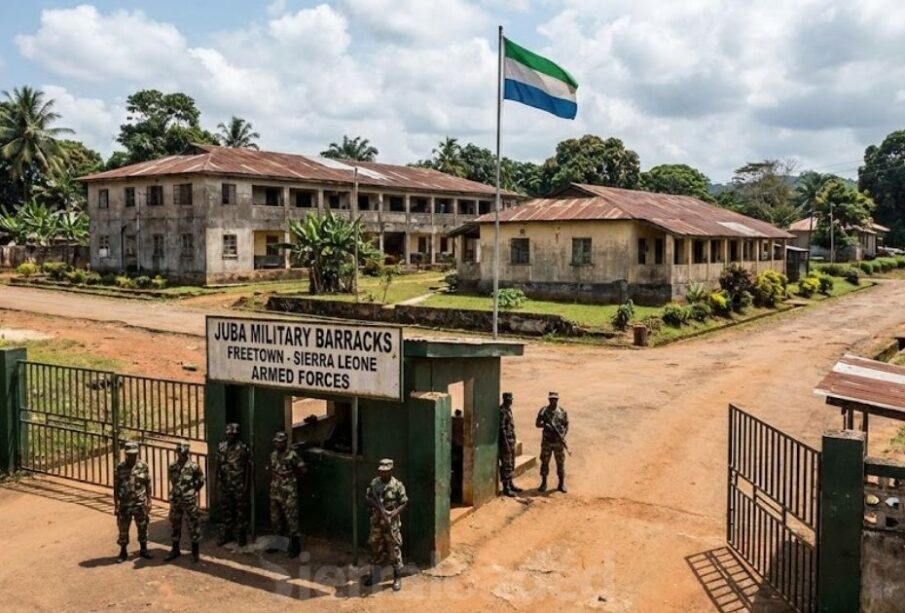
On 23 February 2026, the Ministry of Information and Civic Education published lame arguments titled “Strategic Defence Housing Plan” as a major welfare boost for Sierra Leone’s troops.


The release praised President Julius Maada Bio and Chief of Defence Staff Idara Bangura for “placing troop welfare at the centre of defence planning,” with unnamed analysts and observers commending the move.
The rhetoric is familiar. It recalls Orwell’s Squealer in Animal Farm: glowing praise for government decisions, while dissenting voices are carefully excluded. And beneath the official optimism lies a troubling mix of unanswered questions, political suspicion, and strategic blind spots.
The Ministry claims “security analysts” and “observers” endorse the relocation of Juba Barracks to Masiaka. Yet it fails to name them. Who are these analysts? What authority do they hold in security matters? Without names, the praise rings hollow; manufactured consensus rather than genuine endorsement.
The Republic of Sierra Leone Armed Forces (RSLAF) insists land has been secured in Masiaka for modern facilities. Not only that the move to secure land for an unsold property is preemptive, the Navy still lacks a waterfront barracks. Selling Juba, a coastal site, without addressing this glaring gap undermines maritime readiness. Besides, what about a military barracks at the Yenga border that has been occupied to deter further land usurpation by the Guinean government.
On 23rd February, while the Ministry was advancing arguments for the sale of Juba and the relocation of the military barracks, Guinean soldiers forcefully crossed into Sierra Leone at Sulima Chiefdom in Falaba District. According to the same Ministry release, they apprehended Sierra Leonean military and police officers, seized their weapons, and took them into Guinea. The Ministry, left with no recourse, has now appealed for their unconditional release. Even more troubling, the press statement reveals that the officers were engaged in making bricks for their own makeshift accommodation at the time of their capture.
Across the country, soldiers live in crumbling quarters. Repair and renewal are overdue for all of them. Yet selling prime land in Freetown to fund piecemeal projects looks less like reform and more like improvisation. If modernization is the goal, why not modernize Juba itself for the small number of the navy and strengthen border barracks?
This seems like politics is lurked in the shadows of development: Relocating to Masiaka, at the junction of southeast and northwest, appears less about border security and more about consolidating SLPP political control. Whether true or not, the perception corrodes trust in the neutrality of the armed forces. In defense, perception is power.
The sale process is opaque. Who is the prospective buyer of Juba Barracks? At what price? For what purpose? Without answers, suspicion grows that this is less about modernization and more about monetization for certain people.
Coinciding with the announcement is a 25% salary increase for soldiers. Welcome news, yes—but the timing is telling. It looks less like reform and more like appeasement: Could it be a transactional gesture to soften backlash? Governance by appeasement is not governance by principle.
And at the heart of the matter, the sale of Juba Barracks is not just about land. It is about trust, accountability, and strategic foresight. Modernization is necessary. But modernization without transparency is manipulation. Relocation may be justified. But relocation without strategic clarity is folly. Salary increases are deserved. But when timed to coincide with controversial decisions, they risk being seen as bribes rather than reforms.
If the government wishes to convince the nation that this is modernization, not maneuver, it must put consultation ahead of the securing of the alternative land and announcement of the proposed sale first, and answer plainly:
Who is the prospective purchaser of Juba Barracks? At what price? For what purpose? And how does Masiaka strengthen, not politicize, our national defense?
Until then, Juba Barracks will remain less a symbol of progress and more a question mark hanging over the credibility of governance. I hope government will consider this critique before the deal is done.