
By Hassan Osman Kargbo
The President of the Sierra Leone Association of Journalists (SLAJ), Alhaji Manika Kamara, has called for stronger action to promote the rights, justice and empowerment of women and girls as the world marks International Women’s Day 2026.
In a statement issued to commemorate the day, Kamara joined the global community in celebrating the achievements, resilience and contributions of women across all sectors of society. He said the occasion is not only a time for celebration but also an opportunity for reflection and renewed commitment to advancing equality and opportunities for women and girls.


He referenced this year’s global theme, “Rights. Justice. Action. For All Women and Girls,” describing it as both timely and important. According to him, although progress has been made in promoting gender equality, many women still face barriers that limit their full participation in leadership, economic life, access to justice and decision making processes.
Kamara noted that the situation is particularly significant in Sierra Leone where women play vital roles in community development. He said women continue to support families, drive economic activities and contribute to sectors such as education and health while also strengthening peace and democratic governance.
Despite these contributions, he pointed out that many women still experience structural inequalities that prevent them from reaching their full potential.
The SLAJ President also highlighted challenges within the media sector, noting that women journalists often work under demanding conditions while balancing professional responsibilities with societal expectations. He added that some women in the profession also face harassment, discrimination and limited opportunities for leadership.
Kamara said the resilience and dedication demonstrated by women journalists deserve recognition as well as concrete support from institutions and society.
He explained that SLAJ has taken deliberate steps in recent years to promote gender equality within the media sector. One of the major milestones, he said, was the launch of the first Gender Equality Policy for the media in Sierra Leone during the previous leadership of the association. The initiative was supported by the Embassy of Ireland in Sierra Leone and the SLAJ Gender Advisory Panel.
The policy was introduced to address structural gender imbalances affecting women journalists and to create a more inclusive and supportive environment within the profession.
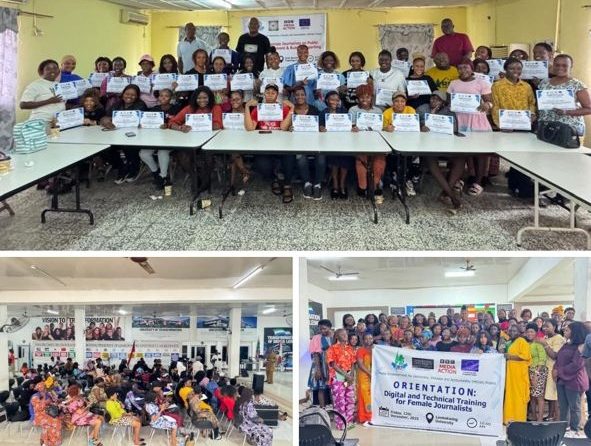
Building on that foundation, Kamara said the current leadership of SLAJ continues to promote programmes that strengthen the role of women in journalism. With support from the European Union through BBC Media Action, about seventy five women journalists have received training in public financial management reporting through the Budget Advocacy Network.
He further disclosed that more than sixty women journalists are currently benefiting from digital media literacy training at Limkokwing University. The programme is designed to equip participants with the skills needed to operate effectively in the rapidly evolving digital media landscape.
Beyond training opportunities, Kamara said SLAJ has also encouraged the election and appointment of more women journalists into leadership positions within the association.
He noted that the association continues to collaborate closely with Women in the Media Sierra Leone, whose advocacy and leadership remain important in advancing the interests of women journalists across the country.
Kamara stressed that a strong and vibrant media sector requires the full participation and leadership of women. He added that journalists also have a wider responsibility to ensure that media reporting highlights issues affecting women and girls while challenging harmful stereotypes.
He concluded by paying tribute to women journalists across Sierra Leone for their courage, professionalism and commitment, noting that their work continues to strengthen democracy and enrich the country’s media landscape.