

By Hassan Osman Kargbo
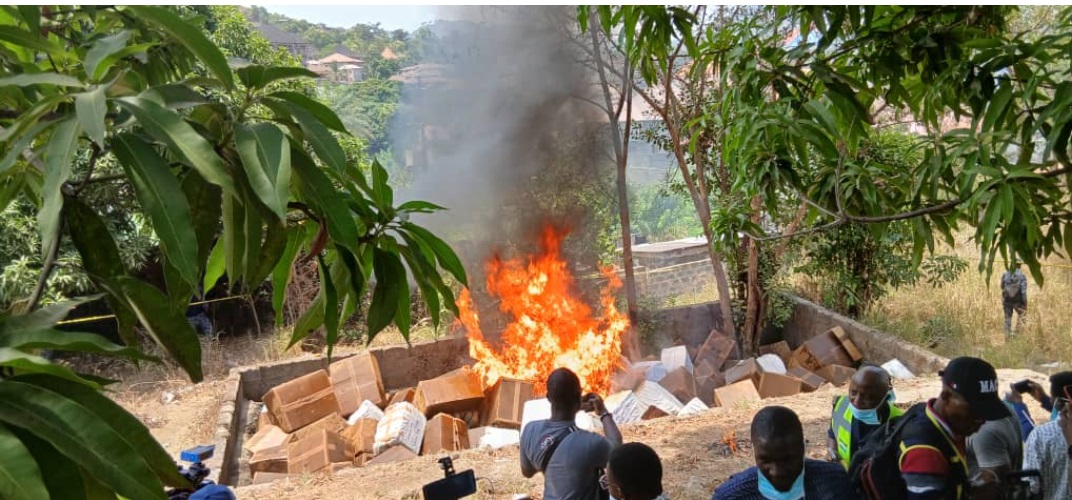
The Sierra Leone Ports and Harbours Authority in collaboration with key national security agencies has destroyed a large consignment of contraband drugs valued at over 2.5 million dollars, marking a significant step in the fight against illicit trafficking.


The operation involved the Office of National Security, the National Drug Law Enforcement Agency, the Sierra Leone Police, and the Transnational Organized Crime Unit. The destruction exercise took place on Wednesday 29 April 2026 at the TOCU headquarters in Hastings.
Andrew Jaya Kaikai confirmed that the destroyed drugs included four containers and 461 cartons of tramadol intercepted earlier this year at the country’s main seaport. He explained that the shipment was seized by SLPHA in March and later handed over to TOCU for secure custody, investigation, and final disposal.
He noted that the operation was driven by coordinated intelligence efforts among the agencies, targeting drug trafficking networks that attempt to exploit Sierra Leone’s port facilities. According to him, the successful interception reflects growing efficiency in joint operations against illicit trade.
CSP M J K Laggah stated that the seizure and destruction demonstrate improved intelligence sharing and coordination among state institutions. He added that all procedures followed legal requirements and were carried out with authorization from the judiciary.
Sahr Moseray described the March seizure as one of the largest recent interceptions of tramadol, highlighting intensified efforts to dismantle transnational drug networks. He reiterated that tramadol remains banned in Sierra Leone except for strictly controlled medical use and warned that unauthorized possession is a criminal offense.
Aruna Kargbo commended the leadership of TOCU, ONS, and the police, pointing to improved working conditions and operational standards. He also praised the safety measures observed during the destruction process and called on citizens to support national efforts to combat drug abuse, emphasizing the importance of collective responsibility.