

By Albert David
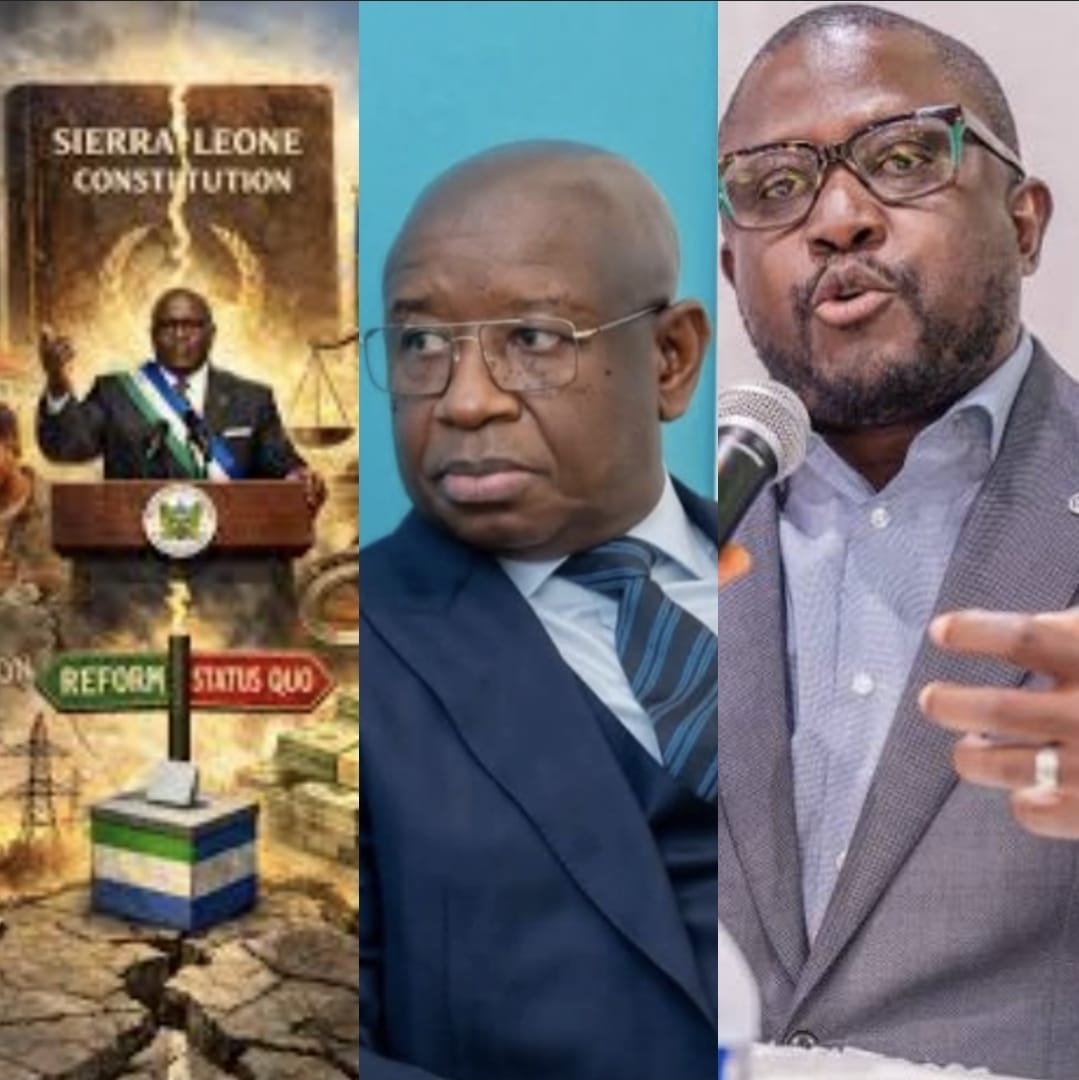
Constitutions are not mere documents. They are the moral contracts that bind a nation together, restrain the ambitions of leaders, and protect citizens from the excesses of power. When a government begins to tamper with that contract for partisan advantage, it is not simply engaging in politics, it is undermining the very foundation of democratic life.


Across Sierra Leone, many citizens, civil society actors, and democratic observers have raised deep concerns about the direction of recent constitutional amendment efforts under the current administration. Their worry is not rooted in partisanship, but in principle: the fear that the nation is being steered toward a model of governance where power is concentrated, accountability is weakened, and dissent is treated as a threat rather than a democratic right.
When constitutional reforms appear designed to expand executive authority, weaken institutional independence, or tilt the political playing field, the consequences are profound. (a) Shielding political power from accountability erodes public trust and invites abuse.(b) Influencing or weakening the independence of electoral bodies undermines the legitimacy of elections, the heartbeat of democracy. (c) Expanding the reach of security institutions for political purposes risks turning protectors of the state into instruments of intimidation.(d) Centralizing authority in the presidency creates conditions where checks and balances become symbolic rather than substantive.(e) Suppressing opposition, civic voices, and dissent transforms democratic disagreement into political danger.
These are not abstract concerns. They strike at the core of constitutionalism, the idea that no leader, no party, and no institution is above the law.
A constitution should never be rewritten to serve the interests of those currently in power. When amendments appear to: entrench partisan advantage, weaken democratic safeguards, or silence critical voices. The nation enters a dangerous zone where governance becomes less about service and more about control. Such actions are widely viewed by democratic scholars as unethical, destabilizing, and corrosive to national cohesion. They create a climate of fear, suspicion, and civic frustration. They betray the trust citizens’ place in their leaders to protect, not manipulate the constitutional order.
Democracy is not only about elections. It is about transparency, accountability, freedom of expression, and the protection of minority voices. When these principles are compromised, the damage is not only political, it is societal. Citizens lose faith in institutions. Youth lose faith in the future. The nation loses its moral compass. A constitution manipulated for partisan gain becomes a weapon, not a shield. It becomes a tool of oppression rather than a framework for justice.
Sierra Leone has endured too much history, conflict, instability, and division to allow constitutional betrayal to become normalized. The nation deserves reforms that strengthen democracy, not weaken it. It deserves leaders who see power as a responsibility, not a possession.
True constitutional reform must be inclusive, transparent, consultative, non-partisan, and grounded in the long-term interests of the nation, not the short-term interests of a political party. Anything less is a disservice to the people and a distortion of democratic values.
The way out of this troubling moment is not silence. It is civic vigilance. It is principled engagement. It is the insistence that constitutional change must reflect the will of the people, not the ambitions of the powerful.
Sierra Leone’s democracy is strongest when its citizens speak, when its institutions stand firm, and when its leaders remember that power is temporary but the constitution is sacred.
History will judge this moment. The question is whether it will be remembered as a turning point toward democratic decay, or a moment when citizens stood up, demanded integrity, and defended the soul of their nation.