

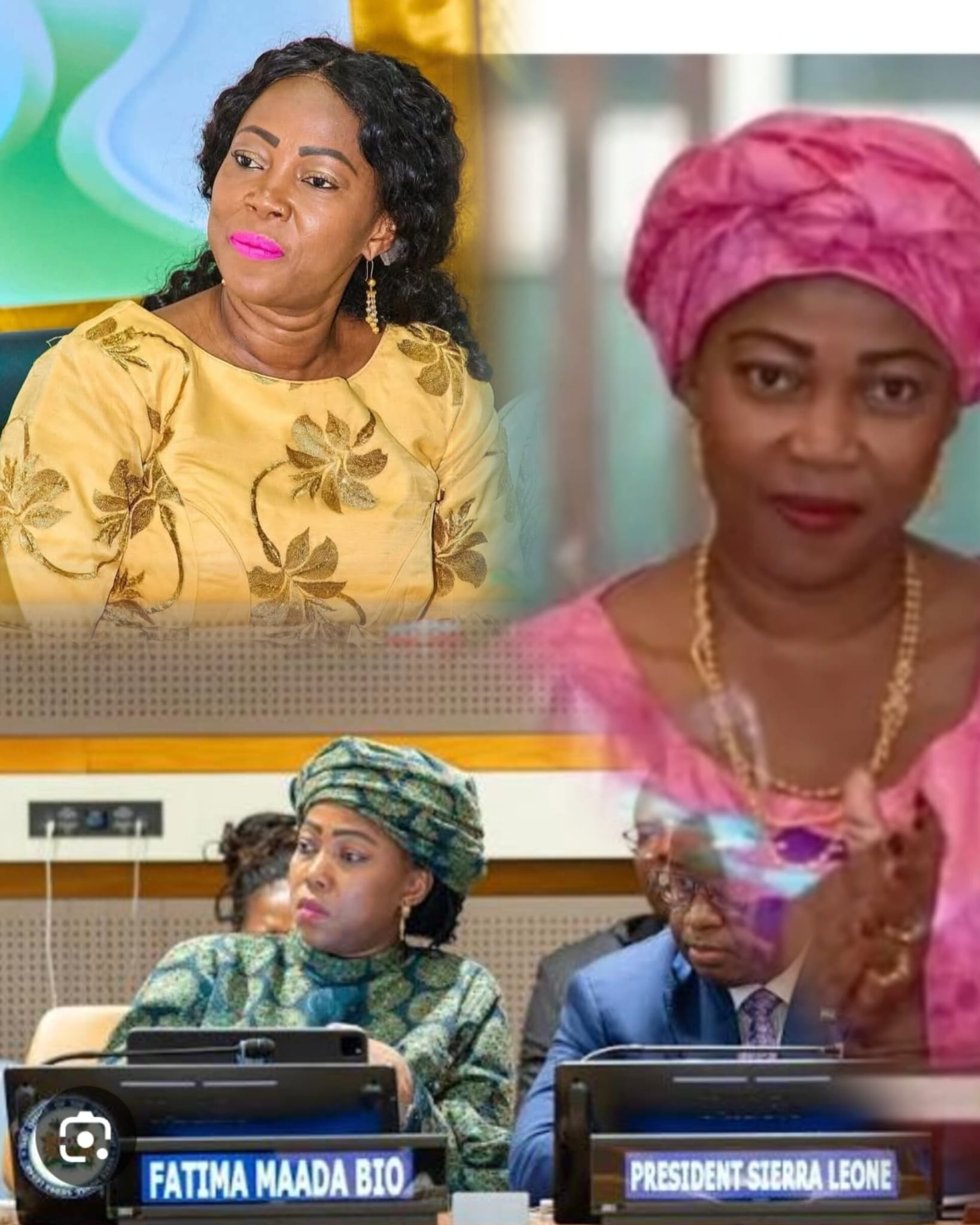
By Albert David
Sierra Leone is entering one of the most defining, and dangerous moments of its democratic journey. Beneath the noise of political rumors, public speculation, and strategic distractions lies a deeper, more troubling reality: the systematic erosion of transparency, constitutional discipline, and ethical governance.


The debate surrounding the rumored presidential ambition of First Lady Fatima Bio is not merely about whether she intends to run. It is a symptom of a much larger national crisis, one rooted in institutional fragility, political manipulation, and the steady normalization of undemocratic behavior. This article does not attack personalities. It interrogates systems, ethics, constitutional order, and the moral responsibilities of leadership in a democracy that is increasingly under strain.
In a healthy democracy, political intentions are communicated transparently. In Sierra Leone, they are whispered, speculated, and weaponized. The fact that the nation is debating whether the First Lady harbors presidential ambitions reveals a vacuum of transparency, a culture of political secrecy, a failure of leadership to communicate openly, and a public forced to rely on rumors instead of facts. This is not normal. This is not democratic, and this is not ethical governance. A democracy where citizens must guess the intentions of those in power is a democracy already drifting toward manipulation.
Even the mere perception of a First Lady positioning herself for presidential power raises profound ethical concerns. Not because she is a woman. Not because she is a spouse. But because public office is not a family inheritance. When political power becomes entangled with personal relationships, a nation risks dynastic politics, institutional capture, abuse of incumbency, manipulation of public resources, and erosion of democratic norms. Ethics demand that public office be exercised with humility, restraint, and respect for constitutional boundaries, not leveraged for personal or familial political advancement.
Legally, the 1991 Constitution sets clear criteria for presidential eligibility. It does not prohibit a First Lady from contesting. But legality is only the minimum standard.
Democracy demands far more: Legitimacy, Public trust, Ethical conduct, Transparency, and Respect for institutional independence. A candidate may be legally qualified yet democratically inappropriate. A leader may meet constitutional requirements yet violate the spirit of ethical governance. The Constitution is not a loophole to be exploited. It is a moral contract between the state and its citizens.
Many citizens believe the rumored ambition is a deliberate distraction, an emotional smoke screen designed to shift attention from governance failures, overshadow economic hardship, divert scrutiny from unresolved electoral controversies, fragment public focus, and test national reaction without accountability. If true, this would represent a deeply unethical use of public psychology, a manipulation of national attention for political convenience. A government that governs through distraction is a government that fears transparency.
The greatest betrayal in leadership is not corruption. It is the abuse of public trust. When leaders withhold information, manipulate narratives, exploit public institutions, silence civic concerns, and normalize secrecy. They commit a civic offense far more destructive than financial misconduct. They undermine national unity, electoral legitimacy, enstitutional credibility, and public confidence in the state. Once trust collapses, democracy becomes a hollow performance.
The fear of dynastic politics is not irrational. It is a rational response to weak institutions, concentrated power, lack of transparency, political impunity, and historical patterns of manipulation. A democracy cannot function when citizens believe leadership is being recycled within a household rather than earned through merit, competence, and public confidence. Leadership is not a family project. It is a national responsibility.
The debate surrounding Fatima Bio’s rumored ambition is not about her. It is about us, the nation, the institutions, the civic culture. Sierra Leone must confront the following truths: 1. Transparency is not optional. Citizens deserve clarity, not confusion. 2. Institutions must be stronger than individuals. When personalities dominate, democracy suffocates. 3. Ethical leadership is non-negotiable. Power without ethics becomes oppression. 4. Public trust is the foundation of national stability. Once broken, it is difficult to restore. 5. Democracy requires vigilance. Silence is not peace. Silence is surrender.
Sierra Leone is standing at a moral and constitutional crossroads. The question is not whether the First Lady wants to run. The question is whether the nation will allow secrecy, manipulation, and institutional abuse to define its political future. A democracy cannot survive on deception. It cannot survive on distractions.
It cannot survive on the personalization of power. It survives on truth, transparency, ethical leadership, constitutional discipline, and the courage of citizens to demand better.
Sierra Leone deserves leaders chosen through integrity, not influence. Through competence, not proximity. Through public trust, not political theatrics. The nation must decide whether it will continue down a path of manipulation and secrecy, or reclaim the democratic values that protect its future