

By Sheriff Mahmud Ismail
On the humid Atlantic edge of Accra, where the Gulf of Guinea exhales history into the present, Africa once again gathered to wrestle with its oldest and most unsettling question: whether unity on this vast and varied continent is a destiny deferred or a promise within reach. The African Summit, held in Ghana under the resonant theme “Building a New United Africa,” arrived as a timely intervention in a world that is rapidly reorganising power, markets and influence—often without Africa at the table, and sometimes at its expense.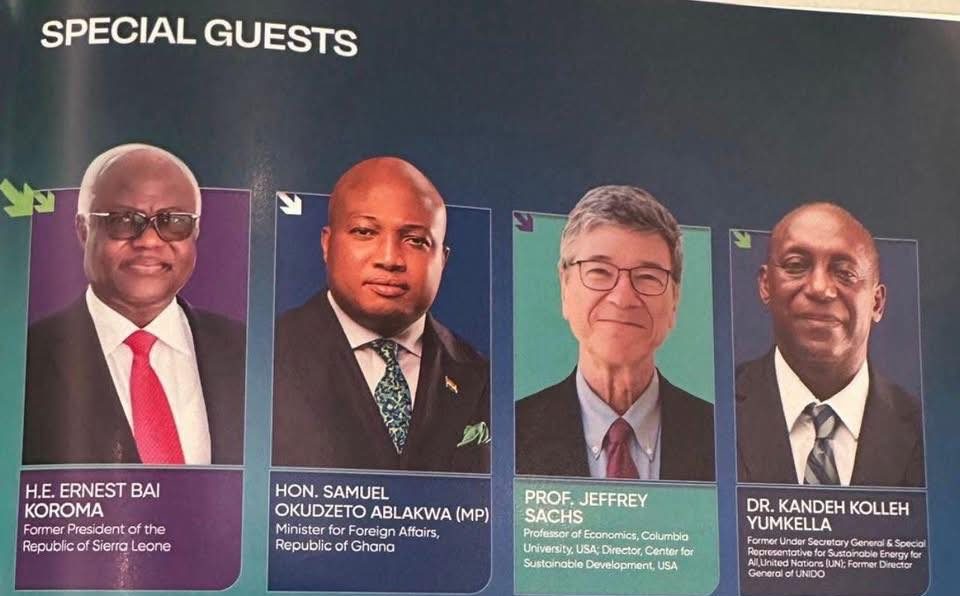
That the summit convened in Ghana was no coincidence, it was symbolism with intent. This is the soil where Kwame Nkrumah, standing at independence in 1957, declared that Ghana’s freedom was meaningless unless it was bound to the total liberation and unity of Africa. Accra, more than any other African capital, is the continent’s political memory bank, a place where Pan-Africanism ceased to be an abstraction and became a programme. To return here in 2025, amid global fragmentation and African uncertainty, was to summon history as a rebuke.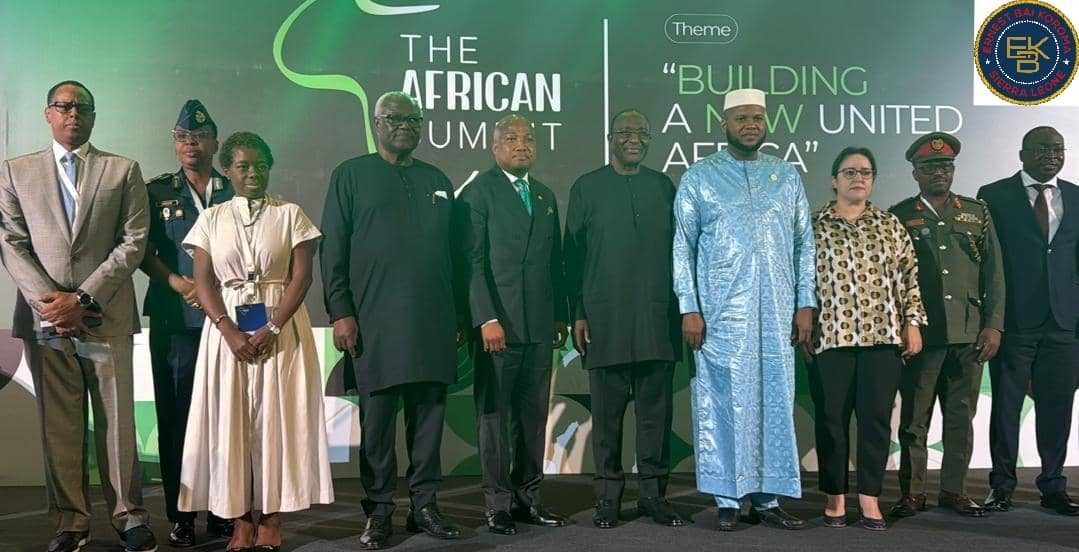


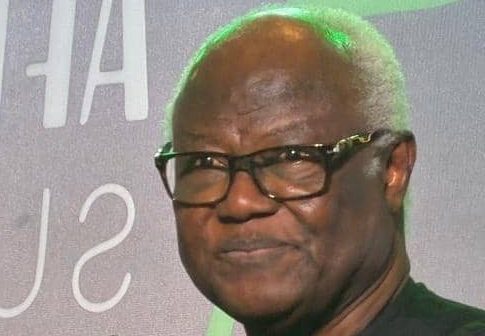
The keynote address by former Sierra Leonean President Ernest Bai Koroma framed the moment with disarming clarity and urgency. His central contention was stark: the world already knows how it prefers to deal with Africa, and it is not on Africa’s current terms. Global powers convene Japan–Africa, China–Africa, EU–Africa, and US–Africa summits not out of sentimental Pan-African conviction, but because it is administratively and strategically easier to engage a continent as one bloc than as more than fifty fragmented, and often competing, states. Africa, by contrast, continues to negotiate with itself in pieces, forfeiting leverage before discussions even begin.
As President Koroma put, this paradox, being treated as one from the outside while remaining divided within, sat at the heart of the summit’s deliberations. “It exposes an uncomfortable truth: disunity is no longer merely an African weakness; it is a global liability” in an era defined by scale. “Markets are continental, technology ecosystems are transnational, and geopolitical influence increasingly belongs to those who can mobilise population size, resources and political coherence. On these terms, Africa’s fragmentation is not just inefficient, it is self-sabotaging, the statesman added.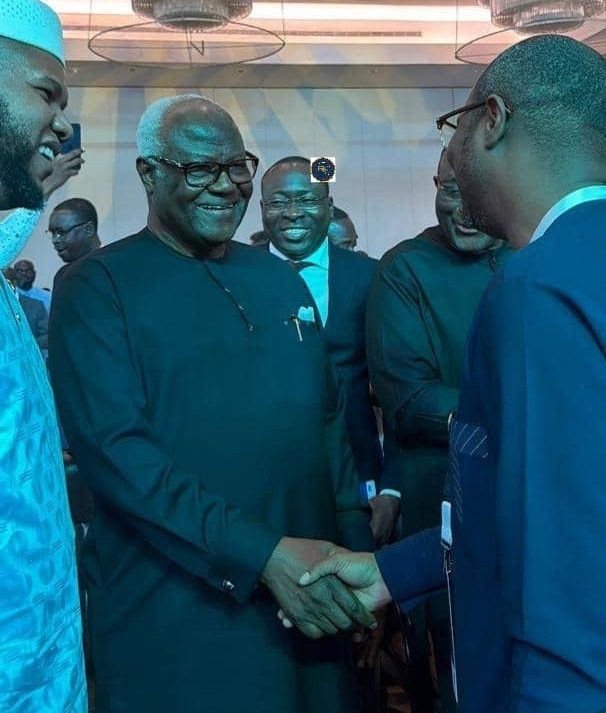
Yet the argument for unity has never been uncontested, and the summit did not pretend otherwise. Skeptics point to Africa’s extraordinary diversity—thousands of ethnic groups, languages, religions and historical experiences—as evidence that political federation is unrealistic, if not dangerous. Others warn that stronger economies may resist surrendering sovereignty or subsidising weaker neighbours. Still others cite fragile institutions, recurrent conflict, democratic backsliding and uneven governance as proof that continental ambition exceeds present capacity. These are not frivolous objections; they are the hard edges of reality.
But as President Koroma reminded his audience, these were precisely the doubts once levelled against Europe, a continent that had just emerged from centuries of internecine war when it chose integration over perpetual rivalry. Diversity did not prevent cooperation there; it demanded better systems to manage it. The lesson is not that Africa should copy Europe wholesale, but that fear of complexity is a poor substitute for political courage.
The costs of non-unity are already visible in the most mundane details of African life. It remains, as the keynote observed, often cheaper and easier to fly from an African capital to Europe than to a neighbouring African country. Goods can move faster from Asia to West Africa than from one West African port to another. Railways and roads still mirror colonial extraction routes rather than continental integration. These are not mere inconveniences; they are structural barriers to growth, trade and solidarity. Transport, President Koroma argued, “is not simply infrastructure, it is the bloodstream of unity. Without it, integration remains theoretical.’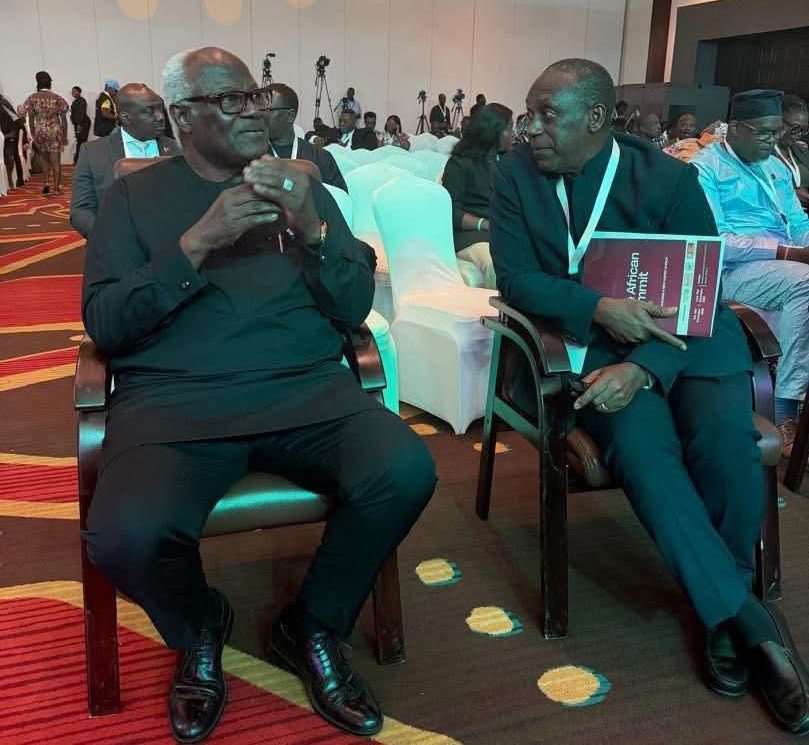
Against this backdrop, the summit’s emphasis on moving “from dialogue to implementation” carried particular weight. The agenda ranged from the African Continental Free Trade Area (AfCFTA) to proposals for common institutions—a central bank, a parliament, a court of justice, and coordinated security architecture—long discussed, rarely realised. AfCFTA, headquartered in Accra, emerged as the most tangible proof that unity need not remain rhetorical. Operational since 2021, it represents the largest single market in the world by number of countries, and a deliberate shift from political aspiration to economic logic.
Still, economics alone cannot sustain a continental project. What gave President Koroma’s intervention the compelling moral force was the way he braided Africa’s future to its past. He invoked the founding generation—Nkrumah, Nyerere, Sekou Touré, Haile Selassie—much more than marble icons, but as restless spirits whose work remains unfinished. Their dream of a united Africa, he suggested, was never naïve; it was prophetic. In African tradition, a “myth” is not a lie but a compass, a story that gives direction. To abandon it is not realism, but amnesia.
Koroma’s own reflections lent credibility to this appeal. Drawing from Sierra Leone’s post-conflict recovery, he argued that unity, whether national or continental, is not achieved by declarations but by confronting divisions rather than avoiding them. Peace was built, he recalled, not by pretending differences did not exist, but by addressing them deliberately and institutionally. The same principle, he contended, must apply to Africa: unity will not emerge from comfort, but from the disciplined willingness to tackle governance failures, rights abuses and leadership deficits head-on.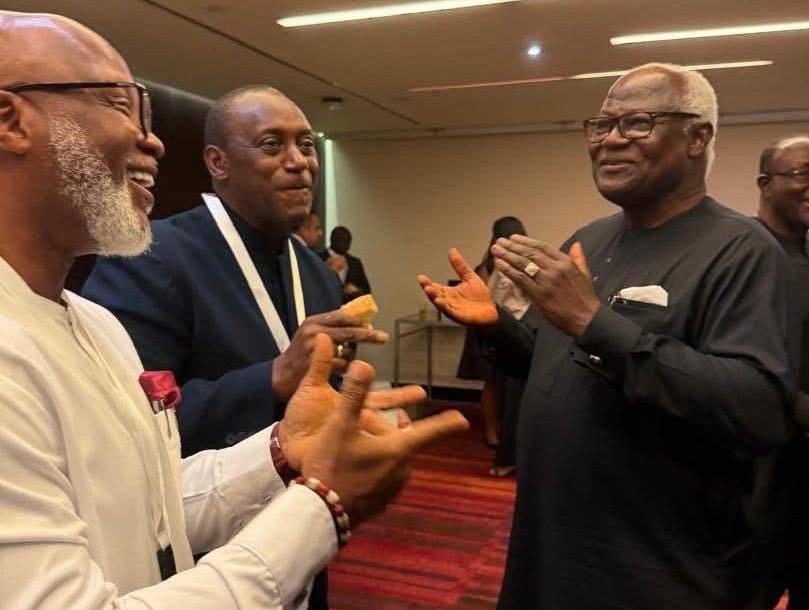
Perhaps the most compelling argument advanced at the summit was demographic. Africa is not merely resource-rich; it is time-rich. With a median age under twenty, the continent is regenerating while much of the world ages. Genetic diversity, youthful populations and vast uncultivated land make Africa should cast Africa more than a participant in the future global order, as a potential architect of it. Yet without unity, these advantages risk becoming burdens—youth without opportunity, resources without value addition, diversity without cohesion.
In the end, the Accra summit was less about resolving the unity question than about reframing it. President Koroma was pointed: “The issue is no longer whether Africa can afford to unite, but whether it can afford not to,” he said adding that “Fragmentation has delivered poverty amid abundance, weak bargaining power in global affairs, and stalled transformation at home. Unity, for all its difficulties, offers scale, voice and dignity.”
There was something fitting, almost inevitable, about concluding this debate where it began. Nkrumah once warned that Africa must face neither East nor West, but forward. Nearly seven decades later, Accra again asked Africa to look ahead,to choose courage over caution, integration over isolation, and action over perpetual postponement.
History, as President Koroma reminded his audience, does not reward hesitation. It rewards leadership. Whether this generation will answer that summons remains the defining question of Africa’s century.