

By Hassan Osman Kargbo
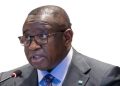
An aspirant for the flagbearer position of the All People’s Congress, Ady Macauley, has openly challenged the government’s record on fuel pricing and overall economic management, arguing that official narratives do not reflect the lived realities of ordinary citizens.


Macauley’s remarks come against the backdrop of comments by President Julius Maada Bio, who described 2026 as a year of decisive action for national development. However, the APC flagbearer aspirant said that government policies and outcomes point in a very different direction, marked by growing hardship rather than progress.
According to Macauley, many Sierra Leoneans are struggling to cope with the rising cost of living, with fuel prices and transportation fares placing increased pressure on household incomes. He argued that these challenges contradict government claims of economic improvement and effective governance.
“What people experience every day does not match what they hear in official statements,” Macauley said, adding that economic indicators should be measured by the wellbeing of citizens rather than by government pronouncements.
Fuel pricing featured prominently in his critique. Macauley maintained that the cost of fuel has had a ripple effect across the economy, driving up transportation costs and the prices of basic goods. He suggested that these increases have disproportionately affected low income earners and small businesses, deepening economic inequality.
While addressing the issue, Macauley urged the public to follow the full broadcast in which he elaborated on his arguments, stressing that the complexity of the fuel pricing structure and its broader economic impact cannot be adequately explained through brief summaries or soundbites.
He further accused the ruling Sierra Leone People’s Party of failing to implement policies that offer meaningful relief to citizens, despite repeated assurances of reform and economic recovery. In his view, the gap between policy announcements and practical outcomes continues to widen.
“With the present SLPP government, 2026 is shaping up to be a year of decisive suffering,” Macauley stated while discussing the state of the economy and governance.
His comments have resonated with some opposition supporters who argue that daily economic pressures have intensified in recent years. They point to transportation fares, food prices, and energy costs as indicators of the strain faced by ordinary people across the country.
Government officials have previously defended their economic policies, citing global economic pressures and external shocks as contributing factors to rising costs. They have also highlighted investments in infrastructure, human capital development, and social services as evidence of progress.
Nevertheless, Macauley’s remarks add to ongoing national debate over economic direction and accountability as political actors position themselves ahead of future electoral contests. As discussions continue, fuel pricing and cost of living concerns remain central issues shaping public discourse in Sierra Leone, with citizens closely watching how competing political narratives translate into tangible change.