

By Albert David
In any constitutional democracy, the legitimacy of public institutions rests not on personalities, political loyalties, or partisan enthusiasm, but on the disciplined observance of due processSierra Leone’s Constitution is unambiguous on this point. Section 32(3) clearly establishes that the appointment of the Chief Electoral Commissioner is not complete until Parliament has exercised its constitutional authority to approve or reject the nominee.


This is not a ceremonial step. It is a substantive safeguard designed to protect the independence of the Electoral Commission and to ensure that no single branch of government, and certainly no political party can unilaterally determine the leadership of an institution so central to democratic stability. Against this backdrop, the wave of congratulatory messages issued before parliamentary approval is not merely premature, it is constitutionally careless. It projects an unfortunate and dangerous message: that the outcome is predetermined, that Parliament’s role is perfunctory, and that constitutional checks are optional formalities rather than binding obligations. In a political climate where public trust in the Electoral Commission is already fragile, such signals deepen suspicion and erode confidence in the integrity of future elections.
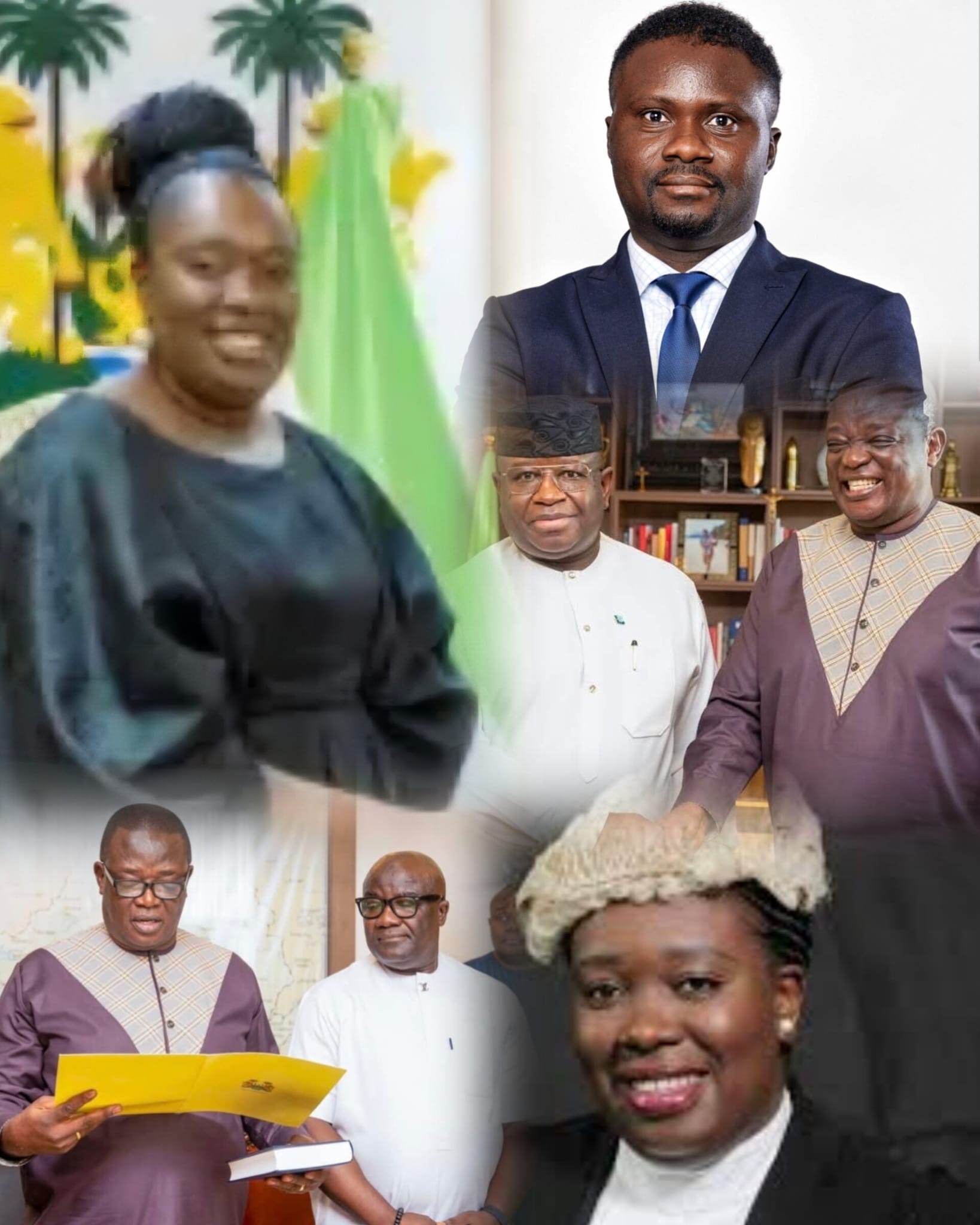
The most troubling of these premature endorsements is the congratulatory letter issued by the President of the Sierra Leone Bar Association (SLBA). The concern is not simply the timing of the message, but the ethical posture it represents. When the head of a professional legal body, who has publicly identified herself as a card‑holding member of the ruling political party, issues a congratulatory statement before the constitutionally required approval process is complete, the optics are unmistakable. It blurs the line between professional independence and partisan alignment. It raises legitimate questions about institutional capture. And it undermines the Bar Association’s credibility as a guardian of constitutionalism and the rule of law.
Legal institutions derive their authority not from political proximity but from principled distance. Their legitimacy depends on their ability to speak truth to power, not echo it. When a Bar Association appears more eager to celebrate executive action than to defend constitutional procedure, it risks forfeiting the moral authority that the legal profession is expected to embody.
The Sierra Leone Lawyers’ Society, in its own public statement, demonstrated the ethical clarity and constitutional discipline expected of a legal body. It raised substantive concerns about the legality, timing, and democratic implications of the appointment. It reminded the nation that democracy cannot be built on shortcuts. It insisted that stakeholder engagement and transparency are not optional virtues but constitutional necessities.
This contrast is stark. Two legal institutions, confronted with the same constitutional moment, responded in fundamentally different ways: one with caution, fidelity to the law, and principled critique, the other with haste, political enthusiasm, and disregard for constitutional sequence. The difference speaks volumes about institutional culture, ethical grounding, and the courage, or lack thereof, to uphold constitutional norms even when doing so is politically inconvenient.
The debate surrounding this appointment is not about personalities. It is not about Edmond Alpha. It is not about political parties. It is about the integrity of constitutional governance. A democracy cannot function when constitutional requirements are treated as optional. It cannot thrive when legal institutions appear politically compromised. And it cannot command public trust when the very bodies tasked with defending the rule of law seem more aligned with political actors than with constitutional principles. The Bar Association has a responsibility, a solemn one, to uphold the Constitution above all else. Not above some things. Above all things. Its duty is to the law, not to the executive. To the public, not to political networks. To democratic integrity, not to partisan convenience.
This moment demands introspection from the Bar Association. It must ask itself: What message does it send when it celebrates an appointment before the constitutional process is complete?, What precedent does it set when its leadership’s political affiliations overshadow its professional independence?, What becomes of public trust when legal institutions appear to validate executive overreach?
These are not abstract questions. They go to the heart of democratic accountability. If the Bar Association is to reclaim its standing as a neutral, principled, and constitutionally grounded institution, it must recommit itself to the ethical standards that define the legal profession. It must demonstrate through action, not rhetoric, that it stands above partisan influence.
The Constitution is not a suggestion. It is the supreme law of the land. And its authority must not be diluted by political enthusiasm or institutional complacency.
Premature congratulations may seem harmless, but in a fragile democracy, symbolism matters. Process matters. Legality matters. And the independence of legal institutions matters most of all.
Sierra Leone deserves a Bar Association that embodies these principles, not one that compromises them.