
DAKAR
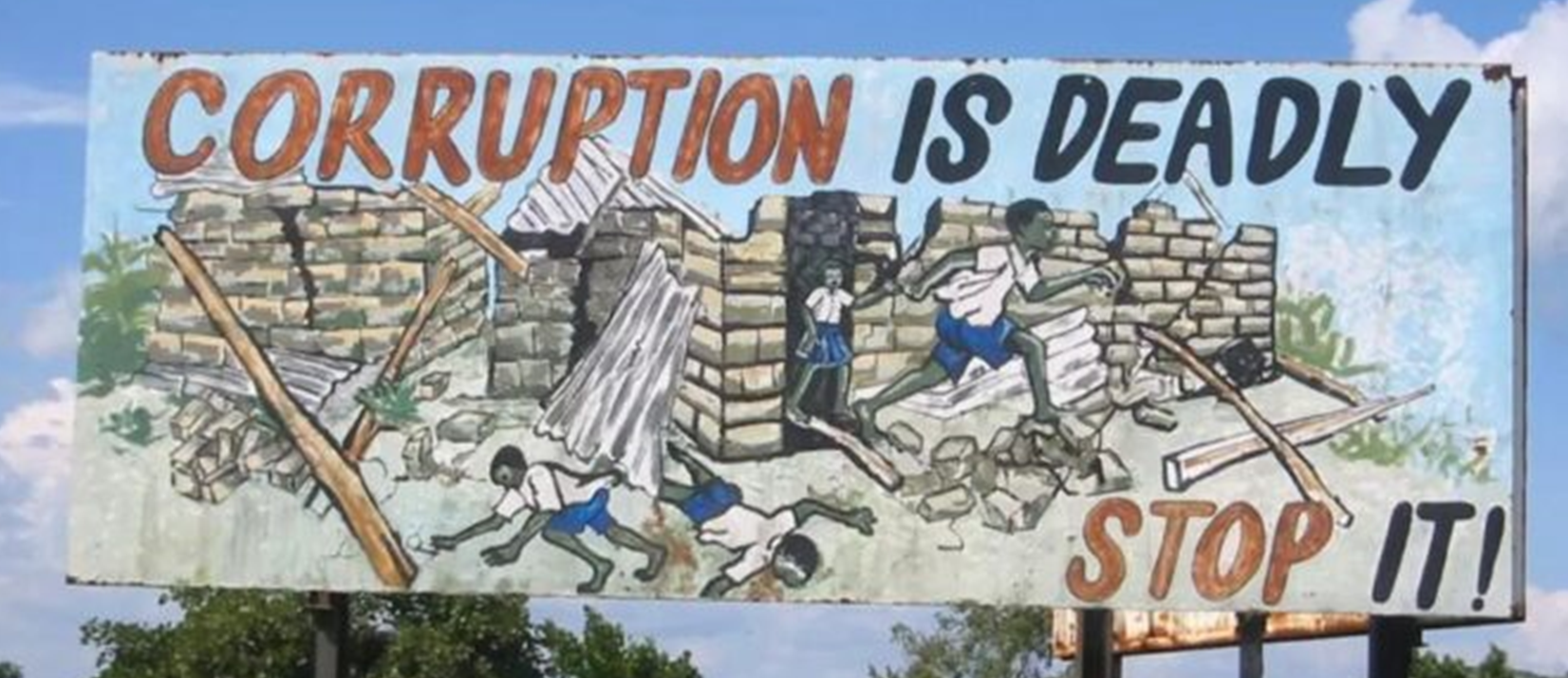
Poor public services in many West African countries, with already dire human development indicators, are under constant pressure from pervasive corruption. Observers say graft is corroding proper governance and causing growing numbers of people to sink into poverty. “If you want to put a human face to corruption… then see how we have kids who walk miles to school because there are no public transport systems,” said Harold Aidoo, the executive director of the Institute for Research and Democratic Development in Monrovia, the Liberian capital.
“You see women and mothers who give birth and die because there are no basic drugs or equipment at the hospitals, and no qualified or trained health professionals. You realize that many of our impoverished populations do not have access to clean drinking water,” he said. More West African countries were perceived to be highly corrupt in 2013 than the previous year due to the effects of political instability in countries such as Mali, Guinea and Guinea-Bissau, according to the corruption index compiled by the global watchdog, Transparency International Bribery, rigged elections, shady contract deals with multinational businesses operating in the natural resources sector, and illicit cash transfers out of countries are some of the more common forms of graft. In sub-Saharan Africa, 90 percent of countries are seen to be corrupt, the watchdog said.


“There is no doubt that corruption affects pure and sustainable development in West Africa, and there is no doubt that it most often affects the poorest and weakest portions of society”
The region accounts for 11 percent of the world’s population, but carries 24 percent of the global disease burden. It also bears a heavy burden of HIV/AIDS, tuberculosis and malaria but lacks the resources to provide even basic health services, according to the International Finance Corporation.
Almost half of the world’s deaths of children under five years old occur in Africa, which also has the highest maternal mortality rate, the organization says. Parents sometimes have to pay bribes to get their children admitted to good schools, said Pierre Lapaque, the UN Office on Drug and Crime (UNODC) representative for West and Central Africa. “There is no doubt that corruption affects pure and sustainable development in West Africa, and there is no doubt that it most often affects the poorest and weakest portions of society.”
Illicit cash flight
As much as US$1.3 trillion has been illegally transferred out of Africa in the past three decades, said a report by Global Financial Integrity (GFI), a Washington-based advocacy group monitoring illicit financial flows. Nigeria’s oil industry has been plagued by graft allegations that gave rise to complaints of neglect and a rebellion by people in the oil-producing southern regions. A draft report released in May 2013 by Liberia’s Extractive Industries Transparency Initiative noted that nearly all resource contracts signed since 2009 had violated regulations.
“Economically speaking, when millions of dollars are filtered out every year by corruption, this is very corrosive in terms of its impact on society,” Aidoo said. “It is very corrosive in how it undermines growth and development and the well-being of our population.” Corrupt politics Many political campaigns in Africa are fraught with allegations of irregularities and malpractice. “Not only are elections prone to corruption in the form of vote-rigging and fraud-monitoring, but by the way in which our political elites become entrenched in power,” said Tendai Murisa, director of TrustAfrica’s Agriculture Advocacy and Financial Flows programme.
“Corruption creates a way to perpetuate the regime, and one of the ways they perpetuate the regime is to buy votes, so that really affects the quality of democracy,” said Murisa, noting that a government deemed corrupt inspires little trust in the people, whose voices are often silenced or ignored when they speak out against graft. Because the poor rely more on public services, they spend the largest percentage of their income on bribes to officials and even school administrators, so corruption pushes the most vulnerable further into poverty.
In Sierra Leone, 69 percent of people think the police are corrupt, and in Nigeria the figure rises to 78 percent, said UNODC’s Lapaque.
Floundering anti-graft war
Despite efforts to increase transparency and accountability throughout the continent, the war against graft in sub-Saharan Africa has been on the decline over the last decade, according to the World Bank’s 2013 World Governance Indicators. With the exception of South Africa and Botswana, sub-Saharan Africa scored in the lowest percentile for the control of corruption worldwide. “If a country’s [public] service is staffed by civil servants based in nepotism or bribery, rather than merit and competence, it creates significant problems,” Lapaque said. “Not only are fewer job opportunities made available to those who deserve them, but the rule of law is undermined and economic growth is stifled.”
Weak governance often undermines security services, which can lead to an increase in local and transnational organized crime, including arms and drug trafficking. It can also undermine human rights. “It’s really very often a failure of our government to be efficient gatekeepers of our resources, and of them allowing leakages within and out of our economies,” Murisa said.
Strategies
To fight corruption, governments first need to recognize that it is a real problem. “They need to ensure that national structures in charge of fighting corruption are well resourced, and staff have the capacity to do their work in an independent way, without political interference,” said Marie-Ange Kalenga, Transparency International’s West Africa regional coordinator. “They also need to ensure there is an appropriate legal framework, in line with the regional and the international instruments on anti-corruption, and to educate ordinary citizens and promote integrity at the individual level,” she said.
Lapaque said this could mean creating an independent anti-corruption entity, or giving political independence to judges and prosecutors. Civil society groups and NGOs can help in developing codes of conduct, promoting integrity, and advocating the adoption of appropriate legislation, as well as the training of anti-corruption agencies, added Kalenga.
Empowering citizens to denounce corruption and to seek redress if they are victims of corruption could also help, as could making budgets more transparent and including people in the participation of public spending, Lapaque suggested. “Transparency is an important factor in building democratic governments that are accountable to their people,” said Tom Cardamone, GFI’s managing director. “I think that’s what we need to do to stem the flow of illicit money and stop this corruption.” Murisa said, “If we just got back 50 percent of what we are currently losing to corruption, it could mean things like advancements in education or better road systems. We could make sure our children are back at school, we could make sure we are maintaining social welfare systems, and we could make sure our healthcare delivery systems are working properly.” jl/ob/he
This article was produced by IRIN News while it was part of the United Nations Office for the Coordination of Humanitarian Affairs. Please send queries on copyright or liability to the UN. For more information: https://shop.un.org/rights-permissions