

By Forum staff writer
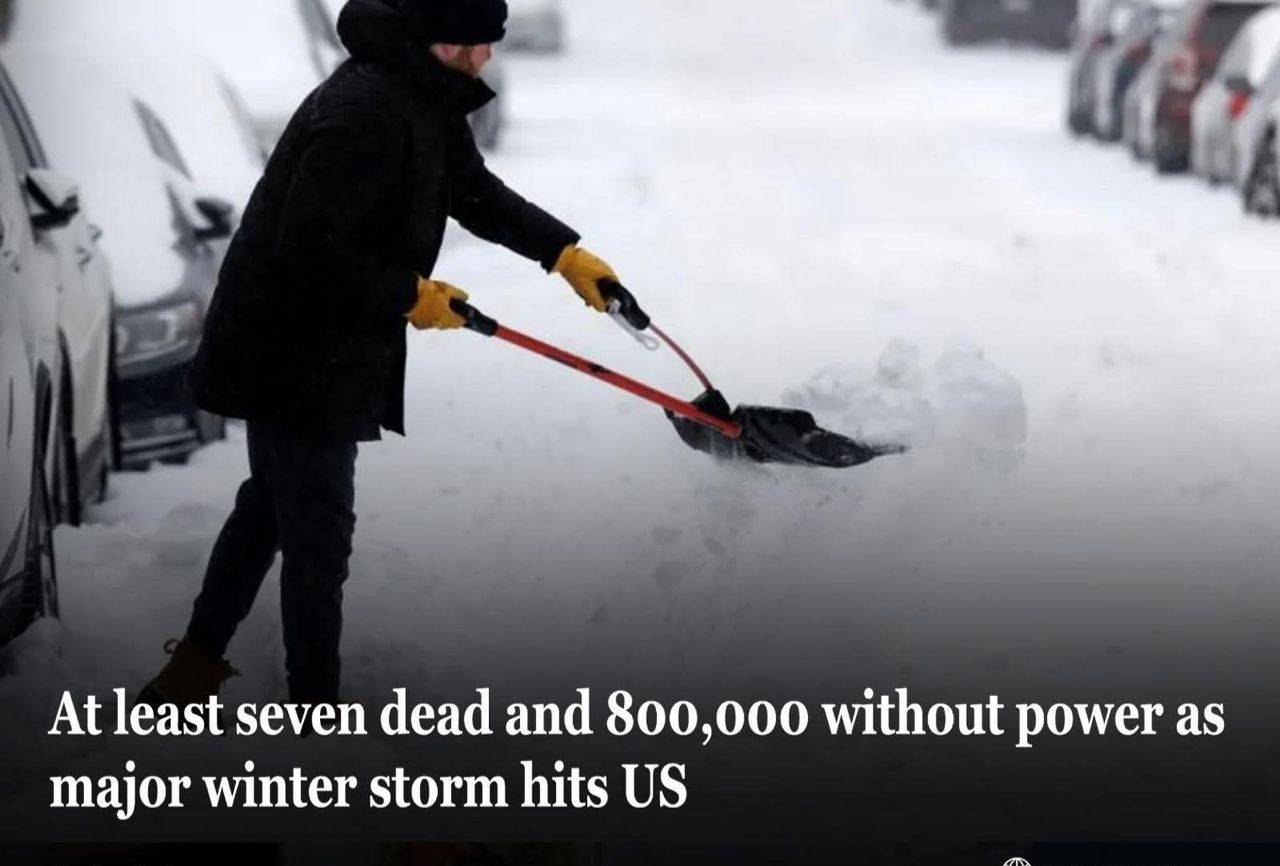
A powerful winter storm has swept across large parts of the United States, leaving at least seven people dead and plunging hundreds of thousands of homes into darkness as severe weather disrupted daily life across the country.
According to the National Weather Service, life threatening conditions stretched from Texas to New England, bringing heavy snow, ice, freezing rain, and dangerously low temperatures. The storm forced widespread closures of schools and roads, while thousands of flights were cancelled as travel became increasingly hazardous.


Authorities confirmed that at least two people died from hypothermia in Louisiana, where freezing temperatures are rare and many homes are not designed to withstand extreme cold. Additional deaths linked to the storm were reported in Texas, Tennessee, and Kansas, as officials warned residents to stay indoors and avoid unnecessary travel.
Power outages affected vast areas as ice and strong winds damaged power lines. By Sunday afternoon, more than 800,000 households across several states were without electricity, according to data from poweroutage.us. Utility companies said restoration efforts were ongoing but could be delayed due to unsafe weather conditions and blocked roads.
Air travel was heavily disrupted, with FlightAware reporting more than 11,000 cancelled flights nationwide. Major airports experienced delays and shutdowns as snow and ice made runways unsafe, stranding passengers and causing ripple effects throughout the national aviation system.
The National Weather Service issued multiple winter storm warnings and advisories, urging people to take precautions against frostbite and hypothermia. Officials advised residents to dress warmly, limit time outdoors, and check on elderly neighbors and vulnerable individuals.
Emergency services across affected states reported an increase in traffic accidents as icy roads made driving extremely dangerous. Several highways were temporarily closed, while snowplows and emergency crews worked around the clock to clear roads and assist stranded motorists.
State and local governments opened warming centers to provide shelter for those without heat, particularly the homeless and residents affected by prolonged power outages. In some areas, officials warned that the cold could strain water systems, increasing the risk of frozen and burst pipes.
Forecasters said the storm system was expected to move eastward, continuing to affect millions of people before gradually weakening. However, they cautioned that lingering ice and freezing temperatures could continue to pose risks even after snowfall subsides.
Authorities continue to monitor the situation and are urging the public to follow official guidance as recovery efforts remain underway.