
The Ministry of Planning and Economic Development (MoPED) and the Economic Community of West Africa States (ECOWAS) National Office in Freetown from 2nd -5th February 2026 ended District Level Sanitization Campaigns on ECOWAS at the District Council Halls in Kambia, Kabala and Kono and the Dr. Ernest Bai Koroma Hall in Magburaka Town respectively.
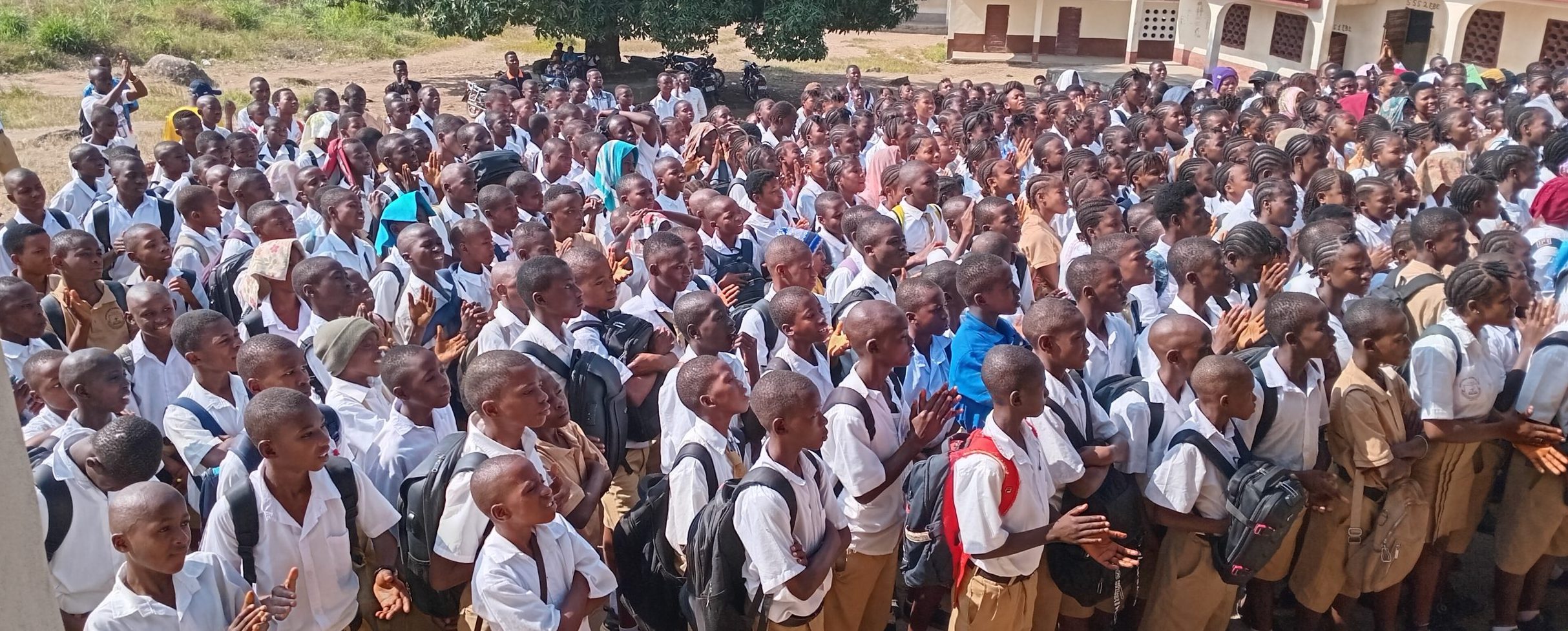
The delegation also sensitized pupils and teachers of the Kabala Secondary, Missionary Church of Africa, Ahmadiyya Muslim Secondary, Unique International Academy and the Apostle Bona Aladura Secondary Schools respectively.
Participants at the various events included Local Authorities, the security sector, pupils from various primary and secondary schools, teachers, civil society organizations, traders, commercial motorbike riders, Drivers’ Union and the physically challenged.


The objective of the campaign is to sensitize stakeholders about the activities and programs of ECOWAS in Sierra Leone and the sub-region.
The ECOWAS Ambassador in Sierra Leone, Mr. John Azuma revealed that the aim of the campaign is to ensure that the people know about the various activities of ECOWAS, commended President Julius Maada Bio, Chairman of the ECOWAS Heads of Governments, for the peace and stability in Sierra Leone that is not taken for granted reiterating that there can be no sustainable development without peace, unity and cooperation as well as political stability.
According to Mr. Azuma, the ECOWAS Vision 2050 places the people at the center of development in line with the African Union and United Nations Visions, disclosed that there are 97 Members of Parliament in the ECOWAS Parliament, urged the pupils to study hard and excel to get jobs in the various ECOWAS institutions reiterating that the pupils have a future in ECOWAS and underscored that unity is the only way out for the survival of citizens of ECOWAS countries.
The Minister of Planning and Economic Development, Madam Kenyeh Barley revealed that this is the Golden Jubilee of ECOWAS, a time to reflect on its original treaty and vision, that from the original 16 members its now has 12, underscored the need for Member Countries to work together to stop terrorism and noted that a new treaty was established in 1996.
She also stressed the need for people to know more about ECOWAS, the reason for the incessant visibility for the peace and prosperity of the people with the ultimate goal of sustainable development asserting that ECOWAS has created impact over the past 50 years.
She informed that the Government of Sierra Leone’s big five game changers include the creation of 5,000 jobs for the youths and human capital development.
The Minister furthered that ECOWAS is now more people centered in line with Sierra Leone’s Medium Term National Development Plan and the five big game changers and enablers intimating that President Bio has visited almost all the ECOWAS Member Countries including the Sahel States that have withdrawn from the Union to dialogue and bring them back onboard.
Madam Barlay disclosed that some of the priorities of President Bio as Chairman of ECOWAS are the restoration of constitutional order and deepening democracy, revitalizing regional security cooperation and informed about the ECOWAS Logistic Depot in Lungi that would be opened in June this year.
The Minister also catalogued some of the activities of ECOWAS like working to counter terrorism, that President Bio has injected more energy into ECOWAS, that there is need to review the treaty to address the lapses reiterating that ECOWAS in reposing itself for the people to embrace it, that Sierra Leone is to host the ECOWAS Conference in June this year for which an ECOWAS Village would be constructed to host the Heads of States, award of scholarships to brilliant girls, support to the Aberdeen Women’s Center for women suffering from fistula, provision of electricity supply to Sierra Leone through the West Africa Power Pool and the CLSG.
Madam Barley went on to disclose that other activities of ECOWAS in Sierra Leone are construction of the University of Science and Technology in Kono District, the Joint Border Post in Jendema, donation of seedlings to farmers affected by flooding in Tiama and Mattru Jong, provision of volunteers in critical areas in schools and health centers and that 25 more are expected soon.
Mr. Komba Momoh, Head of the ECOWAS National Office in Freetown and Dr. Robert Moikowa, Technical to the ECOWAS National Office made PowerPoint presentations during which they highlighted the various interventions of ECOMOG including the construction of a market in Wai Village in the Pujehun District to facilitate cross-border trade, provision of biometric identity cards, election observers, construction of a Sanitary Pad Factory in Kono District, provision of an Information System to the Sierra Leone Police and the rehabilitation of kush and drug victims at the Kissy Mental Home in Freetown among others.
Cyber security, forensic laboratory, support to the Small Arms Commission, donation of crutches and hearing aids to the physically challenged and people with disabilities, trade liberalization, a common currency and tariffs, establishment of TV and radio stations, one mobile network, deployment of peacekeepers in The Gambia and Guinea Bissau and donation of 20,000 dollars to Sierra Leone to combat the Monkey Pox are other support from ECOWAS to Sierra Leone.
Some of the challenges affecting ECOWAS are weak governance, political instability, inconsistent political will, insecurity, extremist groups, cross-border crime, limited capacity and low inter-regional trade.
Presentations were also made by Mr. Konneh of the ECOWAS Early Warning System and Mr. Jim Kosseh of the Ministry of Trade on the One Stop Registration to facilitate trade in the sub-region, establishment of the Small and Medium Enterprises Agency to give loans to businesses with minimum interest.
Some of the recommendations made by the people included cascading the sensitization meetings to chiefdom level while the question and answer session climaxed the well-attended events in all the districts as stakeholders pledged to disseminate the knowledge and information gained to others in their respective communities.