

By Hassan Osman Kargbo
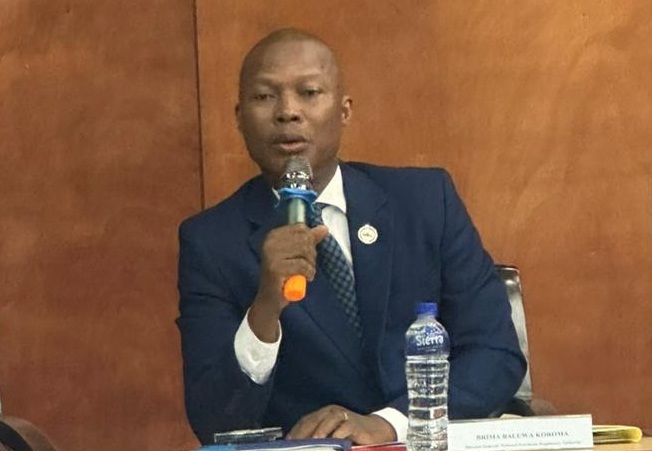
The Director General of the National Petroleum Regulatory Authority, Mr Baluwa Koroma, has explained that global economic shocks and supply disruptions are major factors behind fuel price adjustments in Sierra Leone.


Speaking during a press briefing organized by the ministry of Education and civic Education held at Maitta Conference in Freetown Mr. Koroma said the petroleum sector, though historically adaptable, was significantly affected by the COVID period when global economic activities slowed down and international movement was restricted. According to him, the pandemic disrupted production and supply chains worldwide, creating challenges that continue to influence petroleum markets.
He noted that during the height of the COVID crisis, and now the Iran USA war which is the global economy experienced a near shutdown as industries, transportation and trade activities shrank drastically. These disruptions affected the petroleum industry and created long term consequences that many countries are still dealing with today.
Mr. Koroma said that when the global economy reopened in 2021 and 2022, the petroleum market experienced sudden shocks that immediately affected supply and prices across the world. He emphasized that Sierra Leone, like many other countries that depend on imported petroleum products, was not spared from these developments.
Despite the challenges, Koroma maintained that Sierra Leone continues to maintain one of the lowest pump prices of petroleum products within the region. He said for the past three years the country has managed to keep fuel prices relatively low compared to neighboring states.
He explained that the country consumes about 1.5 million litres of petroleum products daily, covering both petrol and diesel. However, Sierra Leone does not produce petroleum products locally and therefore depends entirely on imports to meet national demand.
Koroma also pointed out that another major challenge facing the sector is product availability. According to him, petroleum supplies arriving in the country often last between seven and ten days before new shipments are required to replenish stock.
He said the Ministry of Trade and Industry and the regulatory authority continue to work together to ensure adequate supply while balancing the need to protect government revenue, sustain the petroleum industry and safeguard the interest of consumers.
Koroma further disclosed that the government is encouraging the expansion of fuel storage facilities to strengthen the country’s supply security. He said the country currently has storage capacity of about 26,000 metric tonnes but plans are underway to expand this capacity through new investments.
He added that authorities are also monitoring the re export of petroleum products to neighboring countries such as Guinea to ensure that domestic demand is first satisfied before any external supply is approved.
Koroma emphasized that Sierra Leone operates one of the most transparent petroleum pricing formulas in the region, noting that the system is publicly available and regularly reviewed to reflect international market conditions.
He called on the public to seek accurate information from the Ministry of Finance, the Ministry of Trade and Industry and the NPRA whenever issues relating to fuel pricing arise.