

By: Amara Kargbo
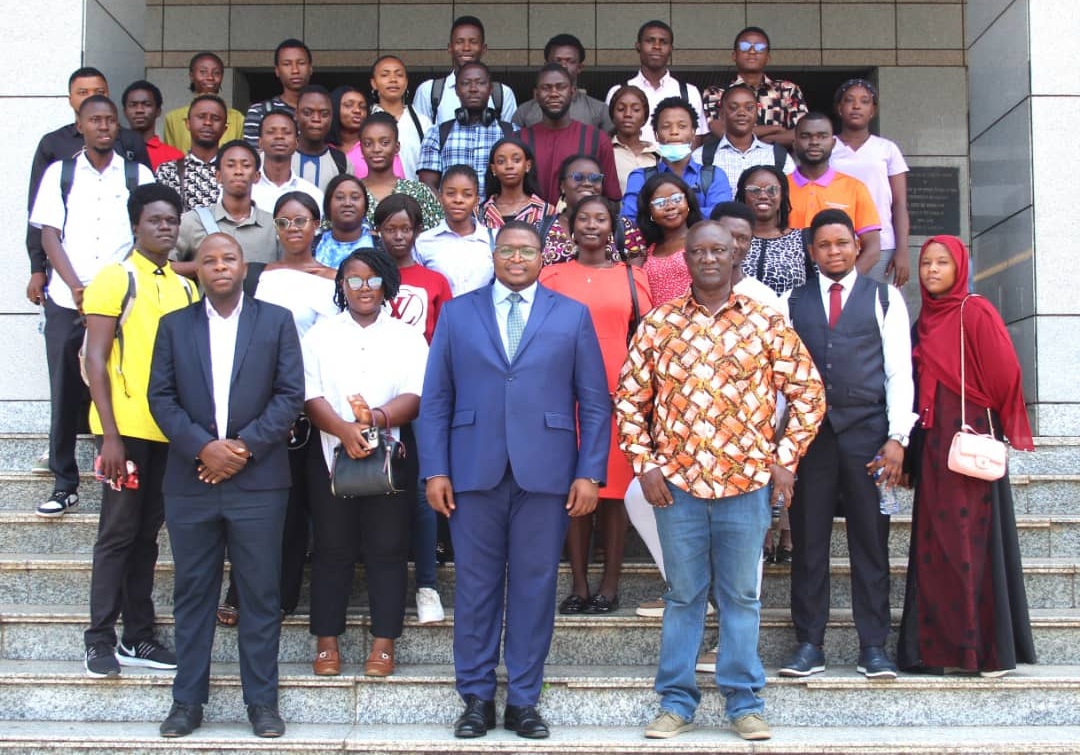
With support from partners, the Ministry of Foreign Affairs and International Cooperation conducted a two-day National Validation Workshop on the government’s Human Rights Report for the 4th Cycle Universal Periodic Review (UPR). Held January 19-20, 2026, the event brought together a coalition of stakeholders to finalize the nation’s human rights report for the upcoming 4th Cycle United Nations Universal Periodic Review (UPR). This collaborative forum aimed to strengthen the document before its formal submission to the UN on January 26.


The session led by the Director of Legal, Mr. Mohamed S. Context Esq., and Mr. Patrick H.M. Koroma Esq., the purpose of the workshop was clarified for all attendees. Held on January 19–20, 2026, at the Ministry Conference Hall, the event highlighted the inclusive and consultative nature of the Universal Periodic Review process. This mechanism actively engages government bodies, the judiciary, parliament, United Nations agencies, and non-state actors, including civil society organizations.
The workshop provided a vital platform for all stakeholders to refine and enhance the data, analysis, and narratives within the national report before its final submission to the United Nations. Sierra Leone’s comprehensive human rights document is scheduled for formal presentation on January 26, 2026.
Director General Mr. Alan C.E. Logan framed the draft report as a testament to meticulous national effort. He highlighted the coordinated work of the National Reporting Mechanism, strategically led by the Attorney-General’s office. Logan stressed that the final document’s credibility hinged on the rigorous input of all present. “The success of this validation rests entirely on your robust, constructive, and critical participation,” he stated, expressing confidence it would lead to a stronger, genuinely nationally-owned human rights policy.
Following this, Magnus Conteh, representing the Global Centre for Health Diplomacy and Inclusion (CEHDI), highlighted Sierra Leone’s tangible progress in health rights over the past two decades. He pointed to a monumental achievement: a drop in the maternal mortality ratio from over 1,100 to an estimated 354 deaths per 100,000 live births between 2013 and 2023. “This is a testament to national resilience and strategic investment,” Conteh stated.
He credited deliberate policies such as the Free Healthcare Initiative, improved adolescent health frameworks, and efforts to combat child marriage for saving countless lives. Despite these gains, Conteh outlined ongoing challenges, including gaps in emergency obstetric care, limited contraception access, and a legal framework that still requires advancement to fully support sexual and reproductive health rights.
Conteh framed the fourth UPR cycle as a strategic opportunity to consolidate progress and address remaining gaps with renewed clarity. CEHDI, he assured, remains a committed partner, pledging full support to ensure this UPR cycle accelerates tangible impact. “Our shared goal,” he concluded, “is to turn international commitments into national action and hard-won progress into true equity.”
His Excellency Zhang Dianbin, Deputy Ambassador of China to Sierra Leone, reinforced the importance of the UPR as a cornerstone of international cooperation. He praised Sierra Leone’s “decisive, concrete action” and legislative milestones like the Gender Equality and Child Rights Acts. Ambassador Zhang reiterated China’s commitment to partnership based on “equality, mutual benefit, and shared progress,” opposing double standards and pledging steadfast support for Sierra Leone’s development journey.
Attorney-General and Minister of Justice, Alpha Sesay Esq., set a tone of candid reflection. “This report is meant to reflect our national journey, it is not a declaration of a perfect human rights record,” he affirmed. He detailed key reforms, including recent amendments to the Sexual Offenses Act that raised the age of consent to 18. The Minister outlined the tangible benefits of a successful review, from bolstered international standing to attracting investment, while emphasizing the process’s role as a vital national stock-taking exercise.
Delivering the keynote address, Deputy Minister of Foreign Affairs and International Cooperation, Mrs. Francess Piagie Alghali, positioned the national report as a document belonging to every Sierra Leonean. “This report is prepared on behalf of every citizen,” she stated, “reflecting a collective effort beyond government alone.”
She underscored the critical role of the participants, asserting that their expert scrutiny was vital for the report’s credibility ahead of its presentation in Geneva. Their contributions, she noted, were invaluable to meeting the submission deadline of January 26th. “I offer sincere thanks on behalf of His Excellency the President, Minister Alhaji Timothy Musa Kabba, and the government and people of Sierra Leone,” she concluded.
Highlighting a shift toward greater transparency, the Deputy Minister pointed to the country’s revitalized national reporting mechanism. “We have moved past an era where reports were presented in Geneva without domestic awareness,” she explained. This streamlined system, born from a prior UPR recommendation and strengthened by coordination between the Attorney-General’s office and Foreign Affairs, now ensures the process is coherent and inclusive.
The comprehensive report details significant national events since 2021 from elections and security incidents to protests and their impact on all categories of rights. It also charts progress on the 216 recommendations accepted during the last review cycle, noting particular strides in labour, social welfare, education, and anti-discrimination efforts. While acknowledging that the government’s position on some noted issues remains unchanged, Mrs. Alghali affirmed ongoing work to protect women and girls from harmful practices like early marriage.
Recognizing the health sector’s challenges, amplified by experiences with Ebola and COVID-19, she welcomed the focused recommendations in this area. The government, she stated, acknowledges that more work is required to ensure citizens fully enjoy their rights, from healthcare and education to climate resilience and inclusive governance.
“The realization of human rights is a progressive endeavor,” the Deputy Minister affirmed, expressing optimism that progress has been tracked for each recommendation. She linked this directly to strategic national investments under the Medium-Term Development Plan, targeting food security, youth employment, and infrastructure.
Minister implored development partners for continued collaboration. “Together,” Mrs. Alghali urged, “we must implement the UPR recommendations and advance the progressive realization of all human rights for our people.”