

Ministry of Gender and Children’s Affairs (MoGCA), in collaboration with its partner Trocaire, has completed a comprehensive three-day monitoring tour across the northern districts of Portloko, Kambia, and Karene. The exercise aimed to evaluate on-the-ground progress in community-led initiatives focused on women’s empowerment, gender equality, and social accountability.
In Portloko,the monitoring team, comprising MoGCA’s Deputy Director Harry Mahoi and Assistant Director Josef Dennis Koroma alongside Trocaire Programme Officer Maurice Pewa, first visited the offices of SEND Sierra Leone. Discussions centered on the organization’s implementation of the POWER project, funded by Trocaire. Key activities reviewed included the support and monitoring of Village Savings and Loan Associations (VSLAs), the execution of a Community Social Accountability (CSA) action plan, and the establishment of 30 VSLAs across 15 communities under the “Female Masidama” initiative, which links to the Shero Credit Union.
SEND Sierra Leone also detailed its work in raising public awareness of the Gender Equality and Women’s Empowerment (GEWE) Act and the Land Rights Act, crucial legal frameworks for protecting women’s rights, and its efforts to build women’s capacity for leadership and governance.


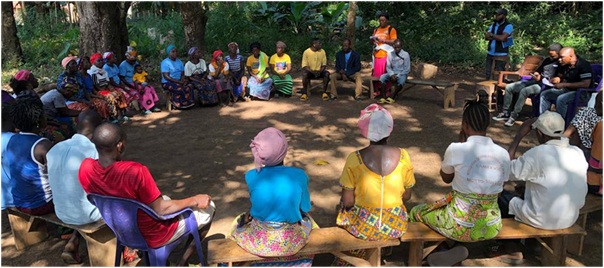
A subsequent community visit to Rosarr featured an interactive session with a Female Masidama group, highlighting their role in local development and the supportive involvement of men. Officials recommended tighter supervision, proposing the formation of dedicated monitoring committees and the inclusion of line ministry representatives at the district level. The team also assessed services at the Rainbo Initiative One-Stop Center, reviewing its partnership with the Ministry in supporting survivors of sexual violence.
The delegation’s next stop was the ABC Development Office in Kambia.Program Manager Beatrice B. Bangura outlined the organization’s approach to women’s empowerment through mentorship, leadership training, and community sensitization on gender equality. This includes forming 10 Masidama groups across five communities to encourage women’s career advancement, political participation, and skills acquisition. The team later met directly with women in Mathuraneh community to hear their perspectives on these programmes.
In Makeni, officials conferred with the Women’s Forum for Human Rights and Democracy (WOFHRAD). Acting Executive Director Emelia Jengo Kamara detailed the forum’s work in preparing women for leadership roles, particularly in the electoral process, and its vigorous advocacy during the 16 Days of Activism campaign against Sexual and Gender-Based Violence (SGBV).
The tour concluded in Karene district with a visit to the Female Masidama group in Kaboray Village,Kamakwe. Women participants expressed gratitude for Trocaire’s support, reporting increased personal confidence, greater involvement in community leadership, better access to services, and improved harmony within their households. Section Woman Chief Ya Alimamy Kargbo urged women to actively seek leadership positions and sustain their developmental roles.
Community members noted tangible benefits, including a reduction in local conflicts and enhanced respect for women’s rights, attributing these positive changes to the Masidama initiative. “Masidama has helped shape our households, especially marriages,” one member shared, highlighting the initiative’s profound social impact.
The final engagement was held at the regional office of the Network Movement for Justice and Development (NMJD), where committee members and women leaders discussed strategies for future collaboration to deepen the impact of community development efforts supported by both Trocaire and the government.
Credit: Kelvin Mark Kargbo, SLENA