

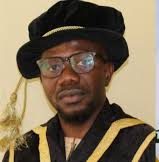
By Hassan Osman Kargbo
A senior professional accountant and financial economist, Professor Ezekiel Kalvin Duramany Lakkoh, has said the private sector continues to play an important role in Sierra Leone’s economy, but its performance remains closely linked to government expenditure and policy direction.


Speaking on AYV Television’s Wake Up Sierra Leone programme, Professor Duramany Lakkoh discussed the theme of the private sector as a catalyst for economic growth and development, focusing on both the challenges and prospects facing businesses in the country.
He noted that available economic data shows the private sector has been contributing to the Gross Domestic Product over the years. According to him, there is clear evidence of revenue mobilisation, increased private sector contribution to tax revenue, and growth in private sector employment, although employment levels are still low when compared to the size of the population.
“The private sector has been contributing to the GDP, and we have seen evidence where there has been revenue mobilisation, an increase in private sector contribution to tax, and an increase in private sector employment, even though not in terms of ratio to the population,” he said.
Professor Duramany Lakkoh explained that while these developments are encouraging, they do not yet reflect a fully independent or robust private sector. He stressed that in Sierra Leone, business growth is still heavily influenced by government spending patterns and policy decisions.
He pointed out that many private sector activities are driven by public sector contracts, state funded projects, and government initiated programmes. As a result, fluctuations in government expenditure often have a direct impact on business performance, job creation, and overall economic activity.
“It is seriously evident that the private sector in Sierra Leone is largely driven by the government’s expenditure on one hand and the government’s policies and decisions on the other hand,” he stated.
The economist said this situation presents both opportunities and risks. On the positive side, supportive government policies can stimulate private investment, improve access to finance, and create an enabling environment for businesses to grow. However, overdependence on government spending can limit innovation, competitiveness, and long term sustainability within the private sector.
Professor Duramany Lakkoh also highlighted structural challenges affecting private sector growth, including high operating costs, limited access to affordable credit, weak infrastructure, and regulatory bottlenecks. He said addressing these issues is critical if the private sector is to become a true engine of economic growth.
He called for consistent and predictable policies that encourage investment and reduce uncertainty for businesses. According to him, policy stability helps build investor confidence and allows enterprises to plan and expand over the long term.
The economist further emphasized the need for stronger collaboration between the public and private sectors. He said government should focus on creating the right conditions, while allowing businesses to operate competitively without excessive dependence on public spending.
Professor Duramany Lakkoh concluded that strengthening the private sector remains essential for sustainable economic growth, employment creation, and revenue generation. He urged policymakers to view the private sector not just as a source of tax revenue, but as a strategic partner in national development.