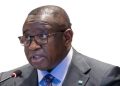

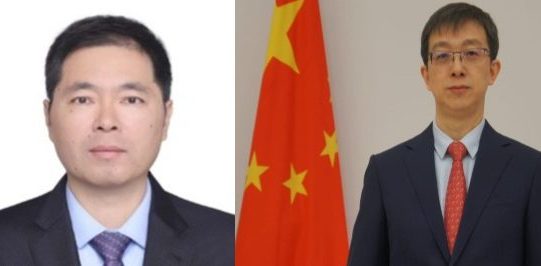
By H.E. Zhao Yong, Chinese Ambassador to Sierra Leone and H.E. Jiang Feng, Chinese Ambassador to African Union
Recently, as tensions in the Middle East continue to escalate, the situation in Iran has become a focus of high attention of the international community, also touching the concerns of both China and Africa.


For African countries, a large number of Africans are employed in Gulf states, contributing to local economic development while providing valuable and stable remittance income to their home countries. The busy shipping lanes running through the Red Sea and the ports of the Gulf closely connect Africa with the rest of the world. Through this route, African agricultural products, minerals and manufactured goods reach the global market, while goods from around the world are steadily shipped to Africa. In addition, the Gulf region is a vital source of energy supply for many African countries. Oil and refined fuels provide critical support for Africa’s transportation, industrial production, and electricity generation.
This is a war that should not have happened and does no one any good. As tensions in the Middle East escalate, the risk of spillover from the conflict continues to rise. Fluctuations in energy prices, disruptions to global supply chains, the deterioration of the regional security situation, and worsening humanitarian challenges have all been rapidly transmitted to Africa, placing new pressures on economic development and people’s livelihoods. It is therefore not surprising that the African Union and African countries have widely expressed concern over the current situation in the Middle East. Mr. Mahmoud Ali Youssouf, chairperson of the African Union Commission has issued three statements in succession, calling for resolving differences through peaceful means and preventing further escalation of the conflict.
Since the very first day of the conflict, China has been actively working for peace and end of hostilities, advocating the settlement of disputes through dialogue and negotiation to safeguard peace and stability in the Middle East and beyond. China promptly called for an emergency meeting of the United Nations Security Council to discuss the situation in Iran.
Chinese Foreign Minister Wang Yi has held telephone conversations with the foreign ministers of Russia, Iran, Oman, France, Israel, Saudi Arabia, the United Arab Emirates, Kuwait, Bahrain, Pakistan, Qatar and Egypt, engaging in in-depth exchanges of views on the regional situation. He emphasized the need to uphold the purposes and principles of the UN Charter, international law, and the basic norms of international relations, opposed the arbitrary use of force, condemned indiscriminate attacks against civilians or non-military targets, called for an immediate ceasefire, end to hostilities, and a political settlement to prevent further escalation and the spread of the conflict.
China’s Special Envoy on the Middle East Issue Zhai Jun is currently shuttling among countries in the region to conduct mediation efforts and actively work to deescalate tensions.
Last week, at the press conference on the sidelines of China’s “Two Sessions” (the concurrent annual meetings of the country’s two most important political bodies: the National People’s Congress and the Chinese People’s Political Consultative Conference), Foreign Minister Wang Yi put forward five principles for the proper settlement of issues related to Iran and the Middle East, providing a comprehensive and clear explanation of China’s position:
First, respecting national sovereignty. Sovereignty is the cornerstone of the current international order. The sovereignty, security and territorial integrity of Iran and all countries in the Gulf region should be respected and must not be violated.
Second, rejecting the abuse of force. Might does not make right. The law of the jungle must not return and rule the world. Wilful use of force does not prove one’s strength. Civilians are innocent and should not be victimized.
Third, noninterference in internal affairs. The people in the Middle East are the true master of this region. Middle Eastern affairs should be determined by regional countries independently. Plotting color revolution or seeking regime change will find no popular support.
Fourth, promoting political settlement of hotspot issues. China always believes that peace is the most precious. All sides should return to the negotiating table as quickly as possible, resolve differences through equal dialogue, and make efforts for realizing common security.
Fifth, major countries should play a constructive role and use their strengths in goodwill. Major countries should act in the spirit of justice and righteousness, and contribute more positive energy to peace and development of the Middle East.
China has always been a firm supporter, defender, and promoter of world peace and development. China and Africa share a broad consensus on safeguarding peace, promoting development, and upholding multilateralism. China is willing to further strengthen communication and coordination with African countries to prevent the spillover of conflict risks and jointly safeguard regional peace and stability. China also stands ready to continue working with the international community to implement the Global Security Initiative, promote dialogue and negotiation, push for a ceasefire and an end to hostilities, play a constructive role in easing tensions, and contribute to building a safer, more stable, and more prosperous world.