
By Sulaiman Jalloh
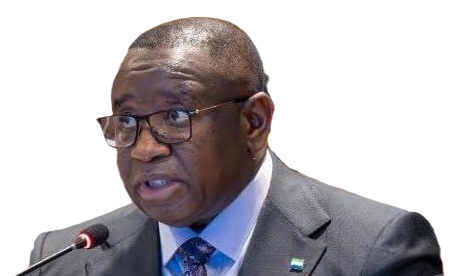
Following recent remarks by Donald J. Trump in which he expressed admiration for the name of Julius Maada Bio, public reactions across Sierra Leone have been mixed, ranging from celebration among government supporters to skepticism from critics.


This divergence in public sentiment raises an important question: what practical value does such a statement hold for Sierra Leone’s national development? While symbolic gestures in diplomacy can carry meaning, it is necessary to examine whether such remarks translate into tangible benefits for the country.
From one perspective, the excitement expressed by some government officials and their allies reflects a broader tendency to equate international recognition—no matter how minor—with political validation.
However, it is worth interrogating whether a casual compliment, such as “I love your name,” should be elevated to the level of diplomatic significance.
Conversely, critics have questioned the intent behind the statement. Was it merely a passing remark, or could it be interpreted as part of a broader diplomatic strategy? For instance, some speculate whether such praise could be linked to efforts by the United States to influence Sierra Leone on sensitive issues, such as migration policies or the acceptance of deportees. While such claims remain speculative, they highlight the importance of critical of engagement with international relations.
If the admiration expressed were to be considered genuine and meaningful, one might expect it to be accompanied by concrete policy actions. For example, easing travel restrictions or revisiting visa policies affecting Sierra Leoneans would provide a clearer indication of goodwill than rhetorical praise alone.
At the same time, those who strongly criticize the statement should also reflect on the limits of their reactions.
Public criticism, while essential in a democracy, may not necessarily alter the perceptions or policies of global powers. The challenge, therefore, lies in balancing critique with strategic thinking about national interests.
There is also a human dimension to consider. On a personal level, it is natural for individuals to feel pride when their leader is acknowledged on the international stage.
Yet, governance and national progress require moving beyond sentiment to focus on substantive outcomes.
Ultimately, Sierra Leone, as a sovereign state, must adopt a more measured and pragmatic approach. Support for leadership should not be blind, nor should criticism be indiscriminate. Instead, citizens must hold leaders accountable while also recognizing and encouraging policies that advance the national interest.
In conclusion, the incident serves as a reminder that international praise, while symbolically appealing, should not distract from the core priorities of governance: economic development, institutional strengthening, and improved living standards.
Sentiment alone cannot substitute for substance.