

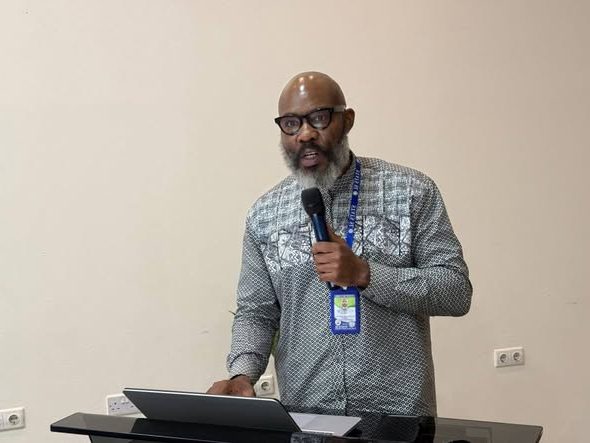
Ftreetown, January 20, 2026(SLENA)-Statistics Sierra Leone convened its Technical Committee today, 20th January, at Brookfields Hotel, Freetown. This gathering updated Ministries, Departments and Agencies regarding the inaugural Pilot Cartographic Mapping phase preceding the 2026 Population and Housing Census.
High-level stakeholders across MDAs and development partners assembled. Discussions highlighted progress and challenges from this pilot mapping phase.
Welcoming participants, Moses Williams, Chairman of the Council for Statistics Sierra Leone, commended Technical Committee members for their unwavering support. He acknowledged almost one year of shared value-chain experiences before the census. Mr. Williams noted these mapping updates offer critical perspectives on the initial cartographic phase.


Representing the Ministry of Planning and Economic Development (MoPED), Senior Economist Manzo Kargbo applauded Statistics Sierra Leone’s management for facilitating cartographic progress. He described the process as “a roadmap for accurate, credible, data-driven results.” Emphasizing the census’s critical value, Mr. Kargbo pledged MoPED’s continued coordinating engagement to review successes, address challenges, and implement improvements.
Mr. Samuel Pamer, representing UNFPA, characterized the meeting as a transition from a critical dress rehearsal toward the final census stretch. He appreciated Statistics Sierra Leone’s committed leadership throughout mapping and pilot exercises.
“UNFPA facilitated an independent monitoring mechanism for the Pilot Census,” Mr. Pamer stated. This involved local and international monitors from the UK Office for National Statistics, the United Nations Economic Commission for Africa, UNFPA headquarters, national researchers, and civil society representatives. These monitors served as eyes and ears across Bo, Bambali, Kailahun and Western Area Urban districts, ensuring objective real-time assessment. Their feedback proved invaluable, recording remarkable progress with digital tablets and real-time data transmission, while also highlighting key issues needing resolution to strengthen data integrity. Mr. Pamer described pilot cartographic mapping as the census bedrock, urging vigilant quality maintenance as scaling proceeds nationally.
Mr. Pamer called for solidified communication strategies to build public trust, plus large-scale recruitment and training for thousands of future enumerators. He reaffirmed UNFPA’s steadfast commitment to sustained technical assistance and coordination support. “We are not just counting people, we are making people count,” he stated, emphasizing census data’s significance for attracting sustainable development, influencing hospitals, schools, and socio-economic growth. Finally, he urged the committee toward renewed energy and focus, ensuring Sierra Leone’s full preparedness by December for an accurate, inclusive, internationally recognized census.
Delivering the keynote statement for the Statistician General, Deputy Statistician General Mr. Lansana Kanneh expressed gratitude for the committee’s continued commitment and meaningful contributions toward this transformative venture for Sierra Leone’s development.
Mr. Kanneh emphasized how cartographic mapping updates would assess successes, challenges, and foster improved designs for a fruitful census. He highlighted how census data will provide critical monitoring and evaluation strategies, tracking progress for the Medium-Term National Development Plan (MTNDP 2024-2030) via an established dashboard. He noted the Technical Committee’s inclusive representation across MDAs and other actors guides census progress, providing valuable input and participation.
He further outlined the cartographic mapping’s crucial value for public participation, assessing digital capacity applicabilities, and setting the stage for critical outcomes. He described the upcoming December launch of the Population and Housing Census, alongside this first pilot mapping phase, as a critical milestone for actualizing effective 2026 Census measures.
Mr. Kanneh encouraged participants to validate successes, address challenges, and improve lapses for credible, data-driven national development. He mentioned that the presence of national and international independent monitors, a first in Sierra Leone’s census history, showcases institutional commitment to strengthening transparency and credibility for accurate data.
Concluding, Mr. Kanneh expressed deep appreciation to Sierra Leone’s Government for providing ninety percent of census funding, with procurement for census tools already advancing. He also commended UNFPA and Irish Aid for their leveraged support.
The meeting featured presentations by key personnel. Consultant for Cartographic Mapping Dr. Foluke Yetunde-Adebayo highlighted national mapping timelines, workplans, delineation coverage, project management, monitoring, geospatial outputs, technical reviews, recommendations, assigned workloads and timelines. National Census Coordinator Mr. Abdulai Salia Brima presented on the 2026 census, delivering pilot census updates that highlighted successes, challenges, and future risks. Director of the National Statistics System Mr. Francis B.J. Tommy provided updates on independent monitoring findings, noting significant achievements and certain challenges from the pilot mapping process.
Presentations preceded interactive sessions, coordinated by Director of Communication and Public Relations Mr. Samuel A. Ansumana, who highlighted the Technical Committee’s critical value for census achievement.
Delivering the vote of thanks, Madam Mahawa Kondeh thanked UNFPA, the Technical Committee, and Statistics staff for fruitful deliberations.
By Correspondent-John Farfira Kamara, SLENA Correspondent