

By Albert David
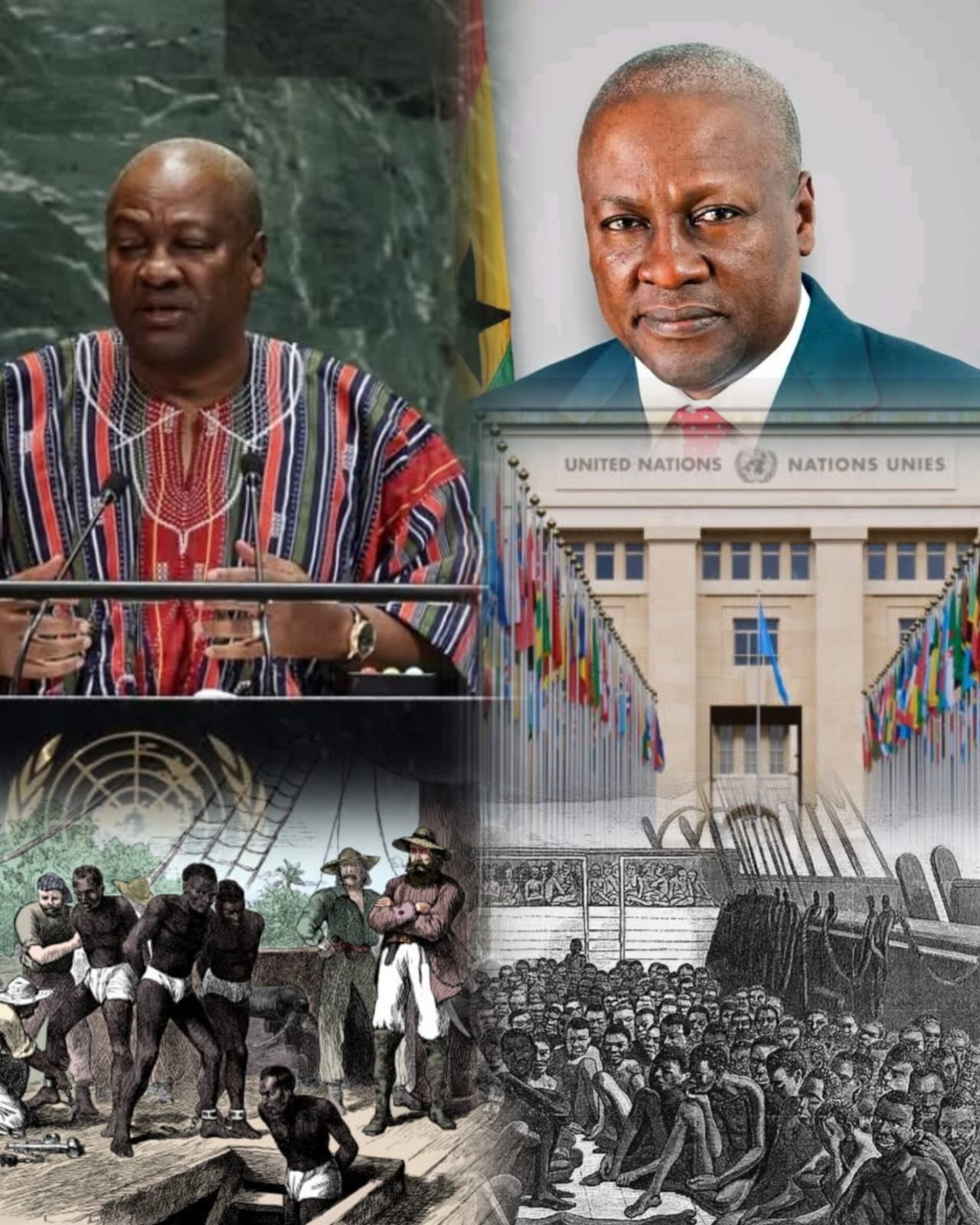
When Ghana’s President John Dramani Mahama called on the United Nations to recognize the transatlantic slave trade as the gravest crime against humanity, and when the African Union stood firmly behind him, something rare happened: a continent long silenced by centuries of violence, erasure, and moral hypocrisy finally spoke with one voice. The question now is not whether the motion should pass, but whether the global community has the courage, the honesty, and the ethical maturity to confront a truth it has avoided for far too long. This is not merely a historical debate. It is a test of the world’s commitment to justice, transparency, and human dignity.


The transatlantic slave trade was not an unfortunate chapter in history. It was a deliberate, industrialized system of human destruction. It was the legal, economic, and moral architecture upon which modern Western wealth was built. It was a crime so vast that its consequences still shape global inequality, racial hierarchies, and geopolitical power today. Between the 15th and 19th centuries, millions of African men, women, and children were kidnapped, branded, chained, and shipped across oceans like cargo. Entire societies were destabilized, depopulated, and economically crippled. Generations were condemned to hereditary servitude, denied humanity by laws crafted to justify the unthinkable. European and American institutions, governments, churches, banks, universities, profited openly and shamelessly from this system. To call this anything less than the gravest crime against humanity is to participate in the very erasure that allowed it to happen.
International law has long acknowledged genocide, apartheid, and ethnic cleansing as crimes against humanity. Yet the transatlantic slave trade, longer, larger, and more systematically dehumanizing than any of them, remains trapped in euphemisms like “tragedy,” “trade,” or “historical injustice.” This linguistic dishonesty is not accidental. It protects the beneficiaries of the crime. It shields nations from accountability. It allows modern institutions to pretend their foundations are clean. But history is not a museum exhibit. It is a living force. And the descendants of enslaved Africans continue to bear the psychological, economic, and political scars of a crime the world refuses to name.
International law is clear. A crime against humanity is defined by its scale, its systematic nature, and its attack on human dignity. By every measure: Scale: Tens of millions affected directly, hundreds of millions indirectly. Systematic nature: Codified in law, enforced by states, financed by global institutions. Attack on human dignity: Africans were legally defined as property, denied personhood, and subjected to generational violence. If this does not meet the threshold of the gravest crime against humanity, then the term has no meaning. Ethically, the case is even stronger. A world that claims to value human rights cannot selectively apply moral judgment. It cannot demand accountability from some nations while excusing others. It cannot preach justice while ignoring the largest forced migration and human rights atrocity in recorded history.
Recognition is not about guilt. It is about truth. It is about dismantling the comfortable myths that allow modern societies to enjoy the fruits of historical violence without acknowledging the cost.
It is about restoring dignity to the millions whose lives were erased from the human story. It is about confronting the global racial order that slavery created an order that still shapes policing, immigration, economic inequality, and cultural representation. It is about ensuring that the world finally admits what Africans have always known: that the transatlantic slave trade was not a “trade” but a crime of unparalleled brutality.
President Mahama’s motion forces the United Nations to answer a simple question: Does the world truly believe in universal human dignity, or only in selective justice?. If the motion fails, it will not be because the argument is weak. It will be because the truth is inconvenient. Because acknowledging the crime means acknowledging responsibility. Because transparency threatens the comfortable narratives that powerful nations have built around themselves. But if the motion passes, it will mark a turning point in global history, a moment when humanity finally confronts the darkest chapter of its past with honesty, courage, and moral integrity.
This is not a call for revenge. It is a call for recognition. A call for the world to finally speak the truth without hesitation or political calculation. A call for institutions to open their archives, confront their histories, and acknowledge the foundations upon which their wealth was built. A call for education systems to stop sanitizing the past. A call for global leaders to demonstrate that justice is not negotiable. A call for humanity to reclaim its conscience.
Whether the United Nations chooses courage or cowardice, the reckoning has already begun. The descendants of the enslaved are no longer silent. African nations are no longer passive. The world’s moral landscape is shifting. History will remember this moment. And it will judge not only the crime itself, but the world’s response to it. The question is no longer whether the transatlantic slave trade was the gravest crime against humanity.
The question is whether humanity is finally ready to admit it.