
By Umaru Jah, Berlin, Germany
Political debate in Sierra Leone is intensifying as citizens express growing frustration with the direction of the country. Across Freetown and the districts, public discussion increasingly centres on jobs, rising prices, and survival, shaping how politics is approached and how political actors are judged.


In neighbourhoods, young men and women recount years of bouncing between informal work and unemployment. Despite holding certificates and diplomas, stability remains elusive. Households are forced to tighten belts, trimming meals and delaying necessities as food prices soar. These conditions are no longer viewed as temporary setbacks, but as realities people now organise their lives around.
This context has reshaped how opposition politics is assessed. Expectations of progress following recent elections were high, particularly around employment, infrastructure, and public services. When those expectations were not met, scrutiny intensified. Public engagement continues, but trust is no longer automatic and is now measured through consistency, preparation, and results.
Political turnover has altered leadership arrangements without easing daily pressures. Voters increasingly judge political actors not by promises or intent, but by whether governance produces visible shifts in living conditions and institutional performance.
The 2023 elections have become a benchmark for how Sierra Leoneans judge political seriousness. After the vote, citizens mobilised both domestically and across the diaspora, applying pressure through protests and formal advocacy, including engagements at the European Parliament led by Sierra Leonean opposition representatives in Europe. Despite these efforts, concerns over vote protection remained unresolved. International observers, including the European Union Election Observation Mission, cited a lack of transparency in result tabulation and called for the publication of disaggregated polling-station data, which was not released. In response, a Tripartite Committee involving the government, political parties, and moral guarantors was established to recommend reforms, but implementation has been slow and incomplete, reinforcing public doubts about whether electoral failures are being seriously addressed ahead of future contests.
For the APC, this expectation carries direct consequences. Criticism of the ruling party remains part of opposition politics, but it holds limited weight without visible organisation, internal discipline, and demonstrated electoral preparedness. These qualities are no longer internal party matters; they have become public measures of seriousness.
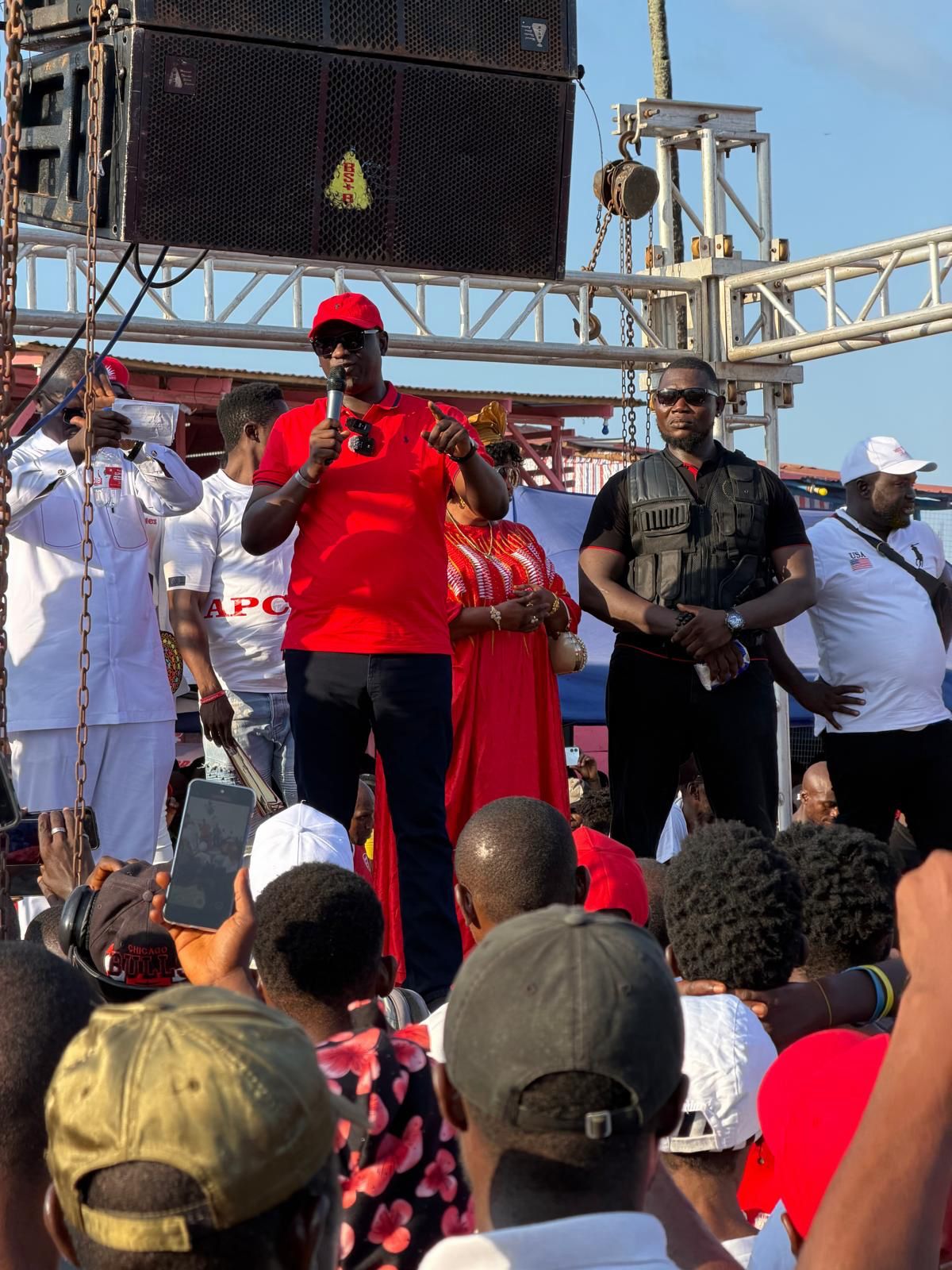
Within this context, Dr Ibrahim Bangura’s recent engagements have drawn attention inside and outside the APC. By identifying youth unemployment as a policy failure and linking drug abuse to prolonged economic neglect, he has aligned his message with widely held concerns while emphasising the need for organisational readiness and vote protection ahead of future elections.
Inside the APC, this approach signals a focus on preparedness and electoral integrity. Attention to structural reform and operational capacity suggests a party assessing its ability to compete effectively rather than relying on dissatisfaction alone.
Dr Ibrahim Bangura has articulated this position publicly. Speaking in eastern Freetown, he described his vision as one of “competent and decisive leadership that will protect the votes of the APC and transform Sierra Leone,” a message that speaks to enduring doubts about whether political participation is adequately defended once ballots are cast.
As 2025 draws to a close, attention is turning to 2026, when the APC will select its flagbearer. That decision will be read as a signal of how the party understands the present political moment and whether it is prepared to move from opposition into national leadership.
The ruling SLPP continues its political work with active organisational structures and intact electoral machinery. Political change will not occur by default, and any opposition serious about power must demonstrate sustained preparation well ahead of elections.
Sierra Leoneans are waiting for an opposition that confronts failure honestly, treats the vote as something to be protected, and offers a credible alternative to current governance. Whether that expectation is met will become clear long before the next election, and public judgment will follow.