
By Albert David
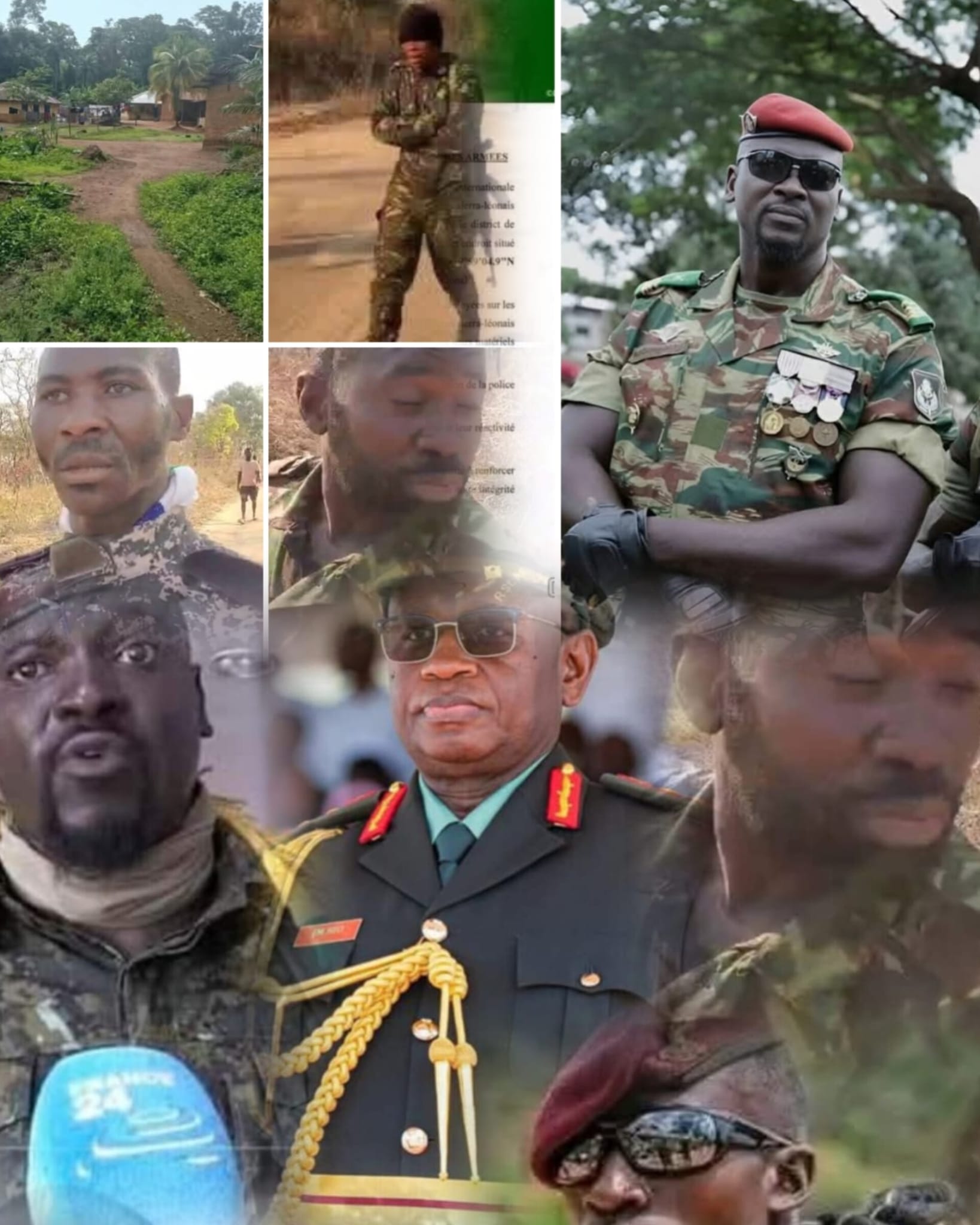
When sixteen Sierra Leonean soldiers and police officers were seized on their own soil by Guinean military personnel in the contested Yenga–Falaba axis, the nation expected, at minimum clarity, urgency, and constitutional leadership. Instead, Sierra Leoneans have been met with silence. Deafening, calculated, institution‑shaking silence.


These were not mercenaries. Not smugglers. Not political operatives.
They were uniformed Sierra Leonean service personnel carrying out their national and constitutional duties at the border, a border whose fragility has been known for decades, and whose tensions demand vigilance, diplomacy, and transparency.
Yet today, the public still does not know: 1- Where exactly the captured personnel are being held, 2- Their physical and psychological condition, 3- Whether they have been granted consular access, 4- Whether their families have been contacted, 5- What steps, if any, the government has taken to secure their release, 6- Why the Guinean military claims they will “face trial”, 7- Why the Commander‑in‑Chief has not addressed the nation. This is not merely a communication failure. It is a constitutional failure. A national security failure. A moral failure.
Images, videos and accounts emerging from the border describe Sierra Leonean soldiers including a captain and a second lieutenant beaten, stabbed, disarmed, and forced to sit on dusty ground, surrounded by villagers, children, and onlookers. Treated like prisoners of war. Stripped of dignity. Stripped of protection. Stripped of the respect their uniforms demand. For a sovereign nation, this is not a minor incident. It is a direct assault on territorial integrity and the sanctity of the state. Yet the leadership entrusted with defending that sovereignty has chosen opacity over accountability.
When a former Sierra Leonean Ambassador to Guinea was arrested with seven suitcases of cocaine and thousands of U.S. dollars in his official diplomatic vehicle, the reaction from Freetown was immediate and aggressive. A high‑level delegation, including the Minister of Foreign Affairs Timothy Kabba and the Minister of Information Chernor Bah was dispatched within hours. Statements were issued. Negotiations were launched. The government mobilized its full diplomatic machinery to protect a well‑paid official implicated in narcotics trafficking.
But today, when underpaid, under‑resourced, frontline soldiers and police officers who sleep in makeshift shelters, who patrol hostile terrain, who defend the nation’s borders are abducted, humiliated, and threatened with trial in a foreign country, the state has gone mute. This contrast is not just troubling. It is devastating. It reveals a hierarchy of value that places political elites above the very people who defend the republic.
Sierra Leoneans are asking and deserve answers: Where is the President?, Where is the Chief of Defence Staff?, Where is the Minister of Defence?, Where is the Minister of Internal Affairs?, Where is the National Security Coordinator?, Where is the current Sierra Leonean Ambassador to Guinea?, and Where is the transparency owed to the families of the abducted?. A government that can swiftly defend a diplomat caught with cocaine but cannot defend soldiers captured while performing constitutional duties raises profound questions about priorities, competence, and integrity.
The refusal to communicate with the public is not accidental. It reflects a deeper culture of cover‑ups, weak institutional accountability, poor crisis management, negligence in national security, leadership unfit for high‑stakes governance, and a disregard for the constitutional rights of citizens to information. The Guinean military has already issued a public statement confirming the capture and announcing investigations. Yet Sierra Leone’s own leadership remains silent, as though the nation is undeserving of the truth. This is not diplomacy. This is abandonment. The Constitution of Sierra Leone mandates the protection of territorial integrity and the welfare of security personnel. When soldiers are captured on duty, the state has an obligation, legal, moral, and political, to act decisively and transparently. Failure to do so is not just incompetence, it is a betrayal of the republic.
Sierra Leoneans deserve now: 1. A national address from the President. Not a press release. Not a spokesperson. The Commander‑in‑Chief must speak directly to the nation. 2. A transparent briefing from the military and security sector. The public must know the facts, the risks, and the steps being taken. 3. Immediate consular access to the detained personnel. Their welfare must be verified and communicated to their families. 4. A diplomatic demand for their unconditional release. Border disputes do not justify the abduction of uniformed personnel. 5. An independent investigation into the leadership failures that allowed this crisis to unfold. Accountability is not optional.
Sierra Leoneans are not asking for miracles. They are asking for leadership. For truth, for dignity, for the assurance that the lives of their sons and daughters in uniform matter more than political convenience. The Yenga–Falaba abductions are not just a border incident. They are a mirror reflecting the fragility of Sierra Leone’s governance, the erosion of public trust, and the urgent need for ethical, transparent, and competent leadership. A nation that cannot protect its protectors is a nation in crisis.