
By Hassan Osman Kargbo
The European Union has reaffirmed its continued interest and support for Sierra Leone’s democratic reform process following high level discussions between its Ambassador and the leadership of the All People’s Congress in Freetown.


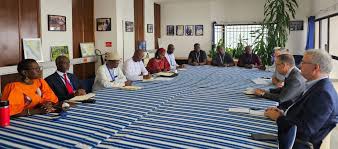
The meeting was held at the European Union Delegation to Sierra Leone, where Ambassador Jacek Jankowski engaged senior officials of the All People’s Congress on the country’s current political climate and governance reform efforts.
According to information from the engagement, discussions centered on progress made in implementing the recommendations of the Tripartite Committee, which was established to address electoral disputes and restore public confidence in Sierra Leone’s democratic institutions. The committee’s work is widely viewed as a key pillar in efforts to strengthen electoral credibility, promote political dialogue, and enhance governance reforms.
Sources familiar with the talks described the discussions as frank and constructive, reflecting a shared commitment by international partners and political stakeholders to maintain open communication on issues affecting democratic stability in the country. The European Union has consistently emphasized the importance of inclusive dialogue, institutional reforms, and adherence to democratic principles as Sierra Leone moves toward future elections.
The diplomatic engagement took place against the backdrop of developments in the Parliament of Sierra Leone, where lawmakers approved the appointment of Edmond Sylvester Alpha as Chief Electoral Commissioner and Chairman of the Electoral Commission for Sierra Leone.
Mr Alpha, who had been serving in an acting capacity, has now been confirmed to lead the Commission as it begins early preparations for the 2028 general elections. His approval has drawn significant political attention, coming at a time when electoral reforms and trust in democratic processes remain central to national discourse.
The European Union has been a long standing partner in Sierra Leone’s democratic development, providing technical and financial support for electoral processes, governance reforms, and civic engagement initiatives. EU officials have repeatedly stressed the need for reforms that are credible, transparent, and owned by Sierra Leoneans.
Political analysts say the timing of the EU APC engagement and the parliamentary approval of the new Electoral Commissioner highlights the sensitivity of the current political environment. They note that sustained dialogue between political parties and international partners will be critical in ensuring reforms are effectively implemented and tensions managed.
As Sierra Leone looks ahead to the 2028 polls, stakeholders agree that the successful implementation of the Tripartite Committee recommendations and the strengthening of electoral institutions will play a decisive role in shaping public confidence and political stability in the country.