

By Albert David
The moral test of any government is measured not by the promises it makes on commemorative days, but by the lived realities of its citizens, especially those most vulnerable to abuse, intimidation, and injustice. When a nation publicly celebrates International Women’s Day while women and girls continue to face violence, harassment, wrongful detention, and systemic neglect, the contradiction becomes impossible to ignore.


Across Sierra Leone, a troubling pattern has emerged in which women, activists, politicians, journalists, minors, and ordinary citizens, encounter forms of state or socially enabled harm that raise profound questions about governance, accountability, and the rule of law. Reports of women being arrested for political expression, detained without timely due process, harassed for civic participation, or denied justice after suffering violence reveal a governance environment where rights appear conditional rather than guaranteed.
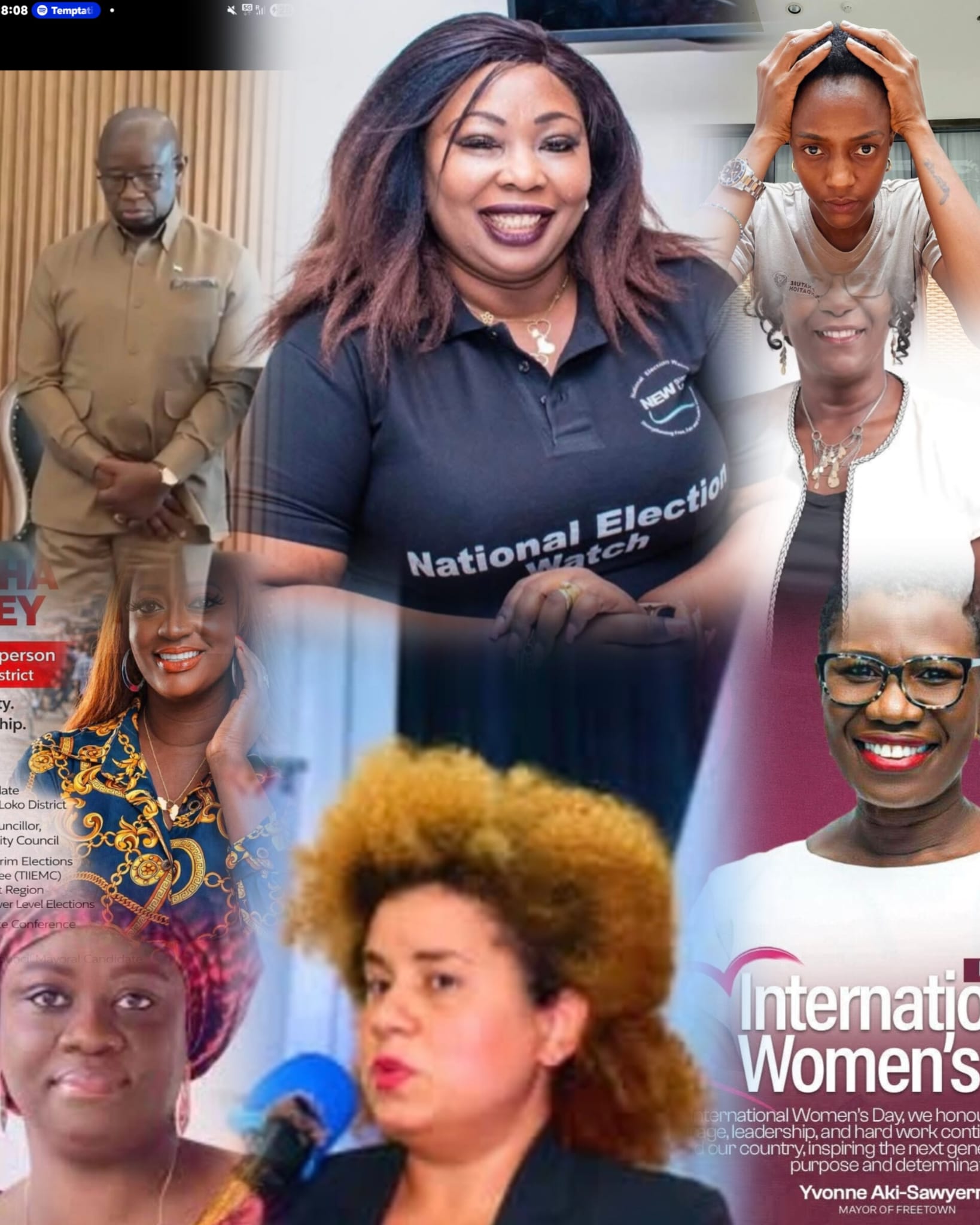
Cases involving public figures such as Sylvia Blyden, Femi Claudius‑Cole, Yvonne Aki‑Sawyerr, Hawa Hunt, Natasha Beckley, Marcella Samba‑Sesay, and Zainab Sheriff illustrate a climate in which dissent or political engagement by women is met with punitive responses rather than democratic tolerance. When women are arrested during peaceful activities, subjected to intimidation, or publicly shamed for exercising freedoms protected under the constitution, it signals a worrying drift away from democratic norms.
Even more disturbing are cases involving minors and vulnerable girls. The unresolved killing of eight‑year‑old K. Jalloh, the death of Sia Kaffa in Kono, and the long‑standing trauma of Edwina Jamiru, whose abuse by a judicial authority Momoh-Jah Stevens, represents a profound institutional failure, and expose deep fractures in the justice system. When families continue to cry for justice months or years after such tragedies, it reflects not only bureaucratic inertia but a systemic devaluation of the lives and dignity of women and girls.
The persistence of harmful practices such as FGM further underscores the gap between public commitments to gender equality and the lived experiences of women. Despite repeated assurances of reform, the absence of decisive action leaves countless girls at risk, reinforcing cycles of harm that undermine national development and human rights obligations.
These realities stand in stark contrast to official statements that celebrate women’s empowerment, equality, and justice. When leadership proclaims commitment to protecting women’s rights while the state apparatus simultaneously detains women for political expression, delays justice for victims of violence, or tolerates intimidation against female leaders, the result is a governance landscape marked by double standards. Such contradictions erode public trust, weaken democratic institutions, and create an environment where rights are symbolic rather than substantive.
A nation cannot meaningfully advance gender equality while women are incarcerated for protesting economic hardship, while activists, and female political leaders face cyber‑bullying and harassment, or while families mourn daughters whose cases remain unresolved. True leadership requires not only rhetoric but consistent, principled action that aligns state behavior with constitutional guarantees and international human‑rights standards.
The path forward demands a renewed commitment to justice, transparency, and accountability. It requires strengthening institutions so that no woman, regardless of political affiliation, social status, or age, is left unprotected. It requires ensuring that the justice system functions impartially, that law enforcement respects civil liberties, and that political participation is not criminalized. Above all, it requires aligning governance practices with the values publicly proclaimed: Dignity, Equality, and the Protection of All Citizens.
A society that fails to safeguard its women and girls cannot claim democratic maturity. A government that silences dissenting women while celebrating their contributions cannot claim moral authority. And a leadership that speaks of justice while justice is delayed or denied must confront the widening gap between its words and its actions.
The measure of progress will not be found in speeches, but in whether every woman and girl, from public figures to schoolchildren, can live free from fear, exercise her rights without intimidation, and trust that the institutions meant to protect her will not become instruments of oppression.