
Medical practitioners, civil society activists and Ministry of Health officials have warned of a looming health crisis in Sierra Leone. The concerned nurses, doctors and civic activists warned that the rise in kidney related illnesses due to the consumption of energy drinks could spell the end of the road for the nation’s health care system, which they described as a quilt or a patched-work.
‘You will usually hear people say ‘problem is on the way.’ Well, the problem is already here. Today the main reason for being hospitalised in Sierra Leone is kidney related from the consumption of energy drinks. Our people are consuming energy drinks like water or soft drinks because that is how energy drinks are marketed to the public. Sadly, the main reason for going to the hospital today is kidney problems from energy drinks. This is dangerous as we do not do kidney operations here in Sierra Leone. You will have to take your sick relative to either Ghana, Turkey, India or Pakistan for transplant or operation. There are presently too many people across the country coming in for dialysis than we can treat. Many of them I am sorry to say will die,’ said a doctor at the nation’s leading referral hospital at Connaught.
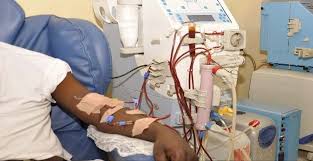
Speaking from the dialysis ward, 7, at Connaught, the doctor says many of the patients’ family members are naïve enough to think that their relatives have what can be easily resolved and paid for such as typhoid and or malaria.


‘They don’t even know that typhoid and malaria have almost devastated our healthcare system; organ problem will completely crush what we have managed to build over the years,’ the good doctor added.
Speaking to a civic activist who spoke on condition of anonymity, he informed FORUM NEWS that in response to the growing number of kidney and heart related health complications in their country, authorities in Guinea recently banned certain energy drink products from the market. He added that in Sweden, energy drinks were removed from the public space because of reports of kidney and heart inflammation among youthful Swedes.
‘In Sierra Leone, however, the need to attract business people to the country has seen the government dropping the standard on what is good and healthy for the citizenry. Look at how the Guineans and Swedes responded when the health of their future generations is at stake. But we are still selling energy drinks on the streets. Today, kidney treatment, Monday, Wednesday and Friday at Connaught is over SLE4, 000/Le4 million Old Leones a week. At Choitram’s it is over SLE6, 000/Le6 million Old Leones a week. That is every week until your family is able to raise enough money to take you to Ghana or further afield for transplant. Sadly many people who are dying from kidney problems in Sierra Leone die at the dialysis stage because their families cannot afford the prohibitive weekly cost for dialysis,’ the CSO head averred.
Also commenting a dialysis nurse at Choirtram’s added: ‘This is a serious problem because when you consider all things we are in an economy where the average man does not take home between four and six million a month yet he or she is expected to raise that much every week for someone’s dialysis treatment. The number of people seeking kidney related treatment is too much. We are not going to be able to treat them all and sadly most of them will die. The hope is that our government will see the need to ban energy drink products from our markets and other public trading places. Mr President, the energy drinks are killing us. It is time we do something about them to not only save the lives of our young people who actually believe that these drinks give them energy to work but to also rescue our poor and fragile healthcare system from being toppled.’
A civil servant working at the Ministry of Health informed FORUM NEWS that today, a cursory glance at the registries of the leading referral hospitals would reveal the rise in the number of people seeking dialysis treatment.
‘This should be a cause for concern for us because we do not have the equipment, don’t have the drugs and certainly don’t have the enabling environment for us to treat kidney related illnesses. The number of drivers, students and party people seeking kidney treatment should worry us. Their families are under the impression that their sick relatives have what can be equated to typhoid or malaria. Kidney problem is so different from typhoid and malaria that if I am your enemy and you were informed that I had kidney problems you would forget our differences and come visit me. All around the world kidney related health problems are called ‘the rich man’s sickness,’ not because you are rich but for the amount of money you would have to spend if your patient is the get better. Sadly, the survival rate for kidney operations is low but we still have to try. It is not all doom and gloom as many people survive years of dialysis and kidney transplants. Sadly for Sierra Leone, our prospects are not looking so good. The only way to solve this problem is for the government of Sierra Leone to see fit to take the political will to ban energy drinks from the public and relegate them to pharmacies and hospitals, and impose heavy taxes on them at the ports. Our people should not have to die for business opportunities to come into the country. So we do not have to stop the investor, we make it costly for them to bring these products into our country by imposing higher taxes,’ the government employee noted.
The poor West African nation of Sierra Leone is in the heat of a looming health crisis. However, this is not a contagious disease or illness; it can be controlled. But, will healthcare necessity take precedence over the need for job creation and attracting foreign businesses to our shores? JKL