

By Forum staff writer
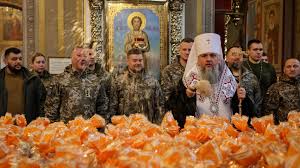
Russia and Ukraine have agreed to a temporary truce for Orthodox Easter after Russian President Vladimir Putin announced a short term ceasefire and called for Ukraine to follow the same approach, according to reports.


President Vladimir Putin said he had ordered Russian troops to cease fire “in all directions” over the Easter weekend, marking a rare pause in the ongoing conflict between the two countries. The announcement came after repeated appeals from Ukrainian President Volodymyr Zelensky for a ceasefire, which had previously gone unanswered by the Kremlin.
According to Putin, the Russian truce is expected to begin at 16:00 local time on Saturday, which is 13:00 GMT on 11 April, and continue through Easter Sunday. He added that Russian forces should remain alert and be prepared to respond to any “possible enemy provocations” or “aggressive actions” during the period.
The Russian leader also said he expected Ukraine to observe the same pause in fighting, describing the move as an opportunity for both sides to temporarily reduce hostilities during the religious holiday.
The announcement comes amid ongoing heavy fighting in several areas of the frontline, where both sides have continued military operations despite international calls for de-escalation. The conflict, now in its extended phase, has caused widespread destruction, displacement, and loss of life across Ukraine.
Putin’s declaration was framed by Moscow as a humanitarian gesture tied to Orthodox Easter, one of the most significant religious events in the Russian Orthodox calendar. However, analysts note that similar past announcements have often been short lived and accompanied by continued tensions on the ground.
The tone of Moscow’s announcement, as well as its expectation that Ukraine should mirror the ceasefire, has been interpreted by some observers as an attempt to gain diplomatic advantage while maintaining military readiness. Ukrainian officials have consistently accused Russia of using temporary pauses in fighting for strategic repositioning.
Shortly after the announcement, Ukrainian President Volodymyr Zelensky responded on social media platform X, stating that Ukraine was prepared to take “symmetrical steps” in response to Russia’s actions.
“People need an Easter free from threats and real movement toward peace,” Zelensky wrote. He added that Russia now had an opportunity not only to pause attacks during the holiday but also to consider extending restraint beyond Easter.
His statement reflected Ukraine’s broader call for a sustained and verifiable ceasefire rather than brief pauses in hostilities. Kyiv has repeatedly emphasized that any meaningful truce must include clear monitoring mechanisms and guarantees against renewed attacks.
The exchange of statements highlights the continuing complexity of diplomatic efforts to reduce violence in the conflict. While both sides have at times expressed openness to temporary humanitarian pauses, lasting agreements have remained elusive.
International observers continue to monitor developments closely, as any reduction in fighting over the Easter period could provide a rare moment of relief for civilians caught in the conflict. However, there remains uncertainty over how strictly the truce will be observed on the ground.
The war between Russia and Ukraine has entered a prolonged phase marked by shifting frontlines and intensified military operations. Efforts by global leaders and organizations to broker peace have yet to produce a comprehensive settlement.
As the Easter period approaches, attention now turns to whether the announced ceasefire will hold and whether it could open space for further diplomatic engagement between the two sides.