
By Ibrahim Sanda Barrie-The Gadfly _
There is a question Sierra Leone can no longer afford to avoid: what kind of leadership does a country still dealing with the consequences of structural division, youth marginalisation, currency depreciation and an unfinished post-war reconstruction actually need?


For years, our politics has moved in a familiar circle. We have gone from the old politics of patronage and party strongmen to a newer language of technocracy, dashboards, programmes and performance indicators. Yet, beneath the changing vocabulary, the basic structure of the economy has remained stubbornly familiar.
We continue to extract our wealth and send much of it abroad in raw form, while importing food, finished goods, machinery and, at times, even the ideas needed to explain how our own economy should work.
That is the contradiction at the heart of Sierra Leone’s development problem.
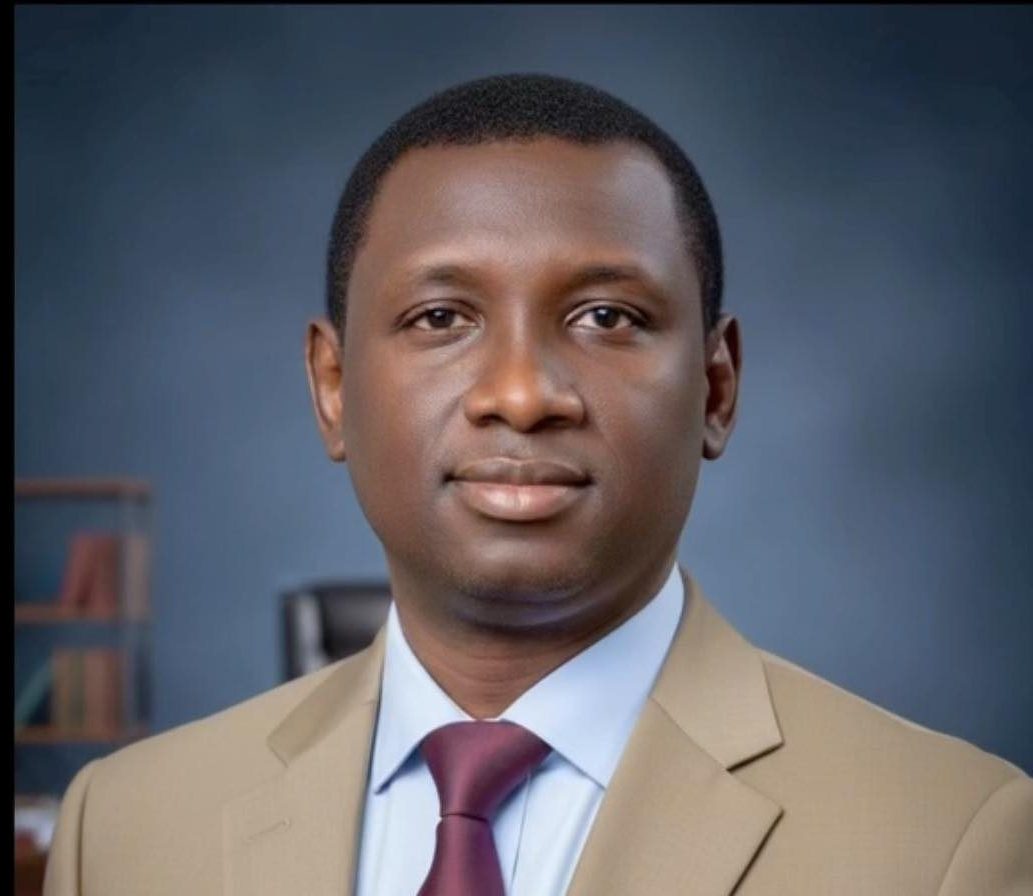
As political conventions approach, the candidacy of Dr. Ibrahim Bangura presents a different proposition. He is not simply entering the political arena with another collection of campaign promises. His argument is that Sierra Leone needs to rethink the very purpose of the state and move from managing inherited weaknesses to reconstructing the economic foundations on which national stability depends.
At the centre of that proposition is what he calls the Peace-to-Production Doctrine.
The Three Models of Governance
To understand what Bangura is proposing, it is useful to place his approach alongside those of two other prominent figures from the emerging generation of Sierra Leonean political leadership, Dr. David Moinina Sengeh and Dr. Emmanuel Saffa Abdulai.
The Technocratic Manager: Dr. David Moinina Sengeh represents an inside-the-system approach to public administration. His emphasis has included digital tracking, data and performance dashboards. There is obvious value in making government more efficient. But efficiency alone cannot resolve structural economic problems. A more efficiently administered economy can still be an economy dependent on raw-material exports, debt and imports. You cannot digitise your way out of a currency crisis if the productive base of the economy remains weak.
The Rights Advocate: Dr. Emmanuel Saffa Abdulai represents another important strand of public life, centred on legal reform, civil liberties and anti-corruption. These are essential pillars of a functioning democracy. But accountability, by itself, cannot create an industrial economy. A country may have cleaner courts, stronger legal protections and greater transparency, yet remain economically fragile if it lacks the productive capacity to create jobs and generate wealth.
The Structural Reconstructionist: Dr. Ibrahim Bangura comes from a different direction. With a PhD in Economics from the Leipzig Graduate School of Management and two decades of experience in peacebuilding, security-sector reform and project evaluation across 30 African nations, his proposed approach sits at the intersection of three problems that Sierra Leone has struggled to resolve: economic survival, youth exclusion and state stability.
His supporters see his lack of previous cabinet office differently from his critics. Rather than viewing it solely as a weakness, they regard it as an opportunity to enter politics without the accumulated baggage of previous government scandals or entrenched partisan patronage networks. He comes into the political arena as someone whose professional life has largely been spent examining why public programmes succeed, why they fail and what makes institutions work.
The Peace-to-Production Pivot
The heart of Bangura’s agenda is the Peace-to-Production Doctrine, built around a simple three-word mandate: Heal, Unite, Build.
The premise is that peace cannot be sustained indefinitely on political stability alone. A durable peace also needs an economy in which citizens can find work, build businesses, acquire productive assets and see a tangible connection between national resources and their own livelihoods.
That thinking informs his proposed Executive Order No. 2 on Mineral Beneficiation.
Under the proposal, the state would institute an immediate moratorium on foreign extraction leases that lack binding schedules for in-country processing. The idea is to change the basis on which Sierra Leone evaluates its mineral wealth. Instead of asking only how much can be extracted and exported, the country would ask how much of the value generated by those resources can be retained and multiplied within Sierra Leone.
The proposed thresholds include three major measures.
- Iron Ore and Bauxite: Phased domestic processing into iron pellets, sponge iron and refined alumina, supported by heavy industrial zones around Pepel and Sherbro Port.
- Diamonds and Gold: 100% in-country sorting and valuation, with 20% of gem-quality rough stones reserved for domestic cutting and polishing in Lungi.
- Sovereign Sinking Fund: Directing 15% of mineral royalties into a ring-fenced fund dedicated exclusively to industrial energy grids and heavy freight logistics.
The thinking behind the proposal is straightforward. Sierra Leone should not remain permanently positioned at the lowest end of the mineral value chain, extracting resources for other countries to process, manufacture and profit from.
The 446-Ward Engine: $2.138 Billion in Import Substitution
The second major pillar of the programme is the Total Ward Development Model (TWDM).
The problem it seeks to address is equally familiar. Sierra Leone currently spends approximately $500 million annually on foreign food imports, placing considerable pressure on scarce foreign exchange.
Bangura’s response is to take production closer to where people live.
The proposed Ward-Level Agro-Industrial Hubs (WAIHs) would be established across Sierra Leone’s 446 electoral wards. Equipped with solar microgrids, automated milling and cold-storage facilities, the hubs would be designed to help move rural communities away from subsistence production and towards commercial agriculture and processing.
The basic idea is not complicated.
A farmer should not have to sell a crop at its least valuable stage simply because there is no local facility to process, store or package it.
If cassava can be processed locally, if rice can be milled locally, if agricultural produce can be stored locally and if finished products can reach domestic markets from local production centres, more of the value generated by agriculture remains in the country.
The financial projections attached to the model are:
* Total 10-Year Co-Investment: $274.2 million across 446 rural and peri-urban wards.
* Direct State Revenue Generated: $421.5 million through processing fees and local leases.
* Cumulative Foreign Exchange Saved: +$2.138 billion over 10 years through the substitution of imported rice, flour, oil and feed.
These figures are projections rather than guarantees. Their significance lies in the underlying proposition: agricultural policy should be treated not simply as a rural welfare programme, but as part of Sierra Leone’s broader strategy for protecting foreign exchange, creating employment and building domestic industry.
From Grants to Ownership: The Youth Compact
No discussion of Sierra Leone’s future can avoid the youth question.
Young people make up a substantial part of the country’s population and its political energy, yet many remain economically excluded. Too often, young citizens encounter politics primarily through temporary programmes, grants, political mobilisation or promises of jobs that never materialise.
Bangura’s proposed response is to shift the emphasis from welfare to ownership through the Youth Capital Equity Fund (YCEF).
The proposal would guarantee 99-year productive land leases for youth agricultural cooperatives, impose a 40% local supply procurement rule on foreign firms and provide youth ventures with sub-8% risk capital.
The objective is to change the position of young people within the economy.
Instead of remaining consumers, job seekers or political spectators, they would have an opportunity to become participants and shareholders in productive enterprises.
That is a significant shift in philosophy. It treats youth policy not simply as a social intervention, but as an economic ownership strategy.
The First 100 Days Blueprint
Bangura’s framework also places considerable emphasis on measurable action.
The proposed First 100 Days Blueprint is built around the idea that a new administration should be judged not by the number of speeches it delivers, but by what it can demonstrate within a defined period.
The proposed sequence is as follows:
* Days 1–30: Issue Executive Orders auditing public debt, freezing raw mineral exports lacking beneficiation plans, and cutting executive discretionary budgets by 50%.
* Days 31–60: Capitalize the first 200 youth agro-industrial cooperatives and launch the Domestic Diamond & Mineral Processing Precinct at Lungi.
* Days 61–90: Enforce streamlined cross-border trade guidelines under ECOWAS frameworks and deploy live digital KPI performance dashboards for all Cabinet Ministers.
* Day 100: Publish a televised national performance scorecard, allowing citizens to assess the administration against predefined economic targets.
There is a larger principle behind this approach. Government should be measurable.
Citizens should know what was promised, what was funded, what was delivered, what failed and who was responsible.
That is a healthier basis for public accountability than political rhetoric alone.
The Question Sierra Leone Must Now Confront
The argument surrounding Bangura ultimately goes beyond one individual.
It goes to the kind of economy Sierra Leone wants to become.
Do we remain an economy that extracts its wealth and exports it largely in raw form, while importing the finished products made from that wealth?
Do we continue trying to make existing systems more efficient without changing the economic structures underneath them?
Or can Sierra Leone begin building a developmental state capable of turning knowledge into production, production into employment, and employment into durable peace?
Bangura’s proposed answer is clear: reconstruction must become the organising principle of the next phase of national development.
The country does not simply need another government occupying State House. It needs a state capable of connecting its natural resources to industrial development, its agricultural land to processing, its young population to ownership, and its peace to productive economic opportunity.
That is the proposition at the heart of Ibrahim Bangura’s political project.
Whether the numbers will hold, whether the institutional machinery can deliver, whether the proposals can be financed and whether the political system can withstand the reforms required are all questions that deserve rigorous public scrutiny.
But the larger question is perhaps simpler.
Can Sierra Leone continue managing the weaknesses of the old economy, or is it finally ready to reconstruct the foundations of a new one?
That is the debate now before the country.