
By MB Jalloh
For a child in Sierra Leone with a complicated illness, a functioning referral hospital can mean the difference between receiving a diagnosis at home and a family having to scramble to finance treatment abroad.


When Diagnosis Becomes a Journey
Consider the experience of Ramatulai Kamara, a mother of four whose cervical cancer reportedly went undiagnosed for years despite visits to several health facilities. When she was eventually diagnosed, she was told she might have to travel to Ghana for treatment. She could not afford it.
Her experience illustrates the broader consequences of inadequate health infrastructure. When patients cannot access scans, laboratory tests, specialist consultations or surgery at home, the medical bill is only the beginning. Families may also have to cover transport, accommodation, food, communication, the expenses of accompanying relatives, to name but a few. Those forced to borrow may also be left with debt.
For wealthier Sierra Leoneans, treatment abroad may be an expensive inconvenience. For poorer families, it can be beyond reach.
The U.S. State Department’s current travel guidance describes Sierra Leone’s health facilities as limited, citing shortages of basic resources and supplies and warning that patients may have to bear the cost of transfers between hospitals.
Against this backdrop, the unexplained status of a US$50 million Saudi-funded referral hospital is more than a question of government procurement or sovereign borrowing. It concerns where Sierra Leoneans will turn when existing facilities cannot provide the diagnosis or specialist care they need.
The project was presented as a major addition to the country’s health infrastructure: a 150-bed Riyadh Referral Hospital financed through a 187.5 million Saudi Riyals (SAR) loan from the Saudi Fund for Development (SFD), equivalent to about US$50 million. The financing agreement was signed in Riyadh on November 9, 2023, and ratified by the Sierra Leone Parliament on October 31, 2024.
The hospital was initially designated for Lungi, near Freetown International Airport, with completion expected by December 2025.
That deadline has passed. Yet the documents reviewed for this report do not establish that the hospital has been completed, commissioned or brought into service.
So, the central question is: What is the current status of the project?
A Longstanding Saudi-Sierra Leone Partnership
The hospital is part of a longstanding development relationship between Saudi Arabia and Sierra Leone.
The SFD’s cooperation with Sierra Leone dates to 1985, when the country’s embassy in Saudi Arabia, then headed by Ambassador Alhaji Sulaiman Baba Timbo, had been operating for six years.
By May 2025, the SFD reported six development loans totaling more than SAR218 million – over US$58 million – for five projects and programmes in Sierra Leone.
Ministry of Finance records also identify an earlier SFD-funded project described as “SFD – The Hospital Project Phase 1,” dating to 1985. That project is separate from the Riyadh Referral Hospital financed under the SAR187.5 million sovereign loan agreed in 2023.
The US$50 Million Project
The Riyadh Referral Hospital was publicly announced in May 2023, when the Ministry of Finance described it as a US$50 million ultra-modern facility to be built in Lungi.
According to the Ministry of Health and Sanitation, the planned services include general surgery, operating theatres, emergency care, paediatrics, inpatient services, obstetrics and gynaecology, nursery facilities and supporting technical and administrative services.
Financial Secretary Sahr Lahai Jusu said the financing would run for 20 years, including a five-year grace period, at one-percent interest, with a 36.1-percent grant element.
The negotiations involved then-Acting Finance Minister Bockarie Kalokoh, Financial Secretary Sahr Jusu, SFD representative Abdulrahman Alharbi and then-Sierra Leone Ambassador to Saudi Arabia Ibrahim Jalloh.
The SAR187.5 million facility is allocated as follows:
– SAR112.5 million – approximately US$29.97 million – for civil works;
– SAR60 million – approximately US$15.99 million – for equipment;
– SAR7.5 million – approximately US$2 million – for consultancy; and
– SAR7.5 million approximately US$2 million – for contingencies.
Civil works cover the hospital and associated infrastructure, including intensive-care and isolation facilities, accommodation, sanitation, sewage systems, water connections and renewable-energy infrastructure.
Consultancy services cover design, tender documentation and supervision.
Ministry of Finance records indicate that the loan carries an annual one-percent charge on principal withdrawn and outstanding, is repayable in semiannual instalments and has a loan-closing date of December 31, 2026.
Lungi or Kerry Town?
Questions about implementation became more pronounced when official announcements began referring to different sites.
The signed 2023 agreement designates Lungi as the project site and requires the Government to acquire the necessary land and land rights.
In January 2025, however, the Ministry of Health and Sanitation, under Health Minister Dr. Austin Demby, announced that the hospital would instead be built on a 300-acre site at Kerry Town as part of a proposed medical city.
The announcement followed a meeting between Dr Demby and Saudi Arabia’s then Ambassador to Sierra Leone, Ali Ibrahim Alheji. The Ministry said the proposed Kerry Town site could serve approximately 1.5 million people.
The differing references do not, by themselves, establish that the project was improperly changed. They do, however, raise a straightforward administrative question: Was the project formally relocated from Lungi to Kerry Town?
If so, when was the decision made, which authority approved it, and did the SFD formally endorse the change through an amendment or other project documentation?
The question matters because the loan agreement requires project plans, specifications, procurement arrangements and construction schedules to be submitted to the SFD, while contracts financed under the facility are subject to the Fund’s approval.
Where Is the Money?
How much of the SAR187.5 million has actually been disbursed? The Government and SFD should clarify whether an initial tranche was disbursed and, if so, the date, amount and purpose. They should also disclose the total amount disbursed, expenditure incurred, funds remaining and amounts spent or committed under the four designated categories.
The loan agreement requires the executing agency to maintain records of project progress, costs, loan-financed goods and services and related expenditures, while providing the SFD access to relevant project information.
Those records should make it possible to trace the project’s financial history from loan signing and disbursement through procurement and construction.
Procurement and Construction
The agreement requires loan-financed procurement to comply with applicable guidelines and provides for SFD approval of contract awards and material modifications. Qualified Saudi consultants, contractors and suppliers, including Saudi-Sierra Leone joint ventures, may participate.
The public record should therefore establish whether contracts have been awarded, to whom, their value and date, the procurement method used, payments made and their current status.
It should also clarify whether physical construction has begun, the level of progress, which components have been completed, what equipment has been procured or delivered, and whether any design or contractual changes have received the required approvals.
These questions are particularly significant because the original December 2025 completion target has passed. The documents reviewed for this report do not confirm that the facility was completed and commissioned by then.
The December 31, 2026 loan-closing date should not itself be interpreted as an extension of the construction deadline. A loan-closing date concerns the financing facility and does not necessarily establish a revised physical completion date.
The Government and SFD should therefore clarify whether the December 2025 schedule was formally revised, why it was revised, and what the current expected completion and commissioning dates are.
A Revised Site?
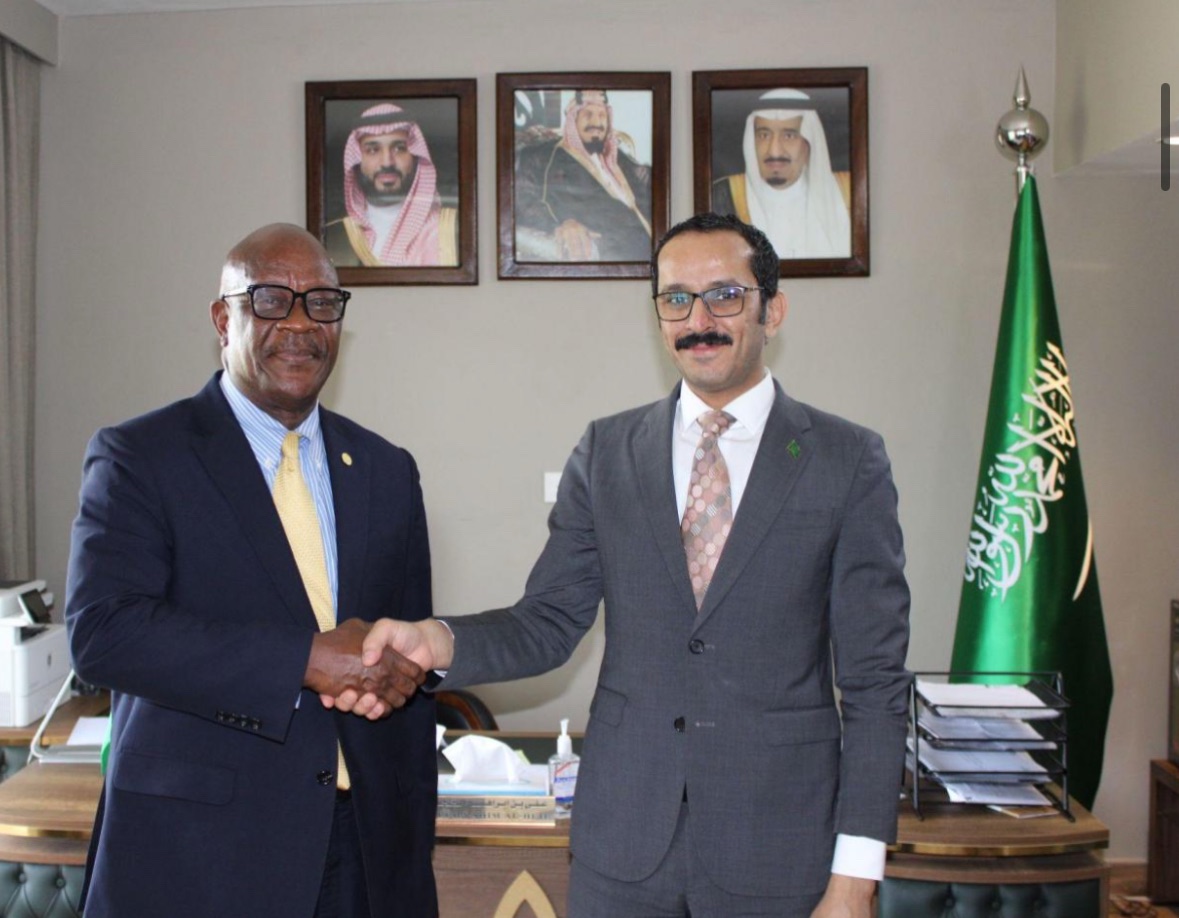
On July 26, 2026, Sierra Leone’s Ambassador to Saudi Arabia, Mohamed S. Barrie, reportedly met SFD Chief Executive Officer Sultan Abdulrahman Al-Marshad in Riyadh.
The meeting reportedly included discussions about a revised hospital site. However, the location was not publicly identified, and no public SFD confirmation reviewed for this report establishes that a change of site has been formally approved.
The Government was also expected to submit a Request for Proposals (RFP) for consultancy services to the SFD for review and approval.
It therefore remains unclear which site is officially approved, who authorised any change, whether the SFD has formally accepted it, and what progress has been made on land, procurement, financing and construction.
Former Ambassador Dr. Ibrahim Jalloh and his successor, Ambassador Mohamed S. Barrie, have facilitated engagement between Freetown and Riyadh concerning the project during their respective periods of service. Questions concerning formal project approval, procurement, financing and implementation, however, fall primarily within the remit of the relevant Sierra Leonean authorities and the SFD.
The Minister’s Response
About three weeks before publication, I contacted Health Minister, Dr. Austin Demby seeking clarification on matters concerning his Ministry and the Saudi hospital project. He was unreachable at the time.
The following day, he apologised via WhatsApp, explaining that he had returned from three weeks of work-related travel and was working through a backlog. At his request, I subsequently sent detailed questions concerning the project.
Nearly three weeks had elapsed since those questions were sent, but no substantive response had been received.
The absence of a response should not be construed as confirmation of any allegation or evidence of wrongdoing. The Ministry remains welcome to provide clarification, and any substantive response received will be considered for publication in accordance with normal editorial standards.
Until the questions posed to the minister and his ministry are publicly clarified, one fundamental question remains:
Where is Sierra Leone’s US$50 million Saudi-funded hospital?