
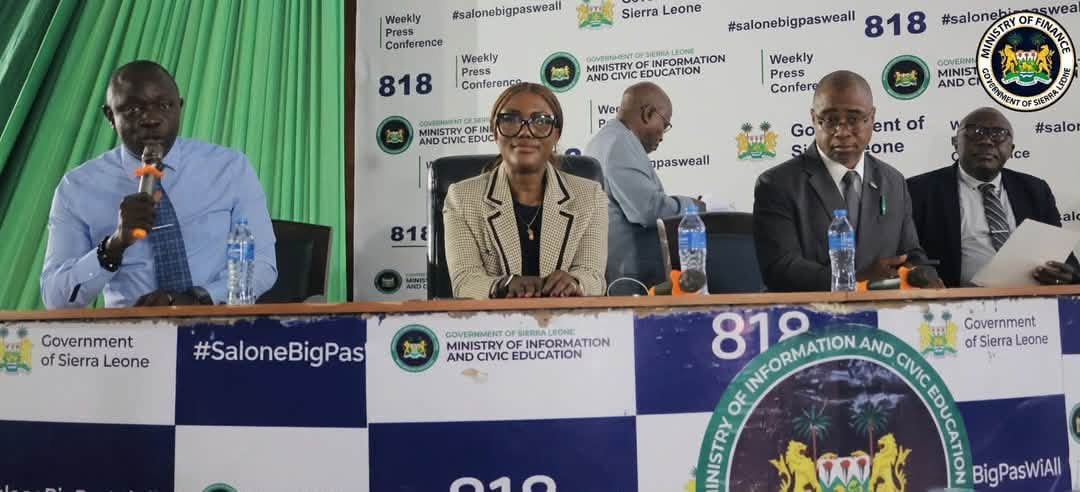
The Ministry of Finance has continued the FY2027 Bilateral Budget Discussions, with the Ministry of Health taking centre stage to present its key deliverables, funding requirements, challenges and opportunities. Deputy Minister of Finance I, Kadiatu Allie, reiterated that the discussions should go beyond budgetary allocations, stressing the importance of ensuring that available resources are aligned with national priorities and deliver tangible results.
The Ministry of Health is seeking NLe341.27 million in recurrent funding for FY2027, against a budget ceiling of NLe153.30 million, leaving an excess request of NLe187.96 million. The Ministry also presented NLe211 million in proposed new capital projects, including support for immunisation, family planning, HIV/AIDS, TB/Leprosy and malaria programmes, construction of regional hospitals, SLeSHI seed funding and dialysis services. Together with NLe52.57 million in ongoing FY2026 capital projects, the total capital requirement stands at NLe263.57 million.
In making the case for increased financing, the Deputy Minister of Health, Prof. Charles Senessie highlighted tangible gains recorded in the sector, including improvements in maternal and infant mortality, increased life expectancy, expanded immunisation coverage, recruitment of more than 3,000 health workers through the digital recruitment platform, and investments in specialised and emergency health services. He called for increased government financing to support the sector and move towards the 15 percent Abuja Declaration commitment.


Senior Permanent Secretary of the Ministry of Health, Andrew Sorie, described investment in health as a life-saving, futuristic and social investment, emphasising the need for sustained financing to strengthen the health system and improve service delivery. The session also highlighted ongoing health financing reforms, including the development of a Health Financing Policy and Bill, finalisation of the Health Financing Strategy 2026–2030, and plans for a Health Financing Agency covering Free Health Care and Health Insurance.
Principal Deputy Financial Secretary, Samuel E.B. Momoh, sought clarification on the Ministry’s strategic objectives, particularly opportunities for private-sector investment and innovation across the health value chain, as part of efforts to complement government financing. Discussions also considered the relationship between government and donor financing, with health-sector resources having declined from US$313 million in 2025 to about US$267 million in 2026, underscoring the importance of sustainable domestic financing.
The discussions also covered the Ministry of Gender and Children’s Affairs, which presented a FY2027 funding request of NLe7.96 million to support its mandate, deliverables and priority programmes. Deputy Minister of Finance II, Isata Marah, and Deputy Director of Budget, Dr. Illara Mahdi, facilitated the session, which examined government and donor support and the justification for additional resources to achieve tangible progress. Civil society actors participating in the discussions also made contributions on the Ministry’s priorities and resource requirements.
*MoF Communications