
By Marian Magdalene Bangura, Strategic Communications Unit – (MOICE)
The Government of Sierra Leone has reaffirmed its commitment to fast-tracking national development through skills training, infrastructure expansion, and economic transformation, as part of President Julius Maada Bio’s agenda.
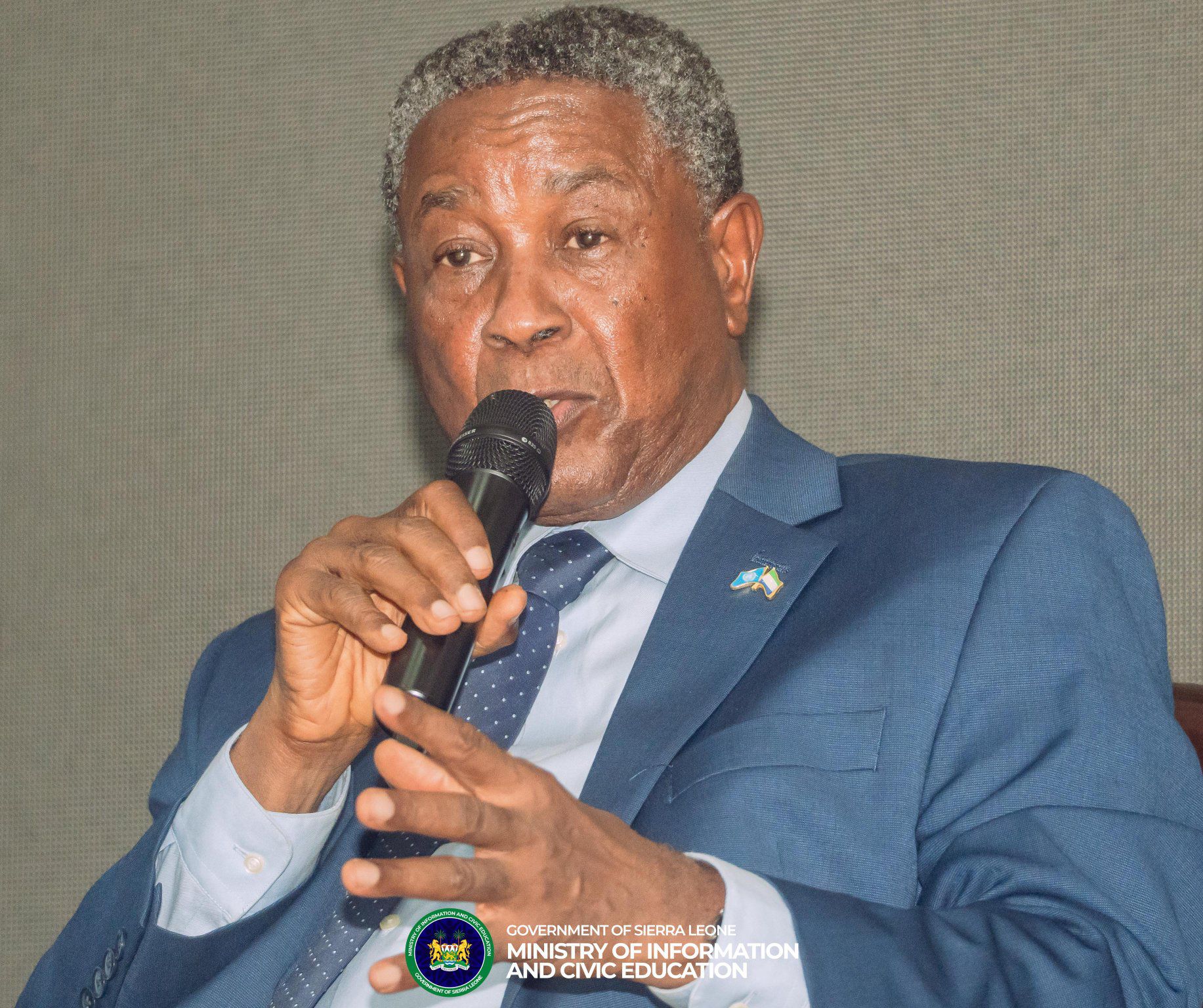
Presidential Spokesman, Alhaji Dr. Alpha Khan, said at the weekly government press conference at the Miatta Civic Centre on Tuesday, 5th May 2026, that the government’s work is driven by key national priorities dubbed the “Big Five Game Changers”.


He reiterated that 2026 is a “year of action,” marking a decisive shift from policy planning to tangible implementation.
A major highlight of the government’s agenda is youth skills development, according to Dr. Khan, noting that partnerships between institutions such as the Freetown Polytechnic and international organizations are expanding access to technical and vocational training. These programmes, he added, are equipping young people with practical skills in areas such as construction, carpentry, and electrical work, thereby enhancing their employability. Community-based initiatives, particularly in Dworzark, were commended for producing a growing number of skilled workers.
In the education sector, Dr Khan said the government has introduced initiatives such as the Education Opportunities Forum (EOF) aimed at strengthening early childhood education. “With support from international partners, plans are underway to construct dozens of nursery schools and expand access for tens of thousands of children across the country,” he disclosed.
On infrastructure, Dr. Khan reported significant progress in road and bridge development. He cited completion of the Bandajuma-Pujehun road and ongoing work on the Julius Maada Bio Bridge as key projects improving connectivity, reducing travel time, and opening up agricultural regions. These developments, he said, are expected to enhance trade and contribute to national food security.
The Presidential Spokesman informed that government is also intensifying its focus on agriculture which has contributed to increased local food production and reduction in rice prices. “Efforts are being made to promote the local production of agricultural inputs, including seeds, to strengthen self-sufficiency.”
On economic development, Dr Khan said several strategic projects have been launched or commissioned, including an industrial fishing harbour at Black Johnson, a flour mill, and mineral processing initiatives. According to him, these investments are aimed at boosting local production, creating jobs, and increasing export value by moving away from the export of raw materials.
He further highlighted progress in strengthening mining community development funds, which are empowering local communities to invest directly in their own development priorities. “These funds are already supporting projects such as rural electrification and feeder road construction in mining areas.”
Overall, Dr. Khan said the government remains focused on delivering practical results by expanding infrastructure, equipping young people with skills, improving access to education, and driving economic growth through local production and strategic investment.