
By Karamoh Kabba
“Sierra Leone now stands at a crossroads: continue the vicious cycle of revenge, or embrace a leadership model rooted in healing, uniting, and building a forward‑looking society of people.” ~Karamoh Kabba


Since 2018, Sierra Leone’s political landscape has undergone one of the most turbulent and polarizing periods of the Fourth Republic. What began as a routine transfer of power quickly evolved into a cycle of mistrust, institutional strain, and deepening partisan hostility.
Several unsavory legal, political, and security‑related developments contributed to a climate that many citizens now describe as expansive divisive politics that, as a nation, we must employ deliberate actions to change.
This is not to suggest that divisive politics did not exist before 2018. The northwest–southeast divide has shaped political identity since Independence in 1961. Nonetheless, the period after 2018 escalated the divide in unprecedented ways.
This analysis outlines the major factors that shaped this environment, explains why the divisions intensified, and suggests how we should shake it off and redeem ourselves from it.
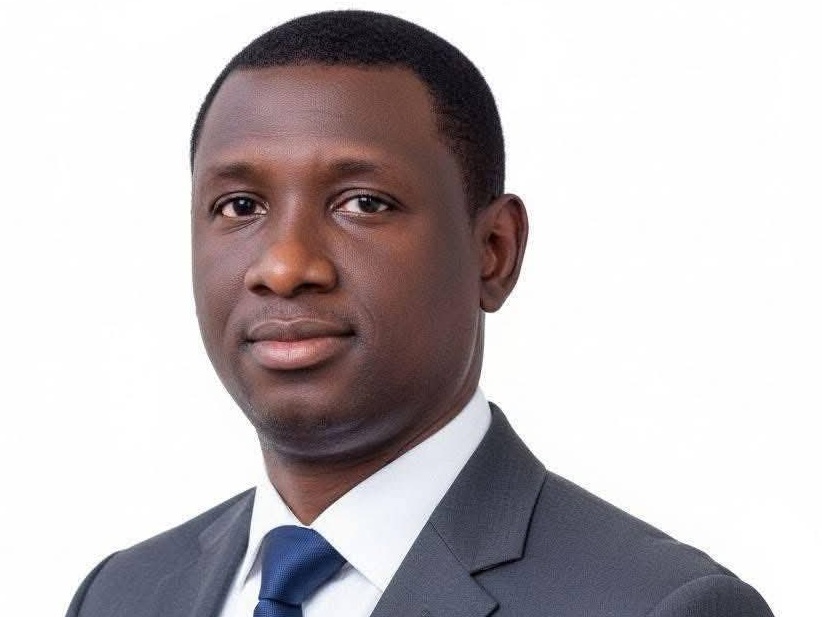
In my view, a leadership model grounded in national healing of our battered compatriots, uniting our people, and building our nation devoid of the existential penchant for confrontation and the prospect of retaliation—such as articulated by Dr. Ibrahim Bangura of the DIB Movement—is what we need to forge a way out of the vicious cycle of political and tribal bigotry.
The post‑election parliamentary tensions of 2018 marked the beginning of the erosion of trust. The political temperature rose sharply after petitions overturned the All People’s Congress (APC) majority in Parliament, shifting the balance of power.
This situation introduced an awkward parliamentary nomenclature such as “Leader of Government Business” instead of the traditional “Leader of Parliament,” because the leadership of the governing Sierra Leone People’s Party (SLPP) refused to concede parliamentary leadership to the opposition.
This was against the backdrop that the APC had won the majority of seats in Parliament. In an attempt to alter the situation outrightly, SLPP members physically assaulted APC Members of Parliament during the controversial swearing‑in session of the parliamentary leader. As a result, repeated APC boycotts of Parliament emerged in protest of what the party leadership viewed as procedural and constitutional violations.
These events created a perception, especially among APC supporters, that parliamentary processes were being manipulated to weaken the opposition. The result was a breakdown of legislative cooperation and the normalization of confrontation over dialogue.
The Commission of Inquiry (COI) and its political fallout caused further damage to the already fragile political cohesion. Intended to investigate alleged corruption under the previous APC administration, the COI became, in the eyes of many, a tool of political witch‑hunt and one of the most polarizing instruments of the period.
While supporters of the ruling party welcomed the inquiries, many others, particularly within the APC, saw the COI as an instrument of selective justice, a mechanism for political humiliation, and a means to disqualify or weaken prominent and competent opposition figures. Its aftermath deepened grievances and entrenched the belief that state institutions were being used for political retribution rather than accountability.
This period also saw the weaponization of state institutions. Public discourse increasingly reflected concerns not only about the perceived politicization of the police and judiciary but also about their blatant use against the opposition.
Critics observed that opposition gatherings were frequently disrupted without reasonable cause, protesters faced harsh crackdowns, and court processes involving opposition figures appeared politically influenced. These actions escalated the erosion of confidence in the neutrality of institutions that should serve as stabilizers in a democracy.
Executive overreach and constitutional concerns further strained relations between government and opposition parties. Several executive actions were widely criticized as inconsistent with constitutional norms, including orders that bypassed or contradicted established legal procedures, administrative decisions that appeared to sideline checks and balances, and actions that raised concerns about the shrinking of civic space.
These developments contributed to a sense that constitutional governance was under threat, further polarizing the political environment. Simply put, the detention of opposition politicians, journalists, and activists—often without clear legal justification—intensified the climate of fear and division.
Simultaneously, the muzzling of the press and restrictions on freedom of expression created an atmosphere where dissent was treated as disloyalty, further undermining democratic norms and fueling resentment across political lines.
The cumulative effect of these actions has been the breeding ground for a politics of revenge and counter‑revenge. By 2023–2024, Sierra Leone’s political culture had hardened into a cycle of continuous oppression and anticipated retaliation.
Party zealots and stalwarts on each side of the political aisle expected and anticipated their government to punish, marginalize, or exclude others who were not members of their party when in power. This is how national development became secondary to political survival, and citizens grew increasingly disillusioned with both major parties. This cycle is widely seen as unsustainable, especially in a country still expected to be healing, uniting, and building after a civil war rooted in partisan divide and governance failures.
It is why a case for healing, uniting, and building‑focused leadership matters in Sierra Leone’s political dispensation. In this regard, Dr. Ibrahim Bangura stands out because he has not served in either of the two major parties’ governments and has not been a perpetrator or direct victim of past political grievances. This provides him a unique vantage point from which to empathize with the nation, compared to the highly charged political populace of our recent past and present, while remaining distant from entrenched hostilities.
His public statements consistently emphasize national healing, unity, nation‑building, and institutional restoration. He argues that development cannot coexist with revenge politics and promotes a philosophy of “bygones be bygones,” urging Sierra Leone to break from the politics of settling scores.
In my humble view, this positions him as a potential leader capable of ending the vicious revenge cycle, healing a battered citizenry, and rebuilding trust in state institutions. He comes across as a prospect for restoring constitutional governance and uniting a polarized nation. This is not a prediction of electoral outcomes; rather, it is an articulation of the leadership qualities I believe are necessary for Sierra Leone’s next chapter.
In conclusion, Sierra Leone’s expansive divisive politics since 2018 did not emerge from a single event but from a cascade of institutional, political, and constitutional tensions. The cumulative effect has been a nation increasingly defined by mistrust, retaliation, and deepening polarization.
Dr. Ibrahim Bangura is here to HEAL. UNITE. BUILD.