

By Forum staff writer
Catholic Relief Services has reaffirmed its commitment to strengthening Sierra Leone’s water and sanitation sector following a high level courtesy visit to the Ministry of Water Resources and Sanitation in Freetown.


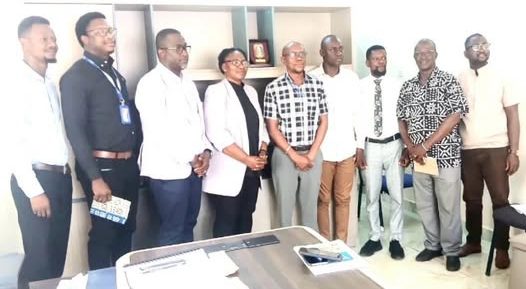
The engagement brought together key officials from both sides, including CRS Sierra Leone Country Manager Michael Moyo, who was accompanied by Water Fund Technical Advisor Arthur Chinsman Williams and Local Leadership and Partnership Strengthening Coordinator Hassan John Sapo Sapateh. The delegation met with the Minister of Water Resources and Sanitation, Dr Sao Kpato Hannah Isata Max Kyne, to explore avenues for deeper collaboration.
Discussions during the meeting focused on strengthening local capacity and promoting sustainable solutions that can withstand the growing impacts of climate change. Both parties emphasized the importance of protecting water infrastructure and preserving critical natural resources, especially as urban pressures continue to rise.
A key highlight of the meeting was the introduction of a newly developed coordination and visualization platform by CRS. The system is designed to improve planning, monitoring, and integration of development interventions within the water, sanitation and hygiene sector. According to CRS officials, the platform will enable better coordination among stakeholders while supporting long term urban development strategies.
The initiative will initially target informal settlements in Freetown, where rapid population growth and unplanned expansion have placed increasing strain on water systems and environmental resources. By improving data sharing and coordination, the platform is expected to help authorities and partners respond more effectively to challenges in these communities.
Minister Max Kyne commended CRS for its consistent support to the sector, particularly in the Western Peninsula Area, which serves as a key water catchment zone for the capital. She noted that the partnership between the government and CRS has evolved significantly over the years, moving beyond training and capacity building to include direct infrastructure support.
She pointed to recent interventions that have helped protect vital water sources from encroachment and contamination. These efforts include the installation of protective barriers around critical catchment areas, which play a crucial role in maintaining water quality and ensuring sustainable supply for residents.
The Minister stressed that such measures are essential in reducing pollution risks and improving access to safe and reliable water for communities across Freetown and surrounding areas. She further highlighted the need for continued collaboration as the country faces increasing challenges linked to climate change, population growth, and urbanization.
The meeting reflects a broader commitment by the Government of Sierra Leone and its development partners to address gaps in the water and sanitation sector. Both sides agreed on the importance of innovative approaches and sustained investment to ensure long term water security.
CRS reaffirmed its readiness to work closely with the Ministry and other stakeholders to deliver practical and sustainable solutions. The organization emphasized that strengthening partnerships remains central to achieving lasting impact in the sector.
As collaboration deepens, stakeholders remain optimistic that ongoing efforts will improve service delivery and enhance resilience in Sierra Leone’s water systems.