
By Forum staff writer
Sierra Leone has been identified as a major logistics and redistribution hub for cocaine trafficking in West Africa, according to the 2025 Organized Crime Index published by the Enhancing Africa’s Response to Transnational Organized Crime.


The index, supported by the European Union and implemented in partnership with the Institute for Security Studies, INTERPOL and the Global Initiative Against Transnational Organized Crime, highlights the country’s growing role in the movement of cocaine from Latin America to Europe.
According to the report, traffickers rely heavily on maritime routes, using fishing vessels, pleasure boats and bulk cargo ships to transport drugs across the Atlantic. These shipments are often trans shipped within the Gulf of Guinea before reaching the coastline of Sierra Leone, where porous borders make interception difficult. Containers are also used to conceal cocaine destined for European markets.
The findings raise concerns about enforcement gaps at the Port of Freetown. Despite several high profile seizures in Europe linked to Sierra Leone, including in Belgium and the United Kingdom, the report notes that no significant cocaine seizures have been recorded at the port in at least five years. This absence has fueled suspicions of protection networks involving customs officials and influential figures.
A separate study by the Global Initiative Against Transnational Organized Crime reinforces these concerns, placing Sierra Leone within what it describes as the Western Hub of trafficking states. This network includes Guinea, Liberia, Senegal, Gambia, Guinea-Bissau and Cabo Verde, all increasingly used as transit points for multi tonne shipments.
The Port of Freetown is identified as a strategic link connecting South America to Europe. Investigators have traced routes from Brazil’s Santos port to Europe, particularly the Port of Antwerp, which has recorded some of the largest cocaine seizures connected to Sierra Leone.
The report also reveals that international criminal networks are active in the country. Lebanese and Nigerian groups dominate distribution channels, while some Nigerian networks are involved in local production of crack cocaine.
Beyond trafficking, the country faces a growing domestic drug crisis. While cannabis remains cultivated in areas such as Kambia District and trafficked through neighbouring countries, its demand has declined in recent years.
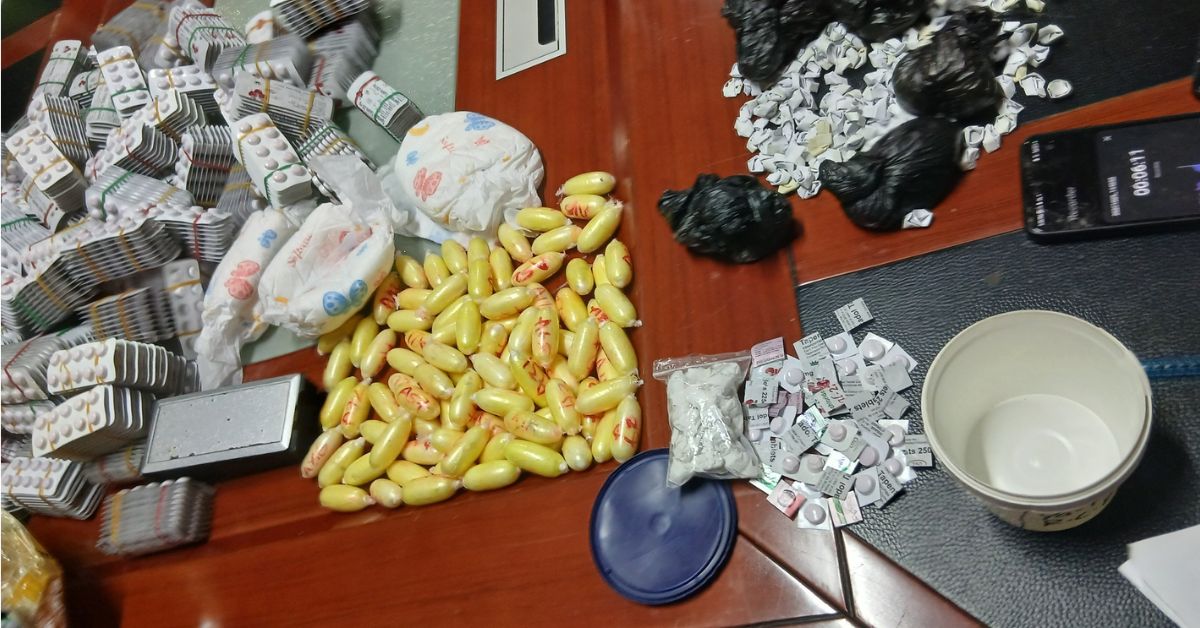
Instead, attention has shifted to kush, a synthetic drug that has surged in popularity since 2021. The report warns that kush has become widely used among young people, driven by its low cost and accessibility. Its chemical components are imported from countries including China, the Netherlands and the United Kingdom, with final production increasingly taking place within Sierra Leone.
Other substances are also on the rise. Opioids such as tramadol and tapentadol, often sourced from South Asia, are widely consumed, while methamphetamine and MDMA are gaining ground in urban areas.
The index further points to corruption within enforcement systems, alleging that some officers accept bribes or divert seized drugs back into circulation.
With Sierra Leone scoring 4.93 for criminality and 4.04 for resilience, the report warns that weak institutions and rising drug use pose serious risks to public health, governance and national security.
It calls for urgent reforms to strengthen law enforcement, regulate chemical imports and dismantle trafficking networks operating within and beyond the country.