
By Hassan Osman Kargbo
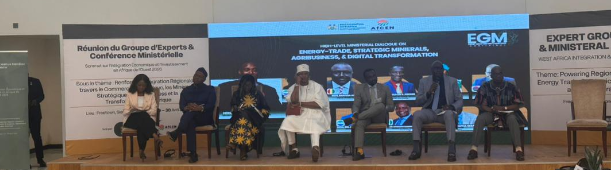
The West Africa Economic Integration and Investment Summit 2026 has opened at the Bintumani Conference Centre, bringing together policymakers, experts and development partners from across the ECOWAS sub region to chart a new path for growth and cooperation.


Held under the theme: powering regional integration through energy trade, strategic minerals, agribusiness and digital transformation, the summit placed strong emphasis on practical solutions to long standing economic challenges.
Welcoming delegates, Dr Kandeh Yumkella, Chairman of the Presidential Initiative on Climate Change Renewable Energy and Food Security, said the gathering marked an important step in aligning leadership with technical expertise.
He noted that while countries such as Sierra Leone, Liberia and Guinea possess vast deposits of iron ore, bauxite and gold, the region has yet to translate this natural wealth into broad based prosperity.
According to him, the challenge goes beyond resource availability. He stressed that exporting raw materials without processing them locally continues to limit economic gains, while weak energy systems, poor coordination among countries and inefficiencies in revenue management remain major setbacks.
Energy, he emphasized, remains the foundation for development.
Without reliable electricity, he said, industrialization cannot take place, digital systems cannot function effectively and investors will continue to look elsewhere. He added that improving power supply across the region must be treated as an urgent priority.
He also called for stronger collaboration among countries, noting that regional frameworks such as the West African Power Pool provide a foundation, but require stronger political commitment and faster implementation.
The Minister of Agriculture and Food Security, Dr Henry Musa Kpaka, highlighted the need for realistic execution of large scale development plans. He observed that while institutions like the African Development Bank and the World Bank continue to support multi billion dollar initiatives, actual impact depends on how effectively countries implement them.
Delivering remarks on behalf of the AfDB President, Vice President Dr Abdul Kamara outlined a ten year strategic framework aimed at strengthening expertise and ensuring sustainability across key sectors in Africa.
The Minister of Communication, Technology and Innovation, Salima Monorma Bah, said Africa stands at a defining moment where the digital economy can become a major driver of growth and job creation. She noted that while the continent is rich in ideas, particularly among young people, many innovations fail to expand due to limited infrastructure and weak policy support.
She stressed that investment in digital systems must go beyond technology, focusing on building an ecosystem that supports innovation, entrepreneurship and cross border trade. According to her, a unified digital market in West Africa would allow businesses to scale, improve efficiency and attract investment.
Global industry continues to expand rapidly, now valued at about 16 trillion dollars, representing roughly 15 percent of global output. Africa’s share, estimated at 3.5 trillion dollars, remains small but is growing quickly.
Experts at the summit warned that Africa’s growing youth population will only become an economic advantage if supported by deliberate investments in digital skills and infrastructure. Without such efforts, the region risks missing out on opportunities within the global digital economy.
Participants agreed that priorities must include expanding energy access, promoting local processing of minerals, strengthening regional cooperation and improving governance systems.
The summit continues with expert sessions and ministerial discussions expected to produce actionable strategies for transforming West Africa’s economic landscape.